Emotional Eating: Understanding the Link Between Feelings and Food
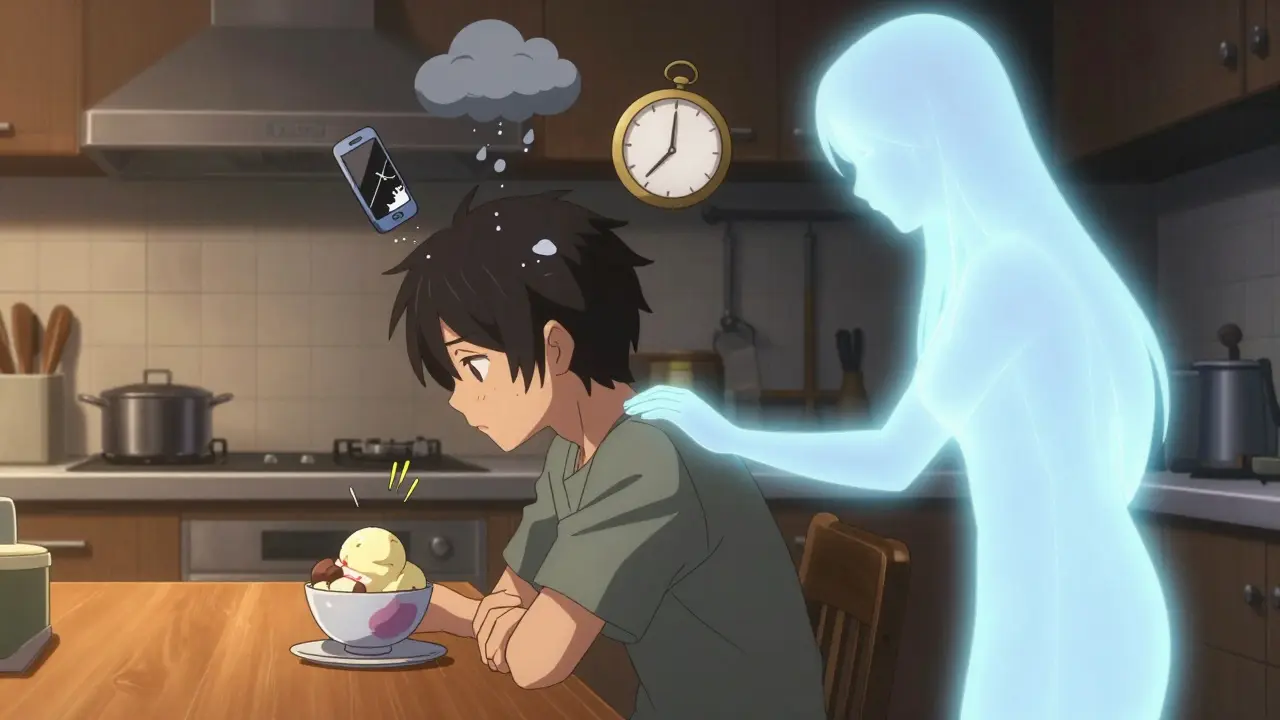
When you reach for a bag of chips after a bad day, or finish a whole pint of ice cream because you’re lonely, you’re not hungry—you’re hurting. This is emotional eating, the habit of using food to manage feelings instead of satisfying physical hunger. It’s not a lack of willpower—it’s a coping response built over time, often without you even noticing. Unlike normal hunger, which builds slowly and can wait, emotional hunger hits suddenly, craves specific comfort foods, and doesn’t stop when you’re full. It leaves you feeling guilty afterward, not satisfied.
Stress eating, a common form of emotional eating triggered by anxiety or pressure, is one of the most frequent patterns. When your body is flooded with cortisol, it craves sugar and fat because those foods briefly quiet the stress response. Food and mood, the connection between what you eat and how you feel isn’t just about nutrition—it’s about brain chemistry. Sugar spikes dopamine, giving a quick high, but the crash makes you feel worse. Over time, your brain starts linking food with relief, making it harder to stop.
Many people try to fix emotional eating by dieting, but that usually backfires. Restricting food increases the power of cravings. The real fix isn’t willpower—it’s learning new ways to handle emotions. Some people find relief through journaling, walking, talking to a friend, or even breathing exercises. Others need professional help to uncover deeper patterns, like childhood trauma or chronic stress. Binge eating, a clinical condition where emotional eating becomes frequent and out of control is more serious and often needs therapy or medical support.
You’re not alone if you’ve ever eaten when you weren’t hungry. Almost everyone does it sometimes. But when it becomes your go-to solution for sadness, anger, or boredom, it starts to control your life. The good news? It can change. You don’t need to quit food—you need to rebuild your relationship with it. The posts below show real strategies people have used to break free: from understanding triggers to replacing food with healthier habits, from medication side effects that worsen cravings to how sleep and hormones play a role. You’ll find practical advice, not just theory. No fluff. No guilt. Just what works.