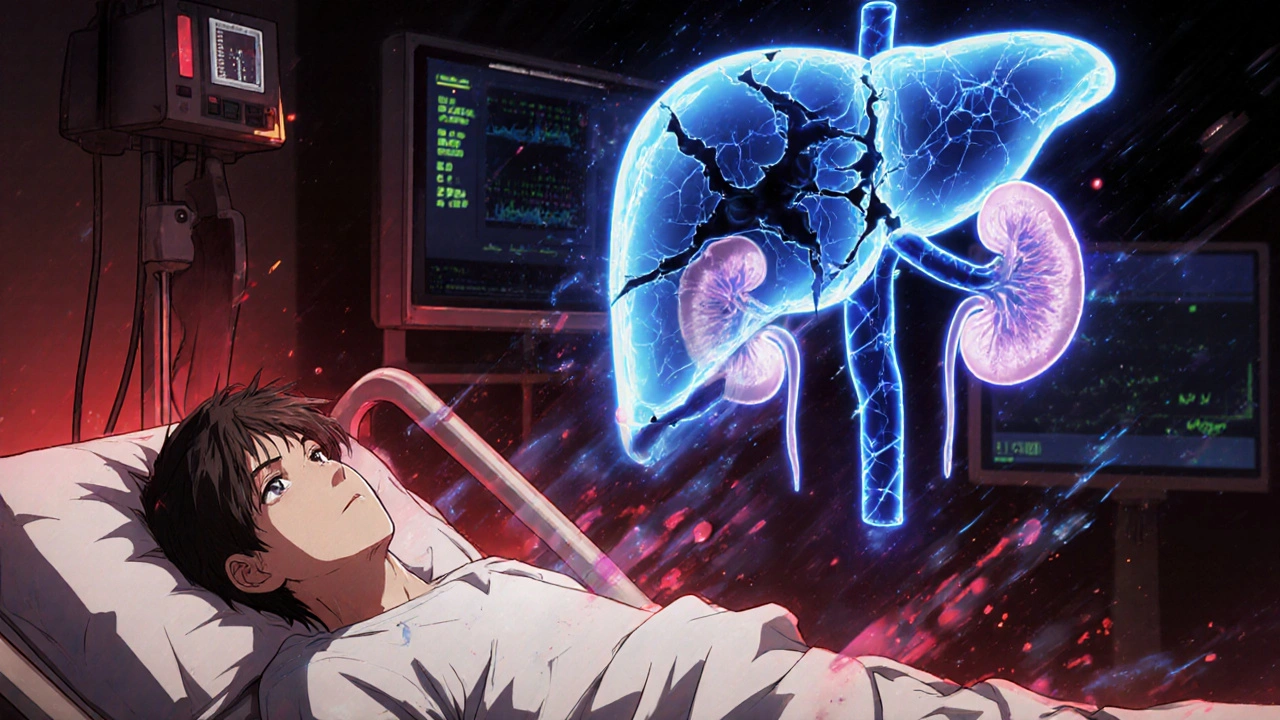
HRS Diagnosis: Understanding Hepatorenal Syndrome and What Comes Next
When your liver fails, your kidneys often pay the price. Hepatorenal Syndrome, a life-threatening condition where kidney function drops sharply in people with advanced liver disease. Also known as HRS diagnosis, it’s not caused by physical damage to the kidneys—but by how the body responds to severe liver failure. This isn’t just a lab result. It’s a signal that your body’s systems are collapsing in sync. If you or someone you know has cirrhosis and suddenly stops producing urine, or creatinine levels spike without clear reason, HRS diagnosis is likely on the table.
HRS diagnosis doesn’t happen alone. It’s tied to cirrhosis, the late stage of liver scarring from alcohol, hepatitis, or fatty liver disease. It often shows up after a trigger—like an infection, heavy bleeding, or too many diuretics. The kidneys aren’t broken; they’re shut down by faulty blood flow signals from the failing liver. That’s why standard kidney treatments often fail. You can’t fix the kidneys without fixing the liver’s chaos.
Doctors look for three things: advanced liver disease, low urine output, rising creatinine, and no other cause like dehydration or kidney damage. No biopsy. No ultrasound finding. Just clinical signs and exclusion. That’s why HRS diagnosis is often missed or delayed. And delay kills. Studies show people with HRS diagnosis have a median survival of weeks without treatment. Transplant is the only cure, but even then, timing is everything. If you’re on a transplant list, HRS diagnosis can move you higher—because it means you’re running out of time.
What you’ll find here are real, practical guides on how HRS diagnosis is made, what happens after, and how medications, lifestyle shifts, and hospital protocols play into survival. From how diuretics can make it worse, to why certain antibiotics are used before a transplant, to how to recognize early warning signs at home—these posts give you the details you won’t get in a 10-minute doctor visit. This isn’t theory. It’s what works when your body is failing and you need answers fast.