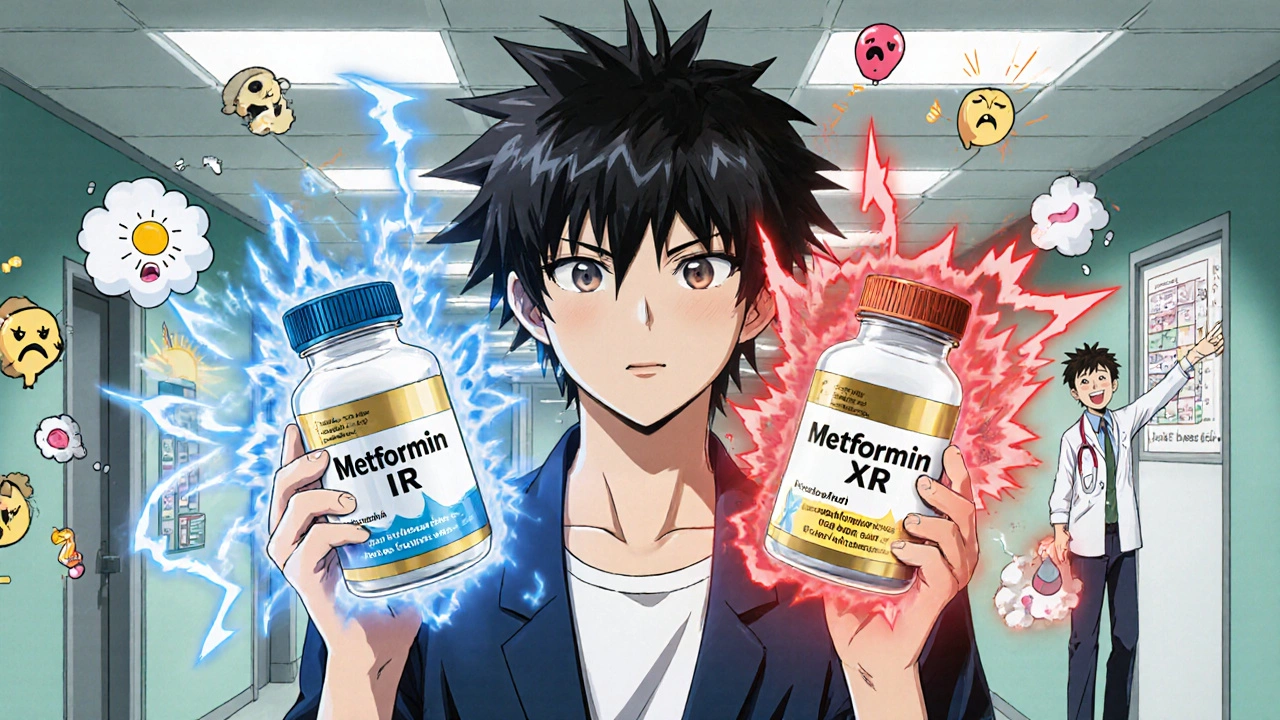
Metformin IR: What It Is, How It Works, and Why It's Still the First Choice for Diabetes
When it comes to managing metformin IR, an immediate-release form of the most widely used type 2 diabetes medication. Also known as regular metformin, it works by reducing sugar production in the liver and helping your body use insulin more effectively. Unlike extended-release versions, metformin IR releases the drug quickly, meaning you take it two or three times a day with meals to avoid stomach upset. It’s not flashy, it doesn’t cost a fortune, and it’s been around since the 1950s—but it still works better for more people than almost any other drug for type 2 diabetes.
What makes metformin IR different isn’t just how it lowers blood sugar—it’s what it doesn’t do. It doesn’t cause weight gain. It doesn’t trigger low blood sugar on its own. And it doesn’t need injections. That’s why doctors start with it before moving to pills like sulfonylureas or newer drugs like GLP-1 agonists. It’s also the only diabetes drug with decades of real-world data showing it cuts heart attacks and death risk in people with type 2 diabetes. Even when people switch to newer, pricier options, many still keep metformin IR in their regimen because it adds a layer of protection no other drug matches.
But it’s not perfect. The biggest issue? Stomach problems. Nausea, diarrhea, bloating—these aren’t rare. They’re so common that nearly half of people who start metformin IR quit within the first few weeks. The trick isn’t to push through it—it’s to start low and go slow. Most people do better on 500 mg once a day for a week, then bump up slowly. Taking it with food helps, too. And if you’re still struggling after a month, switching to the extended-release version (metformin ER) often fixes it without losing the benefits.
Metformin IR also plays well with others. It’s often paired with drugs like sulfonylureas, DPP-4 inhibitors, or SGLT2 inhibitors when blood sugar stays high. But it’s not just about combining pills—it’s about building a plan. People who take metformin IR and also walk 30 minutes a day, cut back on sugary drinks, and get their blood sugar checked regularly see the best results. It’s not magic. It’s a tool. And like any tool, it works best when used right.
And here’s something most people don’t realize: metformin IR is one of the few diabetes drugs that’s been proven to help prevent type 2 diabetes in people with prediabetes. If your A1C is high but not yet diabetic, your doctor might suggest it—not just to treat, but to stop the disease before it starts. That’s why it’s on the WHO’s list of essential medicines. It’s cheap, safe, and effective for millions.
Below, you’ll find real, practical guides on how metformin IR fits into the bigger picture of diabetes care—from how to talk to your doctor about side effects, to why generic versions save you hundreds a year, to how it compares with other blood sugar drugs. These aren’t ads. They’re the kind of info you need to make smart choices without being overwhelmed.