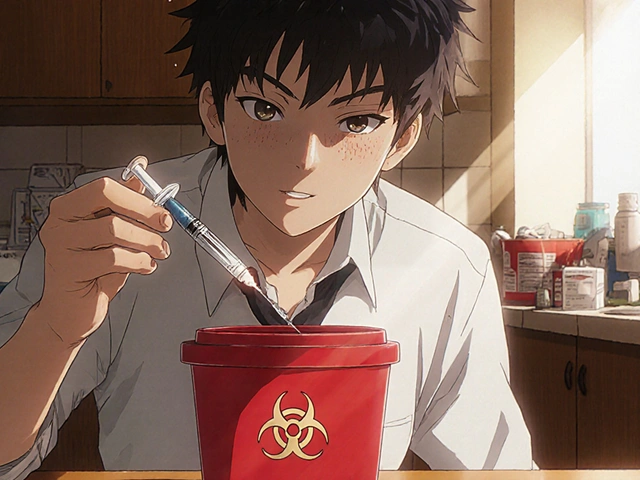
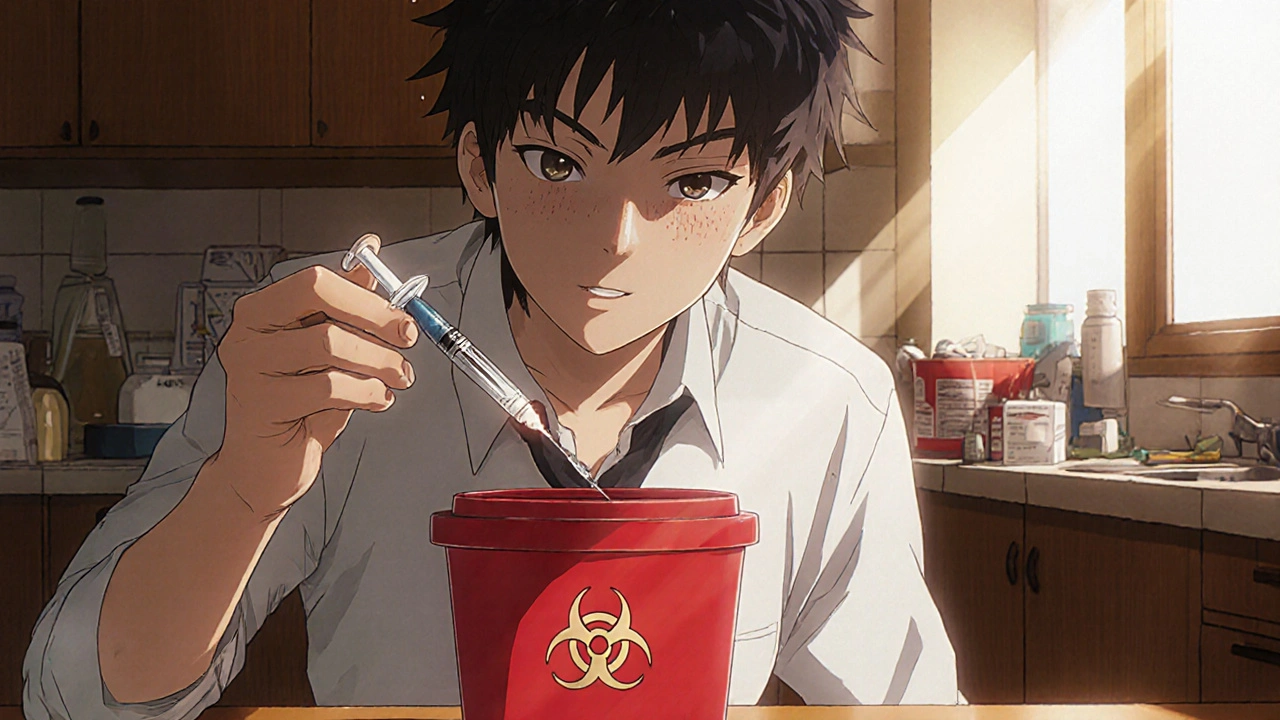
Why Proper Sharps Disposal Matters
Every year, over 385,000 needlestick injuries happen in the U.S. - most of them preventable. These aren’t just minor accidents. A single used needle can carry HIV, hepatitis B, or hepatitis C. The risk isn’t theoretical: hepatitis B can spread in up to 30% of exposures if the needle is contaminated. And it’s not just healthcare workers at risk. Kids find needles in parks, sanitation workers get stuck while sorting trash, and pets get injured in backyards. The solution is simple: sharps disposal in the right container, every single time.
What Counts as a Sharp?
You might think only needles are dangerous. But sharps include more than you realize:
- Needles (used for insulin, vaccines, or other injections)
- Syringes (even if the needle is removed)
- Lancets (used for blood glucose testing)
- Auto-injectors (like EpiPens after use)
- IV catheters and infusion sets
- Dental wires and scalpels
If it’s sharp, used, and came into contact with blood or body fluids - it’s a sharp. Don’t assume it’s safe just because the needle is detached. The syringe barrel can still hold infectious material.
The Only Safe Container: FDA-Cleared Sharps Containers
Don’t use soda bottles, coffee cans, or plastic laundry bottles. These are dangerous and illegal in many places. Only use containers designed and tested for sharps. FDA-cleared containers have specific features:
- Thick, puncture-resistant plastic (at least 0.04 inches thick)
- Locking lid that won’t pop open under pressure
- Clear fill line - never go past 3/4 full
- Red color with the international biohazard symbol
- Sturdy base so it doesn’t tip over
Brands like BD Redi-Sharp, Sharps Compliance Safe•Drop, and Stericycle containers meet these standards. They’re designed so you can’t accidentally reach inside and get stuck. That’s why clinics using them see 78% fewer injuries than those using homemade containers.
How to Use a Sharps Container
It’s not just about having the right container - you have to use it right.
- Immediately after use, place the sharp into the container. Don’t set it down, don’t wait.
- Never recap, bend, or break the needle. This is one of the top causes of injuries.
- Drop the sharp in - don’t force it. If it doesn’t slide in easily, it’s probably not the right size.
- Stop when the contents reach the fill line. Even if the lid looks like it can close, stop. Overfilled containers are a major hazard.
- Keep the container upright and away from children, pets, and high-traffic areas.
Many home users make mistakes in the first 30 days of starting injectable therapy. If you didn’t get clear instructions from your doctor or pharmacist, ask now. Don’t guess.
Where to Dispose of Full Sharps Containers
Once your container is full, you can’t throw it in the trash. Here’s where to take it:
- Pharmacies: Walgreens, CVS, and some local pharmacies offer free drop-off bins. Just bring your sealed container - no appointment needed.
- Hospitals and clinics: Many have public drop boxes, even if you’re not a patient. Call ahead to confirm hours.
- Household hazardous waste sites: Most counties run these. Check your city or county website for locations and days.
- Mail-back programs: Companies like Sharps Compliance and MedWaste Management send you a prepaid, FDA-approved mailer. Seal your container, drop it in the mailbox, and they handle the rest. Costs about $25-$40 per box.
Some states have strict rules. In California, containers must be red. In New York, they must be locked when not in use. Don’t assume rules are the same everywhere. Use the EPA’s Medical Waste Contact Directory (updated quarterly) to find your local guidelines.
What Not to Do
These are the most common - and dangerous - mistakes:
- Don’t reuse containers. Even if you clean them, they’re not designed for multiple uses. A reused bottle can crack or leak.
- Don’t put sharps in recycling. Recycling centers aren’t equipped to handle biohazards. A single needle can shut down an entire facility.
- Don’t flush needles. This contaminates water systems and can damage plumbing.
- Don’t wait until you have a full container. If you’re using insulin daily, go through a container every 2-4 weeks. Waiting too long increases risk.
Costs and Financial Help
FDA-cleared containers cost $8-$15 each. Mail-back programs run $25-$40. That adds up - especially for people on insulin or other daily injectables. But here’s the real math: the average cost of post-exposure treatment after a needlestick injury is $3,267. That’s not insurance. That’s out-of-pocket.
Many states offer free or low-cost disposal programs for low-income residents. Ask your pharmacist, doctor, or local health department. Medicare Part B sometimes covers sharps containers if you’re on home dialysis or insulin therapy. Medicaid programs vary by state but often include disposal support. Don’t assume you can’t afford it - help is out there.
What’s Changing in 2025 and Beyond
Regulations are tightening. Starting December 1, 2025, employers must provide take-home disposal kits to home healthcare workers under OSHA’s updated Bloodborne Pathogens Standard. The EPA is also requiring standardized labeling on all sharps containers by January 2026.
Technology is catching up too. New containers with fill-level sensors are coming. By 2028, the FDA expects all new sharps containers to have smart features that alert users when they’re nearing capacity. These won’t be cheap at first, but they’ll save lives.
What to Do If You or Someone Else Gets Stuck
If you get stuck by a used sharp:
- Wash the area with soap and water immediately.
- Don’t suck the wound or squeeze it - this can push germs deeper.
- Seek medical care right away. Go to an ER or urgent care.
- Ask for testing for HIV, hepatitis B, and hepatitis C.
- If the sharp came from someone with known infection, ask about post-exposure prophylaxis (PEP). It’s most effective if started within 2 hours.
Even if you feel fine, get checked. Some infections don’t show symptoms for weeks or months.
Can I throw sharps in the regular trash if I put them in a bottle?
No. Even if you put needles in a plastic bottle, it’s not safe or legal in most places. Bottles can break, leak, or be punctured by trash compactors. This puts sanitation workers and others at risk. Always use an FDA-cleared sharps container and take it to an approved drop-off site.
Do I need to remove the needle from the syringe before disposal?
Never. Removing the needle increases your risk of a needlestick. Always dispose of the entire syringe - needle and all - in the sharps container. The container is designed to safely hold the whole unit.
Are there free sharps disposal programs?
Yes. Many pharmacies, hospitals, and local health departments offer free drop-off. Some states have programs for low-income residents. Call your county health department or ask your pharmacist. Mail-back programs also offer discounted or free options for qualifying patients.
How long can I keep a sharps container before disposing of it?
Keep it until it’s 3/4 full - no longer. Once full, seal it and take it to a drop-off location within 30 days. Don’t store full containers under your sink or in your garage. Heat and moisture can weaken the container. If you’re not ready to dispose of it, store it out of reach of children and pets, upright and secure.
Can I reuse a sharps container if I clean it?
No. Even if you wash it with bleach or disinfectant, the plastic weakens over time and can crack or leak. FDA-cleared containers are single-use only. Reusing them violates safety standards and puts you and others at risk.