

Imagine taking your evening anxiety medication and a cup of Kava is a traditional Pacific Island herbal beverage derived from the root of Piper methysticum, known for its anxiolytic and sedative properties due to compounds called kavalactones. You expect relaxation. Instead, you find yourself too drowsy to stand up the next morning, or worse, your doctor discovers significantly elevated liver enzymes during a routine checkup. This isn't just theoretical; it's a documented pattern in clinical reports. Kava has gained massive popularity as a natural alternative for stress relief, but when mixed with prescription sedatives like benzodiazepines or sleep aids, the risks multiply rapidly.
The core issue lies in how both substances affect your central nervous system and liver metabolism. Kava works by enhancing GABA activity in the brain, similar to how many sedative medications function. When you stack these effects, the result is often excessive sedation. Simultaneously, kavalactones can inhibit specific liver enzymes responsible for breaking down drugs, leading to higher blood levels of your medication than intended. Understanding this dual mechanism is critical for anyone considering combining these remedies.
How Kava Affects Your Liver and Brain
To understand the danger, you need to look at what happens inside your body after ingestion. The active compounds in kava, known as kavalactones, cross the blood-brain barrier within 15 minutes. They bind to GABA-A receptors, producing a calming effect that peaks around 90 minutes and lasts between 2 and 6 hours. While this sounds manageable, the variability is high. Unlike standardized pharmaceuticals, commercial kava supplements vary wildly in potency. Water-extracted traditional beverages typically contain 150-250 mg of kavalactones per serving, but alcohol-based extracts can push that number to 300 mg or more per dose.
The liver bears a significant burden here. The U.S. Food and Drug Administration (FDA) issued a formal advisory in 2002 warning about potential liver toxicity following reports of severe injury in multiple countries. Although rare, cases have included hepatitis, cirrhosis, and even liver failure requiring transplantation. Dr. Jay H. Hoofnagle, a senior investigator at the National Institute of Diabetes and Digestive and Kidney Diseases, notes that at least a dozen instances of acute liver failure have been reported in patients taking kava. The exact mechanism isn't fully understood, but evidence suggests that kavalactones may trigger an immune-mediated reaction or direct cellular damage in susceptible individuals. Symptoms often appear 1 to 4 months after starting use, presenting as fatigue, nausea, and jaundice.
The Sedation Trap: Why Mixing Is Dangerous
Sedation risk is perhaps the most immediate concern for users. Kava acts as a central nervous system depressant. If you are already taking benzodiazepines (like alprazolam or diazepam), barbiturates, or certain antidepressants, adding kava creates a synergistic effect. This means the combined impact is greater than the sum of its parts. User reports on platforms like Erowid.org describe experiences where individuals took kava with lorazepam and found themselves unable to stand for hours, accompanied by confused speech.
This isn't just about feeling sleepy. Excessive sedation increases the risk of falls, accidents, and impaired cognitive function. In a Sacramento County case study from 2023, two patients developed acute liver failure after combining kava with prescription sedatives. One patient, a 42-year-old taking 300 mg of kava daily along with 2 mg of alprazolam, developed jaundice and elevated ALT levels (2,840 U/L) within 90 days. Another, a 56-year-old combining 250 mg of kava with 10 mg of diazepam, required hospitalization for coagulopathy. These cases highlight that the risk isn't uniform; it depends on dosage, individual genetics, and the specific medications involved.
CYP Enzyme Inhibition: The Hidden Interaction
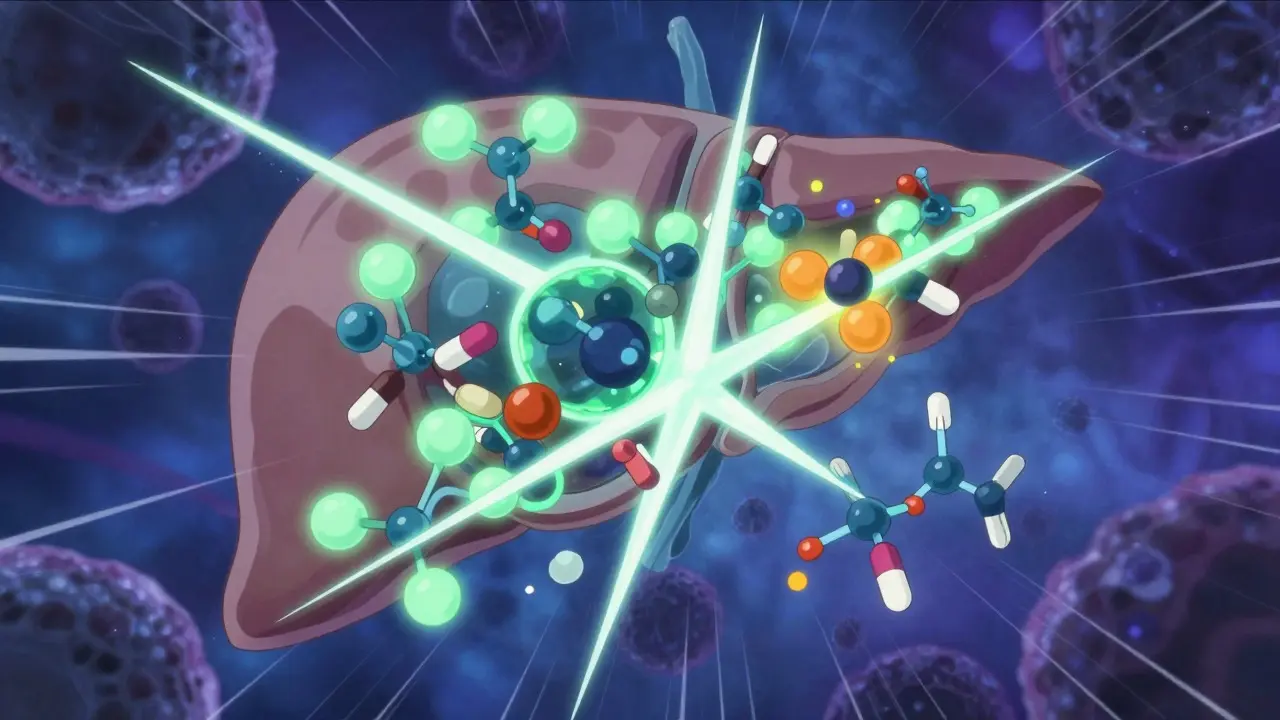
Beyond simple additive sedation, there is a pharmacokinetic layer to the risk. Your liver uses cytochrome P450 enzymes to metabolize drugs. Kava has been shown to inhibit three key enzymes: CYP2D6, CYP2C9, and CYP3A4. Many common sedatives and pain relievers rely on these pathways for clearance. For example, midazolam, a short-acting sedative, is primarily metabolized by CYP3A4. Studies indicate that kava can increase midazolam plasma concentrations by 27% through this inhibition. This means if you take a standard dose of midazolam while consuming kava, your body effectively processes a higher dose than prescribed.
This interaction makes dosing unpredictable. With prescription drugs, you know exactly how much you're taking. With kava, bioavailability varies from 15% to 60% depending on the preparation method. Combine that variable input with enzyme inhibition, and you have a recipe for erratic drug levels in your bloodstream. The European Food Safety Authority concluded in 2024 that no safe level of kava consumption can be established for individuals taking concomitant medications metabolized by these specific CYP enzymes. This regulatory stance underscores the scientific consensus that the interaction is significant and potentially hazardous.
| Attribute | Kava (Piper methysticum) | Benzodiazepines (e.g., Alprazolam) |
|---|---|---|
| Mechanism of Action | GABA-A receptor modulation + Na/Ca channel inhibition | GABA-A receptor positive allosteric modulator |
| Onset of Action | 30 minutes | 15-60 minutes |
| Dosing Consistency | Variable (15-60% bioavailability) | Standardized and predictable |
| Liver Risk Profile | Rare but severe hepatotoxicity documented | Very low rate (~1:100,000 prescriptions) |
| Regulatory Status (US) | Dietary Supplement (FDA Advisory Warning) | Prescription Only (Strict Monitoring) |
Who Should Avoid the Combination?
Not everyone faces the same level of risk, but certain groups should exercise extreme caution or avoid kava entirely if they are on sedatives. First, anyone with pre-existing liver conditions should steer clear of kava, according to CDC guidance from 2022. Second, patients taking medications heavily dependent on CYP3A4 or CYP2D6 metabolism are at higher risk for drug accumulation. This includes not just sedatives but also some statins, calcium channel blockers, and immunosuppressants.
If you do choose to combine them, the general medical advice is to limit kava intake to 70 mg or less daily and undergo biweekly liver function monitoring. However, many healthcare providers recommend avoiding the combination altogether due to the lack of long-term safety data. It’s also crucial to disclose kava use to your doctor. Research from Sacramento County found that only 22% of patients voluntarily disclosed kava use when presenting with liver symptoms. If your doctor doesn't know you're taking it, they can't account for it in their treatment plan or side-effect analysis.

Navigating the Market: Quality Matters
The global kava market was valued at $117.4 million in 2022, with 68% of U.S. sales occurring through online retailers. This fragmented market means quality control is inconsistent. Some products use 'noble' varieties of kava, which are traditionally associated with lower toxicity, while others use 'two-day' varieties grown quickly for commercial extract production. The World Health Organization noted in 2023 that traditional water-prepared kava beverages show a significantly lower incidence of adverse events (0.8 per 100,000 servings) compared to commercial extracts (7.3 per 100,000 servings). If you decide to use kava despite being on sedatives, opting for water-extracted, noble variety preparations may reduce-but not eliminate-risk.
Look for third-party testing labels that verify kavalactone content. Since the FDA does not regulate supplements as strictly as drugs, batch-to-batch variation is real. A product labeled '200 mg' might actually contain anywhere from 150 to 250 mg of active compounds. This variability makes precise dosing impossible, further complicating the interaction with sedative medications.
Frequently Asked Questions
Can I take kava with my prescription anti-anxiety medication?
It is generally risky. Kava enhances GABA activity, similar to many anti-anxiety meds, leading to potential over-sedation. Additionally, kava inhibits liver enzymes (CYP3A4, CYP2D6) that break down these medications, potentially raising drug levels in your blood. Always consult your doctor before combining them.
What are the signs of kava-induced liver damage?
Symptoms typically appear 1 to 4 months after starting use. Common early signs include persistent fatigue, nausea, loss of appetite, and dark urine. Jaundice (yellowing of skin or eyes) indicates more severe damage. Elevated ALT and AST levels on blood tests are key diagnostic markers.
Is kava safer than alcohol for anxiety?
While kava lacks the addictive potential of alcohol, it carries unique risks of liver toxicity and unpredictable drug interactions. Alcohol also causes liver damage and sedation, but its effects are well-documented and predictable. Neither is 'safe' in excess, but kava's lack of standardization makes it harder to manage safely alongside other medications.
How long does kava stay in your system?
Sedative effects peak at 90 minutes and last 2 to 6 hours. However, kavalactones can remain in the body longer, especially with regular use. Because kava inhibits liver enzymes, it may also prolong the effects of other medications taken simultaneously.
Should I stop taking kava if I feel tired?
Fatigue is a common early sign of liver stress. If you experience unexplained tiredness, nausea, or digestive issues while taking kava, consider stopping temporarily and consulting a healthcare provider for liver function tests. Early detection can prevent severe injury.