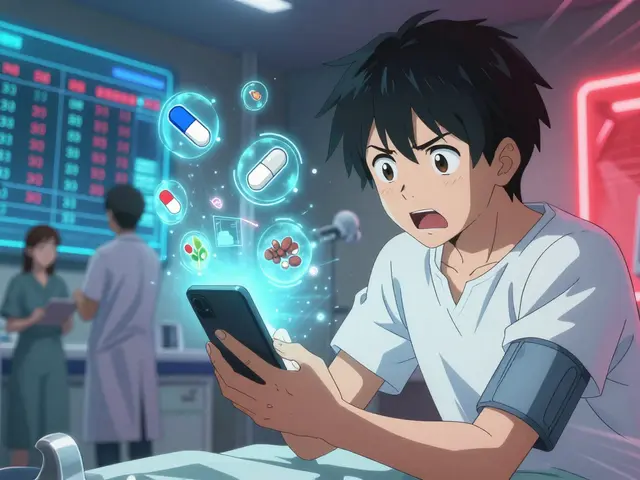

Imagine this: you’re in the emergency room after a fall. You can’t remember all your pills. The doctor asks what you take, and you say, "I think it’s a blue one for blood pressure, a white one for cholesterol, and something for my knees." Meanwhile, your pharmacist down the street has a record of your last 12 prescriptions. Your sister, who lives in another state, filled your diabetes med last week. But none of that shows up in the hospital’s system. That’s not just inconvenient-it’s dangerous.
That’s why personal health records (PHRs) for medication management aren’t a luxury. They’re a lifeline. And they’re finally starting to work-when used right.
What Exactly Is a PHR for Medications?
A personal health record isn’t just a note on your phone. It’s a digital tool you control that pulls together every medication you’ve taken-from prescriptions filled at CVS, Walgreens, or your local pharmacy, to over-the-counter painkillers, vitamins, and herbal supplements. Unlike hospital or doctor portal records, which only show what your provider knows, a PHR includes what you take, even if you paid cash or bought it online.
The big players now include Apple Health Records, which automatically syncs with over 200 million iPhones, and Surescripts, the national network that connects 92% of U.S. pharmacies. These systems don’t just list your meds-they show when they were filled, by which pharmacy, and sometimes even how often you refilled them. That’s huge. Because the real problem isn’t just missing meds-it’s duplicate meds, wrong doses, or hidden interactions.
Why Your Pharmacy Records Don’t Tell the Whole Story
Most people assume their doctor’s EHR has everything. It doesn’t. Hospitals and clinics only see what happens in their own system. If you fill your blood pressure med at Rite Aid and your thyroid med at a small independent pharmacy, your primary care provider won’t know about the second one unless you tell them-and most people forget.
Even worse, pharmacies don’t always talk to each other. A 2022 study found that 53% of patients admitted to the hospital had at least one medication error because their records didn’t match what they were actually taking. That’s not a glitch-it’s the norm. Why? Because:
- Some pharmacies don’t share data with national networks
- Over-the-counter drugs like ibuprofen or melatonin aren’t tracked in most systems
- Patients forget to update their lists
- Systems only keep data for 12-18 months
So if you stopped going to a pharmacy 14 months ago, that med might disappear from your record-even if you’re still taking it.
How PHRs Actually Prevent Dangerous Mistakes
Here’s the math: the U.S. spends $528 per patient every year on avoidable medication errors. Most of those happen during transitions-like when you leave the hospital or switch doctors.
PHRs cut that risk. A 2023 JAMIA study showed that when pharmacists used a complete PHR, medication reconciliation errors dropped by 43%. That means fewer allergic reactions, fewer kidney failures from drug combos, and fewer hospital readmissions.
Take Surescripts. It pulls data from 22 billion annual pharmacy transactions. It matches patients using 12 data points-name, birth date, address, even past prescriptions. It gets it right 99.2% of the time. That’s why ERs in Cleveland, Chicago, and Atlanta now pull up a patient’s PHR before giving a new painkiller. They know if you’re already on 5 other pain meds.
And it’s not just for hospitals. Community pharmacists using PHR tools save 7.2 hours a week on manual checks. That’s time they can spend counseling you on side effects or checking for dangerous interactions.
Apple Health vs. Surescripts: Which One Should You Use?
Not all PHRs are equal. Here’s how the top two stack up:
| Feature | Apple Health Records | Surescripts Medication History |
|---|---|---|
| Data Sources | Pharmacy claims, patient entry | Pharmacy claims, PBMs, direct pharmacy feeds |
| Medication Completeness | 68% | 92% |
| OTC & Supplement Tracking | Yes, manual entry | Only 37% of systems capture these |
| Real-Time Updates | Delayed (1-3 days) | Same-day for most chain pharmacies |
| Accessibility | iPhone users only | Used by providers, pharmacies, hospitals |
| Best For | Patients who want personal control | Providers needing accurate clinical data |
Apple Health is great if you’re tech-savvy and want to see everything in one place. But if you’re managing chronic conditions, your doctor or pharmacist will rely on Surescripts. The truth? You need both.
The Hidden Gaps: What PHRs Still Miss
Even the best systems have blind spots. Here’s what’s often left out:
- OTC meds: Only 37% of PHRs capture non-prescription drugs. That means if you’re taking 800 mg of ibuprofen daily for arthritis, it might not show up-even though it can interact with your blood thinner.
- Herbs and supplements: Many PHRs reject "ginkgo biloba" or "magnesium" as "invalid." You have to type them in exactly right, or they get ignored.
- Adherence: Just because you filled a prescription doesn’t mean you took it. Only 18% of PHRs track actual use.
- Data retention: If you haven’t visited a pharmacy in 13 months, your record there might vanish. That’s a problem if you’re on a long-term med like warfarin.
And here’s the scary part: a Duke University audit found that 61% of patient-entered meds had dosage errors. Someone might write "10 mg" when the pill is 5 mg. Or they might list "Lisinopril" but forget the 20 mg dose. That’s not laziness-it’s confusion. And it’s deadly.
How to Make Your PHR Actually Work for You
Having a PHR isn’t enough. You have to maintain it. Here’s how:
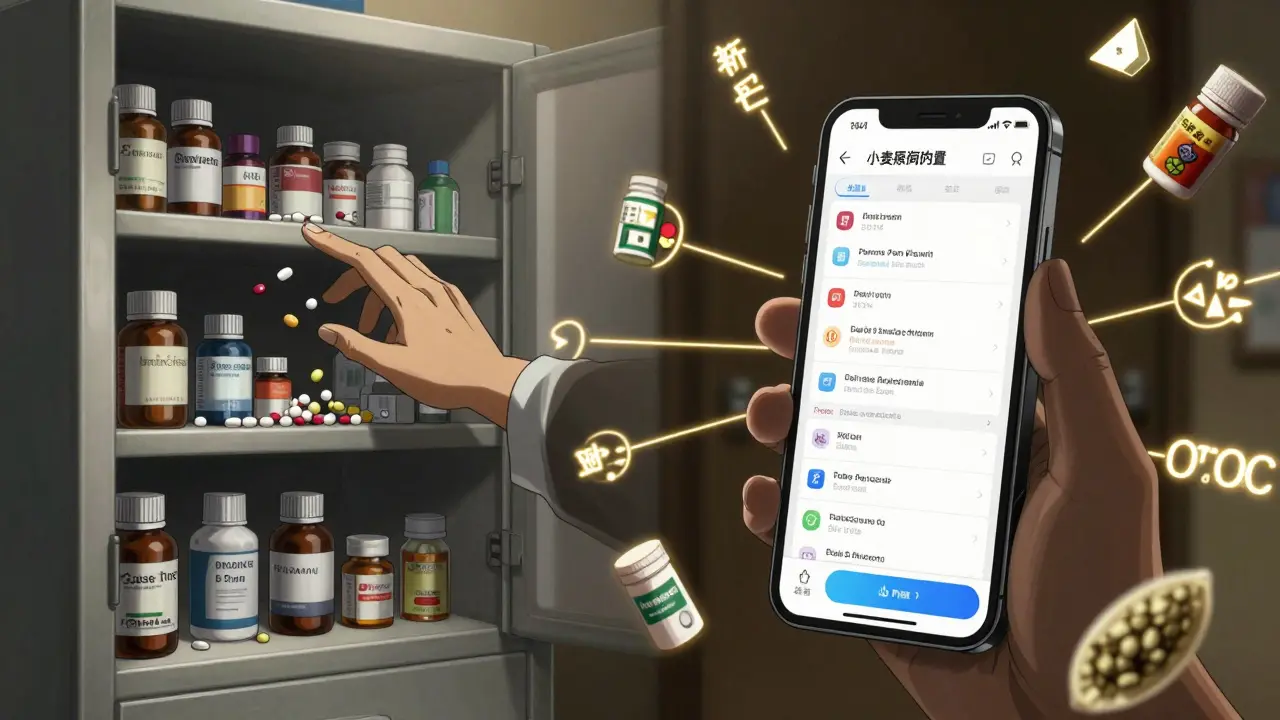
- Start with your current list. Go through every pill bottle in your medicine cabinet. Write down the name, dose, frequency, and reason. Don’t skip the vitamins.
- Sync with Apple Health or another PHR. Turn on medication syncing in your iPhone settings. It pulls from pharmacies that report to Apple.
- Manually add what’s missing. If you bought a painkiller at the gas station, add it. If you take turmeric for inflammation, type it in. Don’t assume it’ll show up.
- Update after every pharmacy visit. Whether you filled a new script or stopped one, update your PHR the same day.
- Share it with your pharmacist. Ask them to check your PHR during your next visit. Most will do it for free.
- Review it every 3 months. Your meds change. So should your record.
At the University of Florida, patients who followed this 6-step process reduced data errors by 52%. That’s not a small win-it’s a safety net.
What’s Changing in 2025?
Things are moving fast. Starting July 2024, Medicare and Medicaid require pharmacy benefit managers to share 45 days of your medication history with your PHR-once you give consent. That means your PHR will soon include meds you bought with insurance, even if you didn’t go to a chain pharmacy.
Also, Surescripts now lets pharmacists send direct messages to your doctor’s inbox when a med changes. No more phone tag. No more voicemails. Just a secure note: "Patient stopped metoprolol. New BP med started."
And AI is coming. Google Health’s prototype can predict medication errors with 92% accuracy by analyzing your refill patterns and symptoms. It’s not in clinics yet-but it will be in the next 3-5 years.
Final Reality Check
PHRs aren’t magic. They won’t fix broken systems. But they put power in your hands. You’re the only person who knows every pill you’ve taken, every supplement you’ve tried, every time you skipped a dose.
And if you don’t manage your own record, someone else will guess. And guesses kill.
Right now, only 39% of patients actively update their PHRs. That’s a problem. Because when you’re in the ER, no one will ask, "Did you update your record?" They’ll just give you a pill. And if it clashes with something you’re already taking-well, that’s on you.
Don’t wait for a crisis. Open your phone. Open your PHR. Add your meds. Update them. Share them. Your life might depend on it.
Can I use a personal health record if I don’t have an iPhone?
Yes. While Apple Health Records is popular, other PHR platforms like My Health Record (Australia), Epic MyChart, and Cerner HealtheLife work on Android and web browsers. Many pharmacies also offer their own medication lists through patient portals. The key is to use a system that pulls data from multiple pharmacies, not just one.
Do over-the-counter meds show up automatically in PHRs?
No. Most PHRs only track prescription medications filled through insurance or major pharmacy chains. Over-the-counter drugs like ibuprofen, melatonin, or fish oil rarely appear automatically. You must manually add them. Skipping these can lead to dangerous interactions-especially with blood thinners or heart meds.
How often should I update my personal health record?
Update your PHR every time you start, stop, or change a medication-no matter how small. That includes new prescriptions, discontinued drugs, and even OTC supplements. At minimum, review and update your list every 3 months. People who do this reduce medication errors by more than half.
Why does my PHR show a med I stopped taking?
PHRs often keep records for 12-18 months after a prescription is last filled. If you stopped a med 14 months ago, it may still appear. Don’t rely on the system to remove it-manually delete or mark it as discontinued. Otherwise, your doctor might think you’re still taking it.
Are personal health records secure?
Yes, certified PHRs use AES-256 encryption and comply with HIPAA. Access is controlled by you-you decide who can see your data. A 2022 federal audit found 98% of certified PHRs meet NIST cybersecurity standards. Still, never share your login, and use two-factor authentication if available.
Next Steps for Better Medication Safety
If you’re managing multiple meds:
- Download your PHR app today-Apple Health, MyChart, or your pharmacy’s portal.
- Gather every pill bottle you have and make a list.
- Enter every med, including OTC and supplements.
- Share your updated list with your pharmacist and primary doctor.
- Set a monthly reminder to review and update.
If you’re a caregiver for an elderly parent:
- Help them set up a PHR. Many seniors don’t know how.
- Check their list during visits. Ask, "Are you still taking this?"
- Call their pharmacy and ask if they can pull a medication history.
Medication safety isn’t about technology. It’s about ownership. The system won’t fix itself. But you can fix it-for yourself, and for the people you care about.