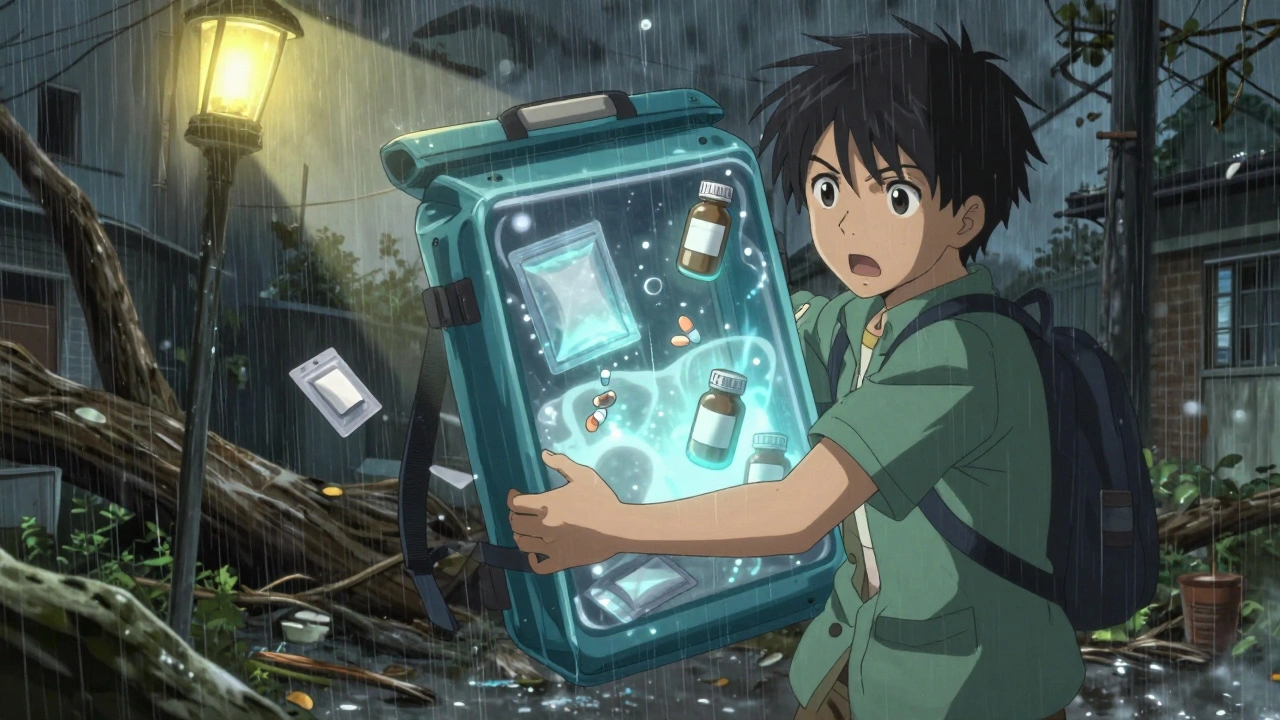
Emergency Kit Temperature Control: Keep Your Medications Safe and Effective
When you’re packing an emergency kit, a portable collection of essential medical supplies meant for immediate use during crises. Also known as first aid kit, it should include everything from bandages to life-saving drugs. Temperature control isn’t just a footnote—it’s the difference between a drug working and failing when you need it most. Heat, cold, and humidity can wreck medications before you even use them. Insulin loses potency if it gets too hot. Epinephrine auto-injectors can stop working after a few hours in a hot car. Even common pills like nitroglycerin or thyroid meds degrade faster than you think. If your emergency kit sits in a garage, a car, or a sun-baked drawer, you’re risking your life—or someone else’s.
That’s why medication storage, the practice of keeping drugs at stable, manufacturer-recommended temperatures to preserve effectiveness matters more in emergencies than in daily use. Most pills and liquids are designed to stay stable between 68°F and 77°F. But in real life, kits get exposed to extremes. A summer day in a car can hit 140°F. Winter temps in an unheated cabin can drop below freezing. Neither is safe. heat-sensitive drugs, medications that degrade quickly when exposed to high temperatures, including biologics, hormones, and certain antibiotics like insulin, EpiPens, and some antibiotics need special care. Even if the label says "room temperature," that doesn’t mean "hot car." Some drugs, like liquid antibiotics or eye drops, can be ruined by repeated freezing and thawing. You don’t need a lab to protect them—just smart habits.
Here’s what works: Keep your kit in a cool, dry place—not the bathroom, not the glovebox. Use insulated pouches with cooling packs for long trips. If you’re traveling, carry it with you, not in checked luggage. Check expiration dates often, especially after exposure to extreme temps. And don’t assume a drug still works just because it looks fine. Cloudy insulin? Discolored epinephrine? Throw it out. There’s no second chance in an emergency.
The posts below cover what you need to know: how drug stability affects real-world outcomes, why some meds fail under stress, how to spot degraded medications, and what the FDA and other agencies say about storage. You’ll find advice on handling insulin in heat, protecting epinephrine during travel, and why your pharmacy’s advice on storage might not be enough. These aren’t theoretical tips—they’re from people who’ve been there, and from experts who’ve studied what happens when temperature control fails. Your emergency kit isn’t just a box of pills. It’s your backup plan. Make sure it doesn’t fail when you need it most.