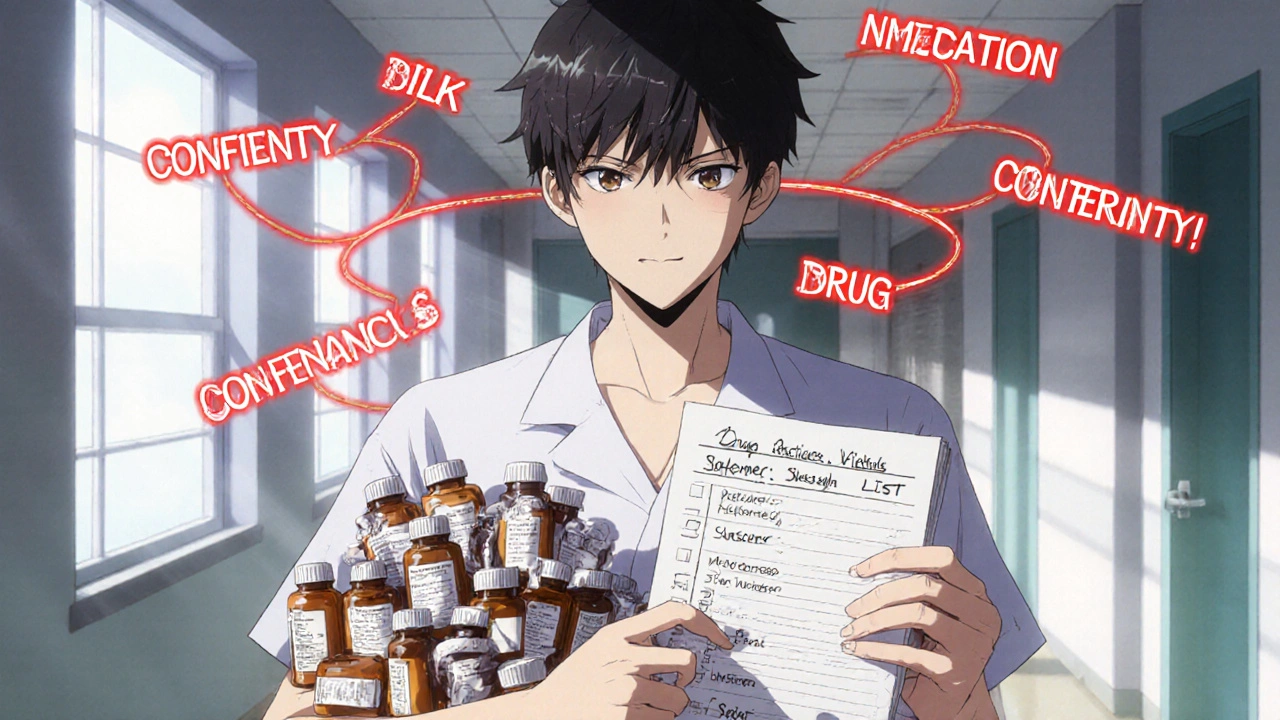
Medication Reconciliation: What It Is and Why It Saves Lives
When you’re taking multiple drugs — maybe for high blood pressure, diabetes, and arthritis — medication reconciliation, the process of comparing a patient’s current medication list with newly prescribed drugs to avoid errors. Also known as medication review, it’s not just paperwork. It’s a safety net that stops harmful overlaps, missed doses, and dangerous interactions before they hurt you. Think of it like checking your GPS route before you drive: if you skip it, you might end up on a dead end — or worse, a collision.
Medication reconciliation matters most when you move between care settings — leaving the hospital, switching doctors, or starting a new treatment. One study found that over 70% of patients had at least one medication error during transitions of care. Many of those errors happened because no one sat down and asked: What are you actually taking right now? It’s not enough to say you’re on "that blood pressure pill." You need to name the exact drug, dose, and schedule. That’s where deprescribing, the careful removal of unnecessary or harmful medications. Also known as medication review, it’s a key part of safe medication management comes in. Older adults, especially, often end up with pills they don’t need anymore — like a beta blocker after heart surgery, or a painkiller that’s no longer helping. Stopping those safely isn’t easy, and it requires a clear list to start with.
And it’s not just about what you’re taking. It’s about what you’re not telling your doctor. Herbal supplements like goldenseal, a common herbal product that interferes with liver enzymes and can alter how drugs work — or over-the-counter pain relievers — can quietly mess with your prescriptions. That’s why a full medication reconciliation includes everything: vitamins, cannabis, eye drops, even patches. If it enters your body, it counts. The goal isn’t to scare you. It’s to make sure every drug you take actually belongs there.
When done right, medication reconciliation cuts hospital readmissions, prevents ER visits, and reduces side effects like dizziness, confusion, or kidney stress. It’s not glamorous. It doesn’t make headlines. But it’s one of the few tools in healthcare that actually works every single time — if someone takes the time to use it. Below, you’ll find real stories and practical guides from people who’ve been through it: how to talk to your doctor about cutting back, how to spot dangerous interactions, and how to keep your meds in order — no matter how many you take.