

Imagine landing in a beautiful new city, only to realize you've left your essential medication at home or, worse, you've fallen seriously ill and need an expensive prescription you can't afford out-of-pocket. In high-cost healthcare hubs like the U.S., a single day in the hospital can easily run between $2,500 and $5,000. Without the right protection, a medical emergency can turn a dream vacation into a financial nightmare. While most people assume their home health plan covers them globally, the reality is often a stark "no." That's where travel insurance medication coverage is a specialized insurance benefit designed to cover prescription costs for unforeseen illnesses or injuries that occur while traveling abroad. It fills the gap between your local health plan and the high costs of foreign pharmacies.
| Feature | Typical Value / Limit | Key Note |
|---|---|---|
| Coverage Limit | $5,000 to $250,000 | Varies by policy level |
| Deductibles | $0 to $2,500 | Your out-of-pocket start point |
| Co-insurance | 80/20 or 100% | You may pay 20% after deductible |
| Dispensing Limit | 90 days | Maximum supply per prescription |
The Hard Truth About Routine vs. Emergency Meds
The biggest mistake travelers make is assuming their insurance will pay for their monthly blood pressure or cholesterol pills. Let's be clear: almost every standard travel policy explicitly excludes "maintenance medications." These are the drugs you take daily for chronic conditions. If you lose your supply of regular meds, you're usually on your own. For instance, travelers have reported claims for blood pressure refills being denied because the condition was deemed "pre-existing."
What these policies do cover are medications for new, acute problems. If you trip on a cobblestone street in Italy and need strong antibiotics and pain relief, that's a covered event. The insurance is there to handle the "surprises," not the routine. This is why you should always pack extra medication and a copy of your prescriptions before leaving home.
How the Money Actually Works: Deductibles and Co-insurance
Understanding the math before you hit the pharmacy can save you a lot of stress. Most plans use a combination of a deductible and co-insurance. Let's say you have a plan with a $250 deductible and 80/20 co-insurance. If your emergency medication costs $10,250, you don't just pay $250. First, you pay the $250 deductible. Then, you're responsible for 20% of the remaining $10,000, which is $2,000. Your total out-of-pocket cost would be $2,250, and the insurance company covers the rest.
You also need to look at the network. Providers like Allianz Global Assistance, IMG, and Seven Corners maintain PPO networks. In the U.S., this means they work with big chains like CVS or Walgreens. If you stay in-network, you might only pay your co-insurance at the counter. If you go out-of-network, be prepared to pay the full price upfront and fight for reimbursement later.
Comparing Your Options: Which Plan Fits Your Trip?
Not all travel coverage is created equal. Depending on your age and where you're going, some options are significantly better than others. For example, Medicare is notoriously limited outside the U.S.; its drug plans generally do not cover prescriptions purchased abroad. If you're a senior, you might look into Medigap plans (like C, D, or F), but those are only available to people who turned 65 before 2020.
Credit card insurance is another common trap. While it's convenient, the medication limits are often tiny-sometimes only $500 to $1,000. For a serious emergency, that's barely a drop in the bucket. If you're visiting a high-cost country, a dedicated visitor policy is a much safer bet. Some specialized plans, such as the Patriot Platinum insurance, even include specific coverage for COVID-19 related illnesses, which is a crucial detail in the current travel climate.
Steps to Get Your Medication Claims Approved
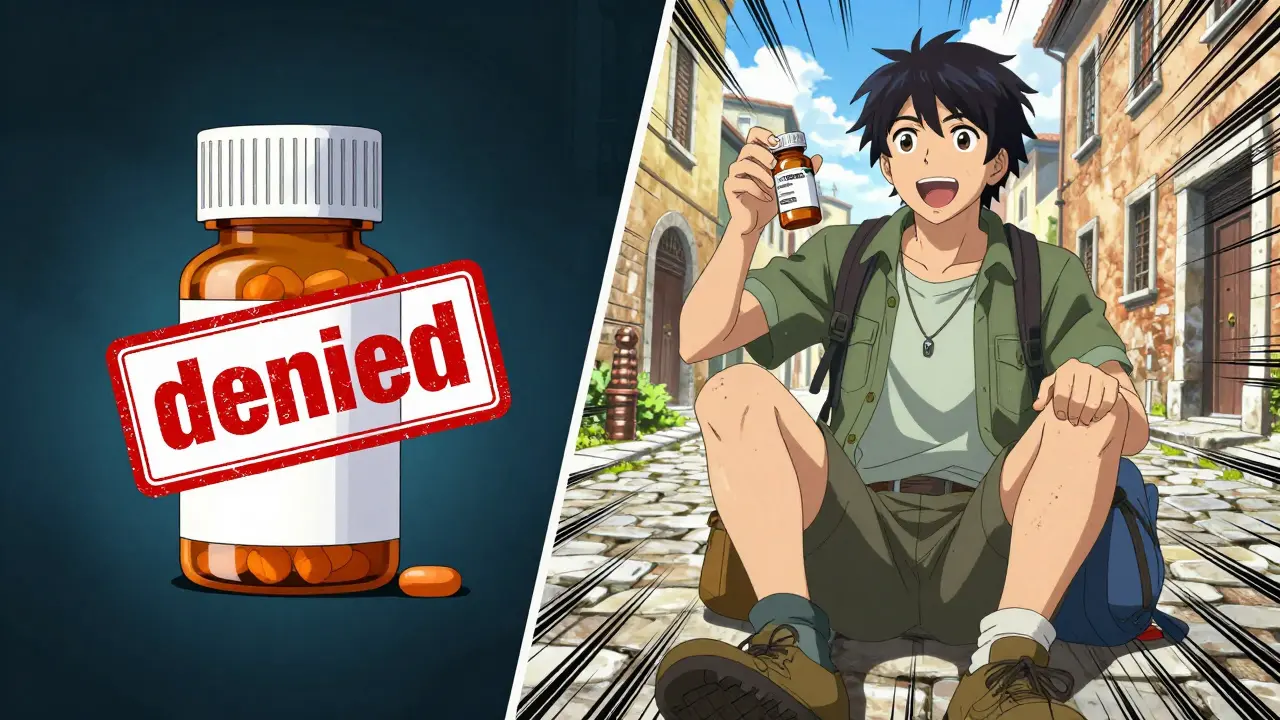
Getting a claim approved is more about the paperwork than the illness. There's a huge gap in approval rates between those who follow the rules and those who don't. Travelers who see a locally licensed physician first to get a proper prescription have a 92% approval rate, while those using foreign prescriptions see that number drop to 67%.
To ensure you get your money back, follow this checklist:
- Visit a local doctor: Get a prescription written by a licensed physician in the country where you are staying.
- Use an in-network pharmacy: Check your insurance app or call your provider to find a partner pharmacy.
- Save everything: You need an itemized receipt. It must show the drug name, the dosage, and the exact price.
- Link the condition: Ensure the doctor's notes clearly link the medication to the acute emergency, not a chronic condition.
The Role of Telemedicine and New Tech
The industry is shifting toward digital solutions to make this process less painful. Many major providers now offer telemedicine services. Instead of hunting for an urgent care clinic while sick, you can have a virtual consultation with a U.S.-licensed doctor who can send a prescription directly to a nearby pharmacy. This eliminates a lot of the guesswork and reduces the risk of using a non-covered provider.
Looking ahead, some companies are testing blockchain systems to verify prescriptions instantly. This would mean no more waiting 7 to 14 business days for a reimbursement check; the insurance company could potentially verify the need and pay the pharmacy in real-time. While this isn't universal yet, it shows that the "pay upfront and pray" model is slowly dying.

Avoiding Common Pitfalls
The most frequent cause of denied claims is a misunderstanding of "pre-existing conditions." Many people think that because they've managed a condition for years, it's not "active." Insurance companies disagree. If you have a condition that required treatment or medication in the months leading up to your trip, it's pre-existing. Unless you bought a specific "pre-existing condition waiver," any medication related to that condition will be denied.
Another trap is the 90-day limit. Most plans won't let you stock up on medications for the next year using their money. They cover what you need for the emergency and a reasonable follow-up period. If you try to claim a six-month supply of an acute medication, expect a phone call from the claims adjuster asking a lot of questions.
Does travel insurance cover my daily medications if I lose them?
Generally, no. Most travel insurance plans exclude routine or maintenance medications. These are considered part of a pre-existing condition or a regular health expense. You are expected to bring a sufficient supply from home. Coverage is typically reserved for new, unforeseen illnesses or injuries that happen during the trip.
How do I get reimbursed for medication bought abroad?
You must submit a claim with an itemized receipt showing the medication name, dosage, and cost, along with a copy of the prescription and the doctor's notes. If you used an in-network pharmacy and presented your card, you may only need to pay the co-insurance. For out-of-network pharmacies, reimbursement typically takes 7-14 business days after the documentation is approved.
Can I use my Medicare drug plan outside the U.S.?
No, Medicare drug plans explicitly do not cover prescription drugs purchased outside the United States. While some Medigap plans provide limited emergency coverage, they are not a substitute for a comprehensive travel insurance policy with medication benefits.
What is the difference between a deductible and co-insurance?
The deductible is the fixed amount you pay out-of-pocket before the insurance company starts paying. Co-insurance is the percentage of the remaining cost you share with the insurer. For example, with a $250 deductible and 80/20 co-insurance, you pay the first $250, and then you pay 20% of every dollar after that.
Will travel insurance cover COVID-19 medications?
It depends on the plan. Some policies, like the Patriot Platinum insurance, specifically include COVID-19 coverage. Others may exclude it or treat it as a special case. Always check the policy's "Exclusions" section to confirm if pandemic-related illnesses and their corresponding medications are covered.
Next Steps for Travelers
If you're planning a trip, start by auditing your current medications. If you have a chronic condition, look specifically for policies that offer a "pre-existing condition waiver." This is a rare but valuable add-on that can expand your coverage. For everyone else, the best strategy is to choose a provider with a strong PPO network in your destination country to avoid the hassle of upfront payments.
Lastly, digitize your medical records. Keep a PDF of your current prescriptions and a list of active ingredients (generic names) on your phone. Many countries use different brand names for the same drug; giving a pharmacist the generic chemical name is the fastest way to get the correct emergency replacement.