

Getting vaccinated while on immunosuppressants isn’t as simple as walking into a pharmacy and getting a shot. If you’re taking steroids, rituximab, methotrexate, or any drug that weakens your immune system, the wrong vaccine could put you at risk - and the right one might not work as well as it should. The good news? There are clear, science-backed rules to follow. The bad news? Many doctors still get it wrong. This isn’t guesswork. There’s a detailed, updated roadmap - and you need to know it.
Live Vaccines: Avoid Them Unless Your Doctor Says Otherwise
Live vaccines contain a weakened version of the virus. In healthy people, that’s enough to trigger a strong immune response without causing illness. For someone on immunosuppressants? That weakened virus can turn into a real infection. That’s why live vaccines are generally off-limits if you’re moderately or severely immunocompromised.
Here’s what you need to avoid:
- MMR (measles, mumps, rubella)
- Varicella (chickenpox)
- Zostavax (old shingles vaccine)
- Live attenuated influenza vaccine (LAIV) - the nasal spray
The CDC and Infectious Diseases Society of America (IDSA) updated their guidelines in October 2025, making this crystal clear: if you’re on drugs that suppress your immune system - even low-dose steroids taken for more than two weeks - don’t get these vaccines. There’s one rare exception: if you’re on very low-dose immunosuppressants and your specialist says it’s safe. But even then, it’s rare. Most patients are told to skip them entirely.
Why does this matter? A 2025 study from the University of Washington tracked 1,200 immunocompromised patients who accidentally received a live vaccine. Nearly 8% developed vaccine-related illness. One patient on rituximab got the nasal flu shot and ended up in the hospital with pneumonia. That’s not a hypothetical risk. It’s real, documented, and preventable.
Inactivated Vaccines: Safe, But Timing Is Everything
Unlike live vaccines, inactivated ones don’t contain any live virus. They’re made from killed pieces of the pathogen or synthetic proteins. That makes them much safer for people on immunosuppressants. But here’s the catch: your immune system may not respond well - even if the vaccine is perfectly safe.
These vaccines are recommended, but they need to be timed right:
- Inactivated influenza vaccine (flu shot)
- COVID-19 mRNA vaccines (Pfizer-BioNTech, Moderna)
- COVID-19 protein vaccine (Novavax)
- Hepatitis B (Engerix-B, Recombivax HB, Heplisav-B)
- Pneumococcal vaccines (PCV20, PPSV23)
Timing isn’t just a suggestion - it’s critical. If you’re on rituximab, ocrelizumab, or another B-cell depleting drug, you need to wait at least six months after your last dose before getting vaccinated. Why? Because these drugs wipe out the immune cells that make antibodies. If you vaccinate too soon, your body won’t respond. Studies show antibody response jumps from under 10% to over 70% when you wait the full six months.
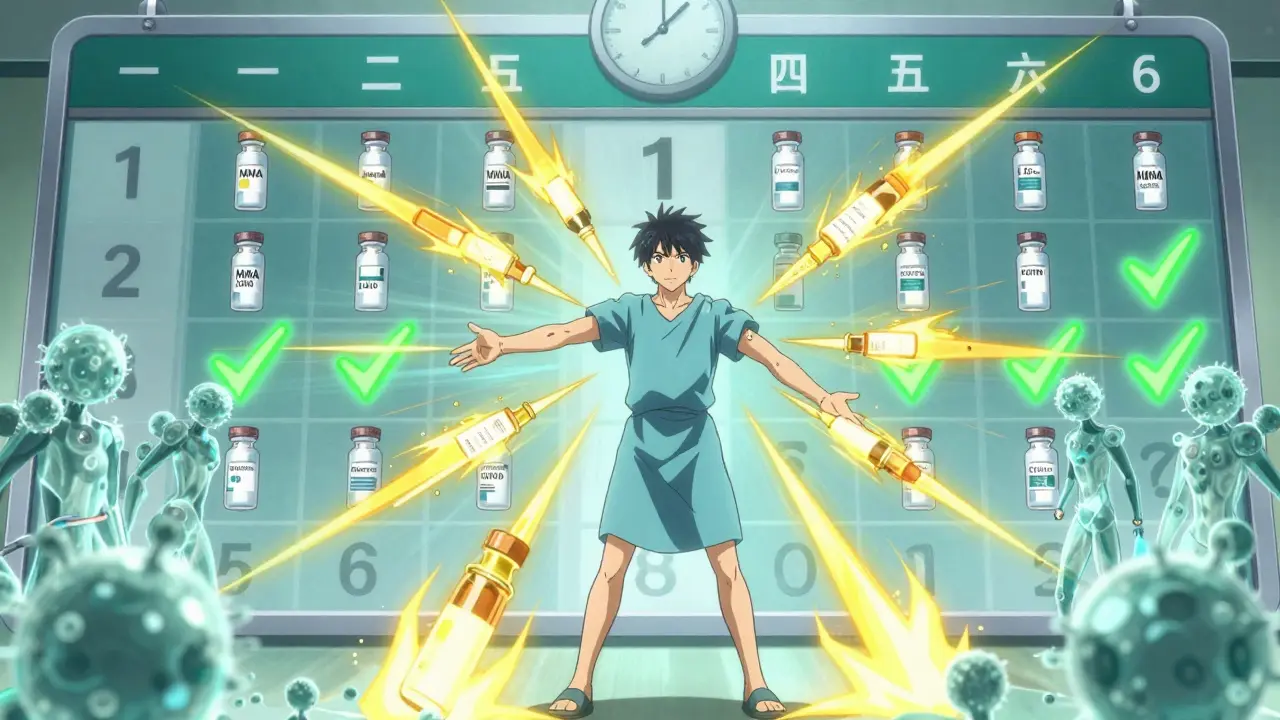
For people on cyclical treatments like cyclophosphamide, the best time to vaccinate is during the “nadir week” - when your white blood cell count is starting to recover between cycles. For those on daily steroids, get the shot when your dose drops below 20 mg of prednisone (or equivalent) for at least two weeks. Your doctor should track your medication schedule like a calendar - because your vaccine schedule depends on it.
COVID-19 and Flu: More Doses, Not Just One
If you’re immunocompromised, you don’t get the same protection from one shot that healthy people do. The CDC’s August 2025 update says you need more.
For COVID-19:
- Start with a 3-dose primary series (if you haven’t already).
- Then get two additional doses of the 2025-2026 updated vaccine - at least four weeks apart.
- After that, you may need more doses depending on your condition. Some patients on long-term rituximab get boosted every six months.
For flu:
- Get the inactivated flu shot every year.
- No extra doses - just one per season.
One patient in Portland, on methotrexate for rheumatoid arthritis, told her doctor she’d only had one COVID shot. She skipped the rest because she thought one was enough. By winter, she got infected - and ended up in the ICU. Her antibody test showed zero response. She’s now on a strict schedule: get the shot, skip methotrexate for a week, then resume. That simple change boosted her antibody levels into the protective range.
What About Your Family?
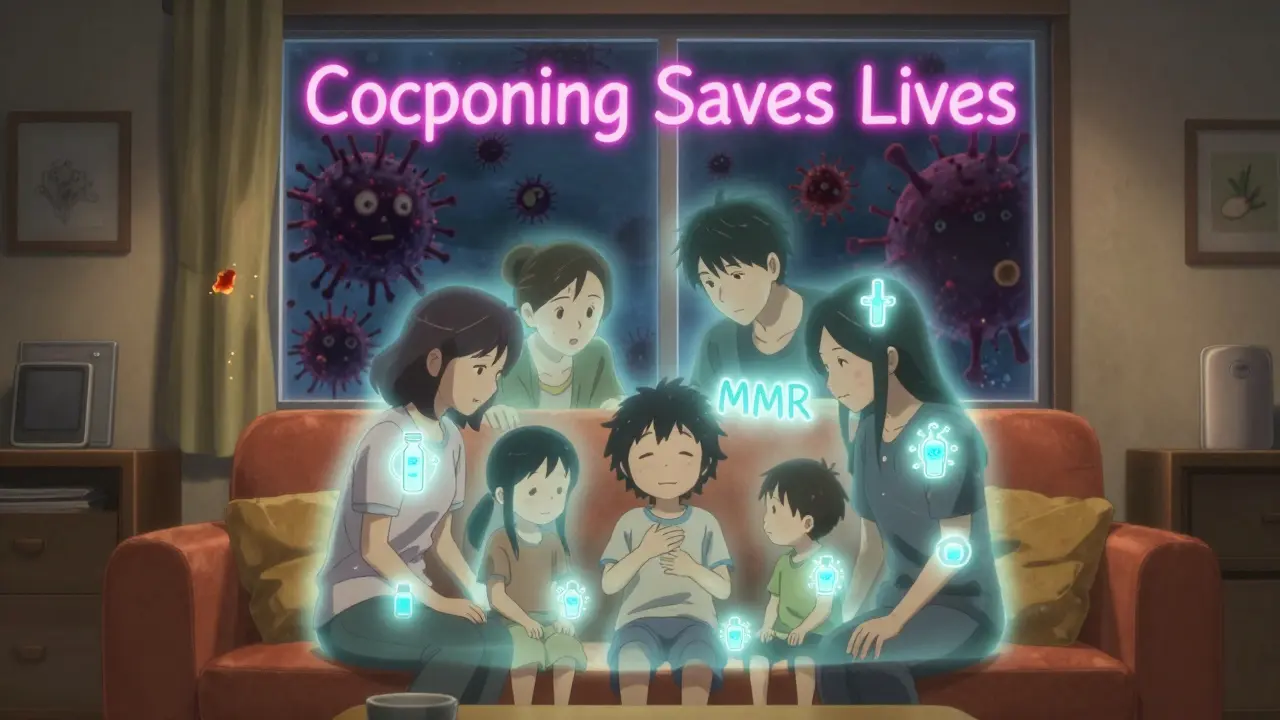
Your vaccine schedule isn’t the only thing that matters. The people around you matter too. The IDSA guidelines stress “cocooning”: if your household members are up to date on all vaccines - especially flu and COVID - your risk of exposure drops by nearly 60%.
That means your partner, kids, or roommate should get their flu shots. They should get boosted. They shouldn’t skip the MMR if they’re healthy. If they get sick, they won’t bring it home to you.
One transplant patient in Oregon had three family members get the flu vaccine. He didn’t get sick all winter. His neighbor, who didn’t vaccinate their kids, got COVID twice - and passed it to him. He spent 12 days in the hospital.
How to Make Sure You Get the Right Vaccines
Here’s what you can do right now:
- Make a list of every immunosuppressant you take - including dose and how often.
- Ask your doctor: “Am I moderately or severely immunocompromised?” (ICD-10 codes like Z94.0 for transplant or D47.Z for leukemia help define this.)
- Request a vaccination plan. Many clinics now use tools like the IDSA’s online decision support system, which generates a custom schedule based on your meds.
- Ask if your pharmacy carries the updated vaccines. Many don’t stock the 2025-2026 versions. You may need to go to a specialty clinic or hospital pharmacy.
- Track your shots. Keep a printed or digital record. Include dates, vaccine names, and which dose it was.
Some patients report being turned away from pharmacies because the staff didn’t know the rules. Others got the wrong vaccine - like the nasal flu spray - and had to cancel. That’s why you need to be your own advocate. Bring printed guidelines from the CDC or IDSA. Don’t assume your provider knows the latest updates.
What’s New in 2026?
Things are changing fast. In January 2026, Epic Systems - the software used in 70% of U.S. hospitals - updated its EHR system to auto-flag immunocompromised patients and suggest vaccination timing based on their meds. That’s huge. But not every clinic uses it yet.
Also, the NIH is testing new adjuvanted vaccines - ones with stronger immune boosters - specifically for immunocompromised people. Early results show promise. Within five years, doctors may use a simple blood test to check your immune response and adjust your vaccine schedule in real time.
For now? Stick to the proven rules. Live vaccines = avoid. Inactivated vaccines = get them - but only when your meds allow it. And always, always talk to your specialist before getting any shot.