

Venlafaxine Blood Pressure Risk Estimator
Patient Parameters
Assessment Result
Estimated Risk Level
Low RiskRecommended Monitoring
Weekly Checks
You start taking Venlafaxine (often known by the brand name Effexor) because your doctor says it’s one of the best options for treating depression or anxiety that hasn’t responded to other treatments. It works well for many people. But there is a catch that often gets overlooked in the excitement of feeling better: this medication can raise your blood pressure. If you are not watching your numbers, you could be trading mental health struggles for cardiovascular risks without even realizing it.
This isn't just theoretical. Venlafaxine belongs to a class of drugs called serotonin-norepinephrine reuptake inhibitors (SNRIs). Unlike standard SSRIs that only affect serotonin, venlafaxine also impacts norepinephrine-a neurotransmitter that acts like adrenaline. When you block the reabsorption of norepinephrine, your body holds onto more of it, which constricts blood vessels and raises heart rate. The result? Higher blood pressure. Understanding how this happens, who is at risk, and exactly how to monitor yourself is critical for staying safe while getting the mental health benefits you need.
Why Venlafaxine Raises Blood Pressure
To understand the risk, you have to look at how the drug works inside your body. Most common antidepressants are SSRIs, which focus on serotonin. Venlafaxine is different. At lower doses (below 150 mg per day), it primarily affects serotonin. However, as the dose increases, its effect on norepinephrine becomes much stronger. This is known as noradrenergic potentiation.
Norepinephrine is part of your sympathetic nervous system-the "fight or flight" response. By inhibiting its reuptake, venlafaxine keeps levels of this chemical higher in your synapses. This causes your blood vessels to tighten slightly and your heart to pump with a bit more force. For most people, this change is small and manageable. But for some, especially at higher doses, it pushes blood pressure into the hypertensive range. A landmark meta-analysis by Khan et al. (2005) showed that while the average increase might seem small (1-3 mmHg in diastolic pressure), the variability is high. Some patients see no change, while others experience significant spikes.
The extended-release formulation (Effexor XR) is commonly prescribed because it smooths out the peaks and troughs of the drug in your bloodstream, potentially reducing sudden spikes compared to immediate-release versions. However, the total daily dose remains the primary driver of cardiovascular effects. If you are taking more than 300 mg per day, the risk of clinically significant hypertension jumps considerably.
Who Is at Risk?
Not everyone on venlafaxine will develop high blood pressure, but certain groups need to be extra vigilant. You should consider yourself higher risk if:
- You have preexisting hypertension: Even if your blood pressure is currently controlled with medication, adding venlafaxine can make it harder to keep those numbers stable. You may need adjustments to your antihypertensive regimen.
- You are on high doses: Patients taking over 150 mg/day, and especially those over 300 mg/day, face a statistically higher incidence of elevated blood pressure.
- You have underlying cardiovascular disease: History of heart attack, stroke, or arrhythmia means your cardiovascular system has less reserve to handle additional stress from increased norepinephrine activity.
- You use other stimulants: Combining venlafaxine with caffeine-heavy diets, nicotine, or other stimulant medications can compound the pressor effects.
Interestingly, research suggests that venlafaxine does not necessarily worsen control in patients who already have well-managed hypertension, but it definitely raises baseline pressures in people who previously had normal readings. This makes the "silent" nature of hypertension dangerous-you can feel fine mentally while your blood pressure quietly climbs.
Monitoring Protocol: What You Need to Do
Ignoring the issue is not an option. The American Psychiatric Association and cardiology guidelines agree on one thing: regular monitoring is non-negotiable. Here is a practical checklist for managing your health while on this medication.
- Get a Baseline Reading: Before you start, or within the first week, know your normal blood pressure. Visit your GP or use a validated home monitor. Write down both systolic (top number) and diastolic (bottom number) readings.
- Invest in a Home Monitor: Don’t rely solely on clinic visits. White-coat hypertension (high BP at the doctor’s office due to anxiety) can skew data. Buy an upper-arm cuff monitor that is validated for accuracy. Wrist monitors are generally less reliable unless used perfectly.
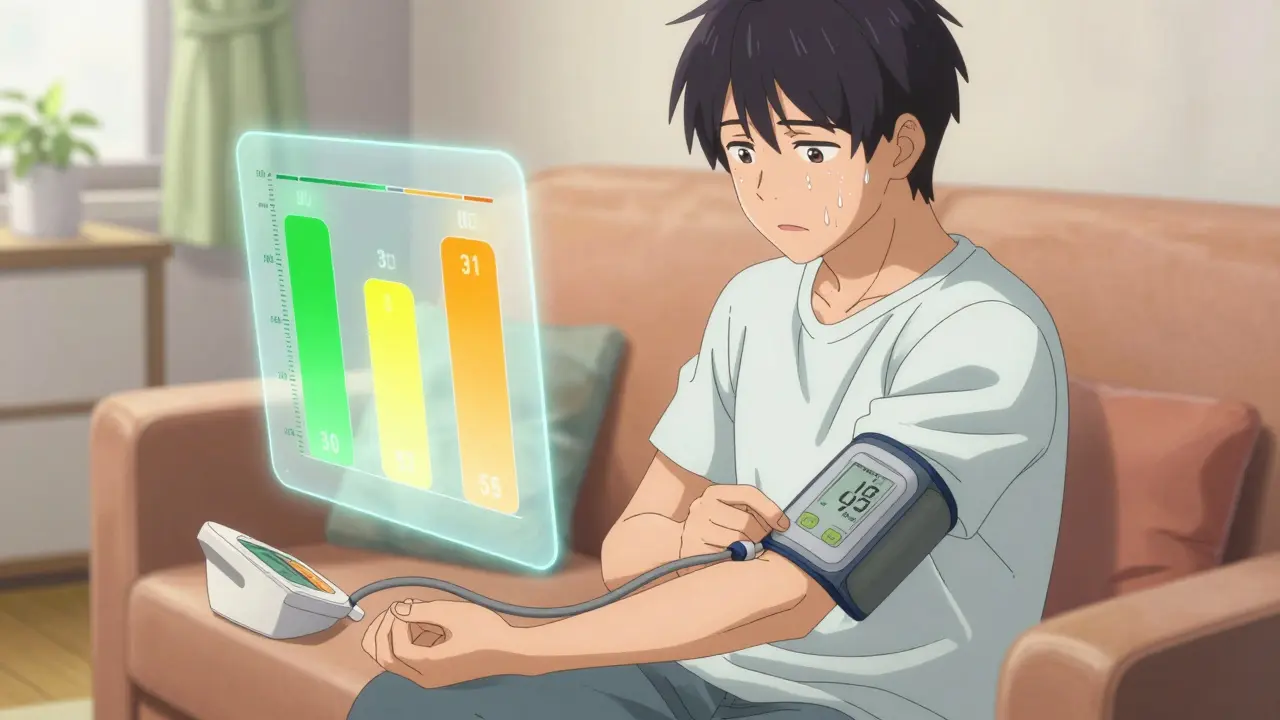
- Check Regularly: During the first three months of treatment-or any time your dose changes-check your blood pressure at least once a week. Take two readings, five minutes apart, in the morning before taking your medication and again in the evening. Average them out.
- Know the Danger Zones:
- Normal: Less than 120/80 mmHg.
Elevated: Systolic 120-129 AND Diastolic less than 80. - Hypertension Stage 1: Systolic 130-139 OR Diastolic 80-89.
- Hypertension Stage 2: Systolic 140+ OR Diastolic 90+.
- Watch for Symptoms: While high blood pressure is often silent, severe spikes can cause headaches, nosebleeds, shortness of breath, or visual disturbances. These require urgent medical attention.
Dr. Costas I. Kosmas and colleagues noted in a 2021 review that sustained diastolic increases can reach up to 15 mmHg in chronic users. That is a significant jump that puts strain on your kidneys, eyes, and heart over time. Catching it early allows your doctor to adjust the dose or switch medications before damage occurs.
Comparing Venlafaxine to Other Antidepressants
If you are worried about blood pressure, it helps to know how venlafaxine stacks up against other options. Not all antidepressants carry the same cardiovascular baggage.
| Drug Class / Example | Primary Mechanism | Blood Pressure Effect | Risk Level |
|---|---|---|---|
| Venlafaxine (SNRI) | Serotonin & Norepinephrine Reuptake Inhibition | Dose-dependent increase | Moderate to High |
| SSRIs (e.g., Sertraline, Escitalopram) | Serotonin Reuptake Inhibition | Neutral or minimal change | Low |
| Duloxetine (SNRI) | Serotonin & Norepinephrine Reuptake Inhibition | Mild increase, less than Venlafaxine | Moderate |
| TCAs (e.g., Amitriptyline) | Multiple receptor interactions | Orthostatic hypotension (drop upon standing) | Variable (High fall risk) |
| Bupropion (NDRI) | Norepinephrine & Dopamine Reuptake Inhibition | Possible mild increase | Low to Moderate |
As you can see, SSRIs are generally the safest bet for patients with existing heart conditions. Venlafaxine sits in a middle ground-it is more effective for some resistant cases of depression but requires more vigilance. Duloxetine, another SNRI, has similar mechanisms but tends to have a milder impact on blood pressure, though it is not completely free of risk.
What Happens If Your Blood Pressure Gets Too High?
If your home monitoring shows consistent readings in the hypertensive range, do not panic, but do act. The first step is usually not stopping the medication abruptly, which can cause severe withdrawal symptoms (dizziness, electric shock sensations, nausea). Instead, consult your prescriber.
Your doctor might take one of three paths:
- Dose Reduction: Lowering the venlafaxine dose might reduce the noradrenergic effect enough to bring your blood pressure down while maintaining antidepressant benefits.
- Add Antihypertensive Medication: If the venlafaxine is working wonderfully for your mental health, your doctor might prescribe a low-dose blood pressure medication (like an ACE inhibitor or calcium channel blocker) to counteract the rise.
- Switch Medications: If the blood pressure issues are severe or unmanageable, switching to an SSRI or a different class of antidepressant may be necessary. Tapering off venlafaxine slowly is essential to avoid discontinuation syndrome.
In rare cases, severe hypertension can lead to hypertensive crisis or posterior reversible encephalopathy syndrome (PRES), a serious condition involving brain swelling. This is why ignoring symptoms like severe headache or vision changes is dangerous. One case report described a young man whose blood pressure hit 210/170 mmHg after ten months on a moderate dose. While extreme, it highlights that individual reactions can vary wildly.

Lifestyle Adjustments to Help Manage Pressure
While medication management is key, lifestyle plays a huge role in buffering the effects of venlafaxine. Since the drug increases norepinephrine, anything else that stimulates your nervous system adds fuel to the fire.
- Cut Back on Caffeine: Coffee, energy drinks, and strong tea stimulate adrenaline production. Limiting these can help keep your vascular tone relaxed.
- Reduce Sodium Intake: Salt retains water, increasing blood volume and pressure. Aim for less than 2,300 mg of sodium per day, ideally closer to 1,500 mg if you are sensitive.
- Regular Aerobic Exercise: Paradoxically, while exercise temporarily raises blood pressure, regular cardio lowers resting blood pressure over time. Just ensure you warm up properly to avoid sudden spikes.
- Stress Management Techniques: Since venlafaxine treats anxiety, using mindfulness, deep breathing, or yoga can help lower sympathetic nervous system activity, countering the drug’s noradrenergic effects.
These steps don’t replace medical monitoring, but they give you agency over your health. They are simple, evidence-based strategies that support both your mental and physical well-being.
Frequently Asked Questions
Does venlafaxine always raise blood pressure?
No, it does not affect everyone equally. Many patients experience only minor, clinically insignificant increases. However, the risk is dose-dependent, meaning higher doses (above 150-300 mg/day) are much more likely to cause noticeable elevations in blood pressure. Individual genetics and baseline health also play a major role.
How quickly does venlafaxine affect blood pressure?
Changes can occur within the first few weeks of starting treatment or shortly after a dose increase. Some patients notice shifts within days, while for others, the elevation builds gradually over months. This is why initial monitoring is so frequent during the titration phase.
Can I take venlafaxine if I already have high blood pressure?
Yes, but with caution. Studies suggest venlafaxine does not necessarily destabilize well-controlled hypertension. However, you will need closer monitoring, and your doctor may need to adjust your blood pressure medications. Never hide your history of hypertension from your psychiatrist.
What are the symptoms of venlafaxine-induced hypertension?
Mild hypertension is often asymptomatic. Severe cases may present with persistent headaches, nosebleeds, shortness of breath, chest pain, or blurred vision. If you experience these symptoms alongside high home readings, seek medical attention promptly.
Will my blood pressure return to normal if I stop venlafaxine?
In most cases, yes. Once the medication is tapered off and cleared from your system, blood pressure typically returns to baseline levels within a few weeks. However, if long-term hypertension caused underlying vascular changes, some residual elevation might remain, requiring ongoing management.
Is Effexor XR safer for blood pressure than immediate-release Venlafaxine?
The extended-release (XR) version provides a smoother release of the drug, which may prevent sharp peaks in norepinephrine levels. However, the total daily dose determines the overall cardiovascular load. Both forms carry the same risk profile regarding sustained blood pressure elevation, so monitoring is required for both.