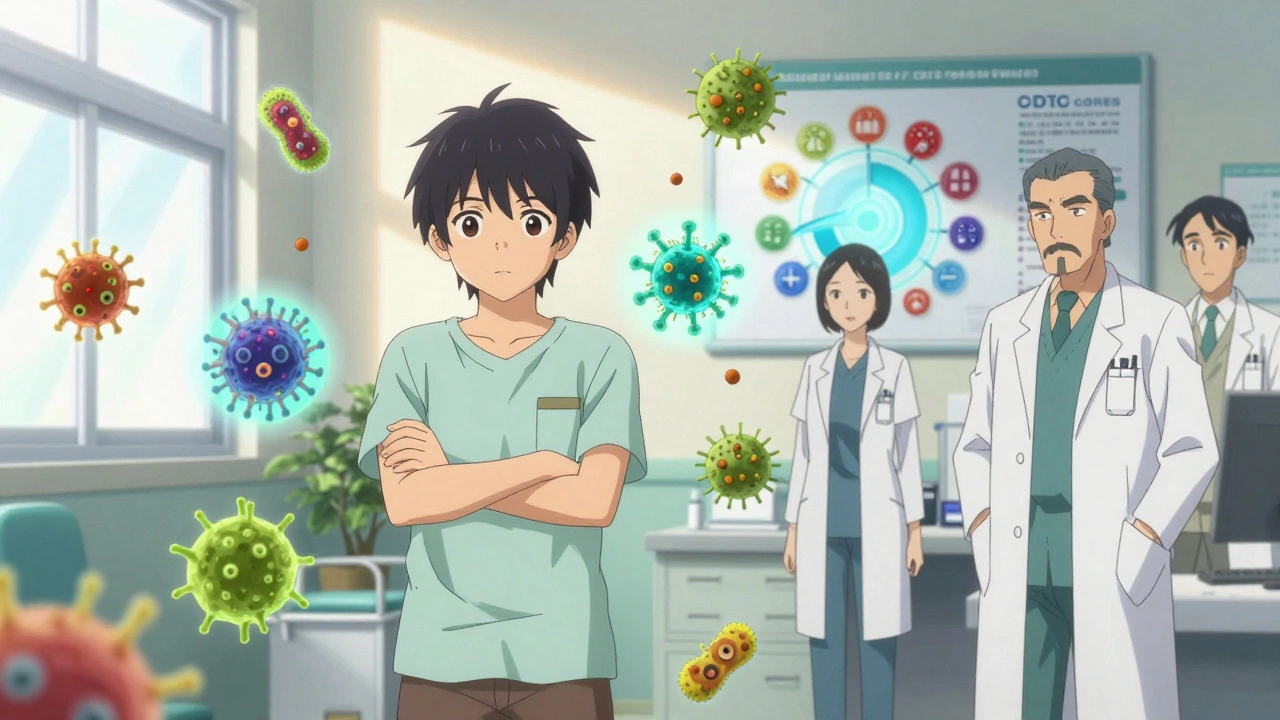
Every time you take an antibiotic, you’re not just fighting an infection-you’re also stirring up your gut. Billions of good bacteria get wiped out along with the bad. And if that happens too often, or when it’s not even needed, you’re not just risking a bad stomach ache-you’re helping create superbugs that no drug can kill.
Why Antibiotic Stewardship Isn’t Just a Hospital Policy
Antibiotic stewardship isn’t some fancy term doctors use to sound smart. It’s the simple idea: use antibiotics only when they’re truly needed, and when you do, use the right one, at the right dose, for the right amount of time. The CDC defines it as measuring and improving how antibiotics are prescribed and used. That’s it. No jargon. No bureaucracy. Just common sense.Here’s the problem: nearly half of all antibiotic prescriptions in outpatient clinics are unnecessary. Think about it-your kid has a runny nose, a cough, maybe a low fever. The doctor checks them, says it’s a virus, and sends you home. But you’re worried. You ask for antibiotics. The doctor, under pressure, writes a script. That’s not stewardship. That’s a missed chance to protect your child’s gut-and the rest of us-from resistant infections.
Every unnecessary antibiotic increases the chance that bacteria will evolve to survive them. In the U.S. alone, over 2.8 million antibiotic-resistant infections happen every year. More than 35,000 people die from them. These aren’t abstract numbers. They’re your neighbor, your coworker, your parent. And the biggest driver? Overuse.
How Antibiotics Destroy Your Gut-And What That Really Means
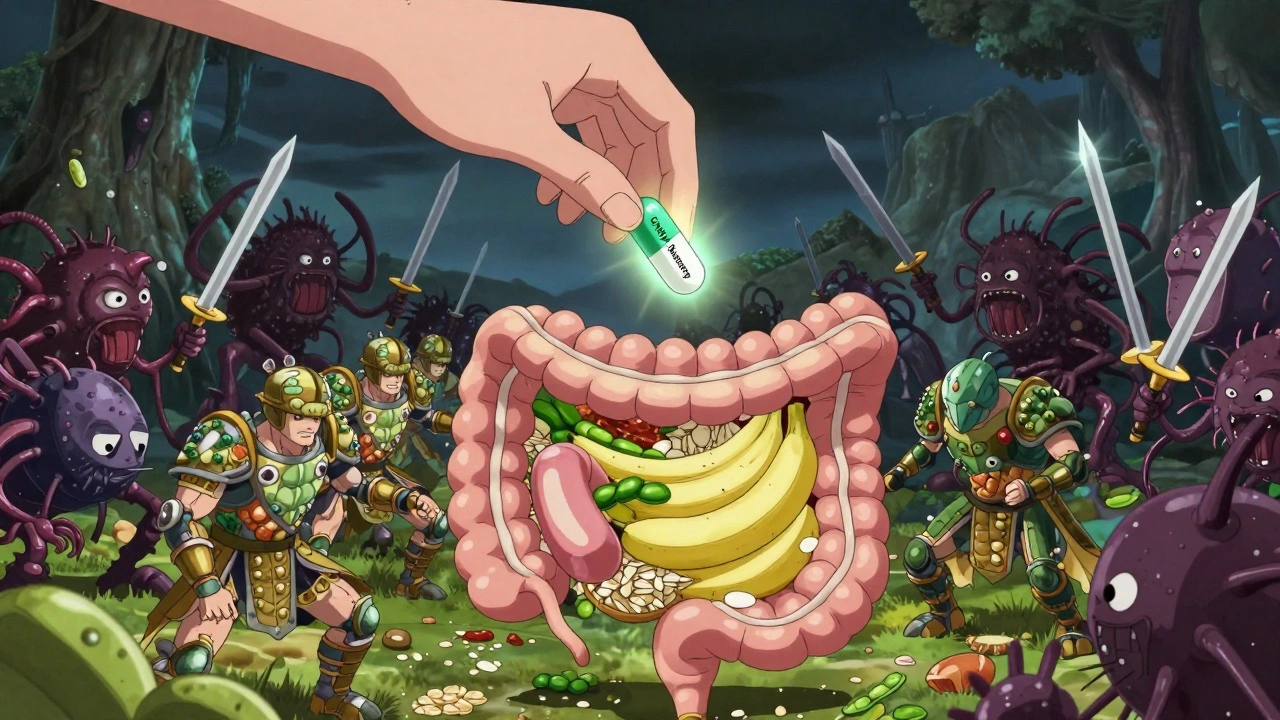
Your gut isn’t just a tube for digesting food. It’s a living ecosystem. Trillions of bacteria live there, helping you absorb nutrients, train your immune system, and keep harmful bugs in check. When you take an antibiotic-even one that’s perfectly appropriate for a throat infection-you’re not just targeting the bad bacteria. You’re wiping out the good ones too.That’s when Clostridioides difficile, or C. diff, gets its chance. This nasty bug is usually harmless-until the good bacteria that normally keep it under control are gone. Then it multiplies fast. C. diff causes severe diarrhea, colon damage, and sometimes death. In the U.S., it leads to over 223,900 infections and 12,800 deaths each year. And antibiotics? They’re the #1 risk factor. About 1 in 5 people who take antibiotics end up with C. diff.
It’s not just about diarrhea. Studies show that even short courses of antibiotics can change your gut microbiome for months-or even years. That’s linked to everything from allergies to depression to weight gain. Protecting your gut isn’t about probiotics or kale smoothies. It’s about not taking antibiotics unless you absolutely need them.
The Real Tools Behind Effective Antibiotic Stewardship
Hospitals and clinics aren’t just guessing when to prescribe. They’re using real, proven methods. The CDC’s Core Elements framework lays it out clearly: leadership, expertise, action, tracking, and education.One of the most effective approaches? Handshake stewardship. It sounds simple: a doctor and pharmacist walk into a patient’s room together. They talk to the nurse. They review the antibiotics being used. They ask, ‘Is this still needed?’ No forms. No pre-approvals. Just a conversation. And it works. At one 444-bed hospital, this method saved over $2 million a year-and cut C. diff rates by nearly 30%.
Outpatient clinics are catching on too. Some use ‘commitment posters’ in exam rooms-signs where doctors write their names and pledge to prescribe antibiotics only when necessary. One study showed this alone cut inappropriate prescriptions by 5.6%. That’s not magic. That’s behavior change.
And now, AI is stepping in. Some hospitals are testing AI tools that analyze lab results, symptoms, and patient history in real time. These tools suggest whether an antibiotic is truly needed-and if so, which one. Early results? Up to 20% better prescribing accuracy.

Who’s Leading the Charge-and Who’s Falling Behind
The best stewardship programs are led by infectious disease specialists and pharmacists who work side by side with primary care doctors. It’s not about policing. It’s about partnership. The American Academy of Pediatrics and the Infectious Diseases Society of America both say this team approach is non-negotiable.But here’s the gap: 84% of big hospitals (over 200 beds) have full stewardship programs. Only 54% of smaller hospitals do. And in nursing homes, long-term care facilities, and rural clinics? It’s even worse. That’s a problem. Older adults and people with chronic illnesses are the most vulnerable to C. diff and resistant infections.
That’s why programs like the one at the University of Nebraska Medical Center matter. Since 2004, they’ve been running a remote stewardship program that supports small hospitals across the Midwest. They don’t send staff. They train local pharmacists. They give them tools. They make stewardship scalable. And they’ve cut C. diff rates in those facilities by nearly half.
What You Can Do-Even If You’re Not a Doctor
You don’t need a medical degree to be part of the solution. Here’s how:- Don’t demand antibiotics. If your doctor says it’s a virus, trust them. Ask, ‘What else could this be?’ instead of ‘Can I get a pill?’
- Ask about alternatives. For ear infections in kids, watchful waiting is often better than antibiotics. For sinus infections, saline rinses and time often work.
- Take them exactly as prescribed. Never save leftovers. Never skip doses. Never stop early just because you feel better. That’s how resistant bugs survive.
- Ask about testing. For urinary or respiratory infections, ask if a rapid test is available. It can tell if it’s bacterial or viral in minutes.
- Protect your gut after antibiotics. Eat fiber-rich foods-beans, oats, bananas, apples. They feed the good bacteria that come back. Skip the sugary yogurt. It doesn’t fix what antibiotics broke.
The Bigger Picture: Why This Matters for Everyone
Antibiotic resistance isn’t a future threat. It’s happening now. A simple cut could become deadly. A routine surgery could turn fatal. A child with pneumonia could die because the drugs don’t work anymore.But here’s the good news: we know what works. We’ve seen it in hospitals, clinics, and even small-town pharmacies. Antibiotic stewardship saves lives, saves money, and protects your gut. It’s not about restricting doctors. It’s about empowering them-with science, with data, with teamwork.
The CDC projects that if we scale up stewardship nationwide, we could prevent 130,000 C. diff infections and save 10,000 lives by 2025. That’s not a guess. That’s what the data says.
Every antibiotic you don’t take is one less chance for resistance to grow. Every time you ask, ‘Is this really needed?’ you’re helping protect not just yourself-but everyone you know.
Are antibiotics always necessary for infections like sinusitis or ear infections?
No. Many sinus infections and ear infections in children are caused by viruses, not bacteria. Antibiotics don’t work on viruses. Studies show that most of these infections clear up on their own within 7-10 days. Watchful waiting-with pain relief and hydration-is often the best first step. Only if symptoms worsen or last longer than 10 days should antibiotics be considered.
Can probiotics prevent C. difficile after taking antibiotics?
The evidence is mixed. Some studies show certain strains, like Saccharomyces boulardii or specific Lactobacillus combinations, may slightly reduce risk. But they’re not a magic shield. The best protection is avoiding unnecessary antibiotics in the first place. If you do need them, focus on eating fiber-rich foods afterward-those feed your natural good bacteria better than any pill.
Why can’t we just make new antibiotics?
It’s not that simple. Developing a new antibiotic takes over a decade and costs more than $1 billion. Most pharmaceutical companies have stopped investing because antibiotics aren’t profitable-they’re used for short periods, unlike drugs for chronic conditions. Meanwhile, bacteria evolve resistance faster than we can develop new drugs. That’s why stewardship isn’t optional-it’s our last line of defense.
Do I need to avoid antibiotics during pregnancy?
Not necessarily-but only use them if truly needed. Some antibiotics are safe during pregnancy, like penicillin and cephalosporins. Others, like tetracycline, are not. The key is working with your doctor to confirm the infection is bacterial and choosing the safest option. Unnecessary antibiotics during pregnancy can still disrupt your gut microbiome and affect your baby’s developing immune system.
How do I know if my doctor is practicing antibiotic stewardship?
They’ll explain why they’re prescribing-or not prescribing-an antibiotic. They’ll ask about symptoms, duration, and severity. They might suggest waiting a few days. They won’t push a script just because you ask. If they say, ‘This is a virus, let’s try rest and fluids,’ that’s stewardship in action.
What Comes Next?
If you’ve been prescribed antibiotics recently, ask yourself: Was this really necessary? Did I finish the full course? Did I eat foods to help my gut recover? Those small questions matter.Next time you’re in a clinic, bring up stewardship. Ask if they use rapid testing. Ask if they track antibiotic use. You’re not being difficult-you’re helping make healthcare better.
The fight against resistance isn’t just for hospitals. It’s for every person who takes a pill. And the best way to protect your gut-and the future of medicine-is to use antibiotics only when they truly save lives.