
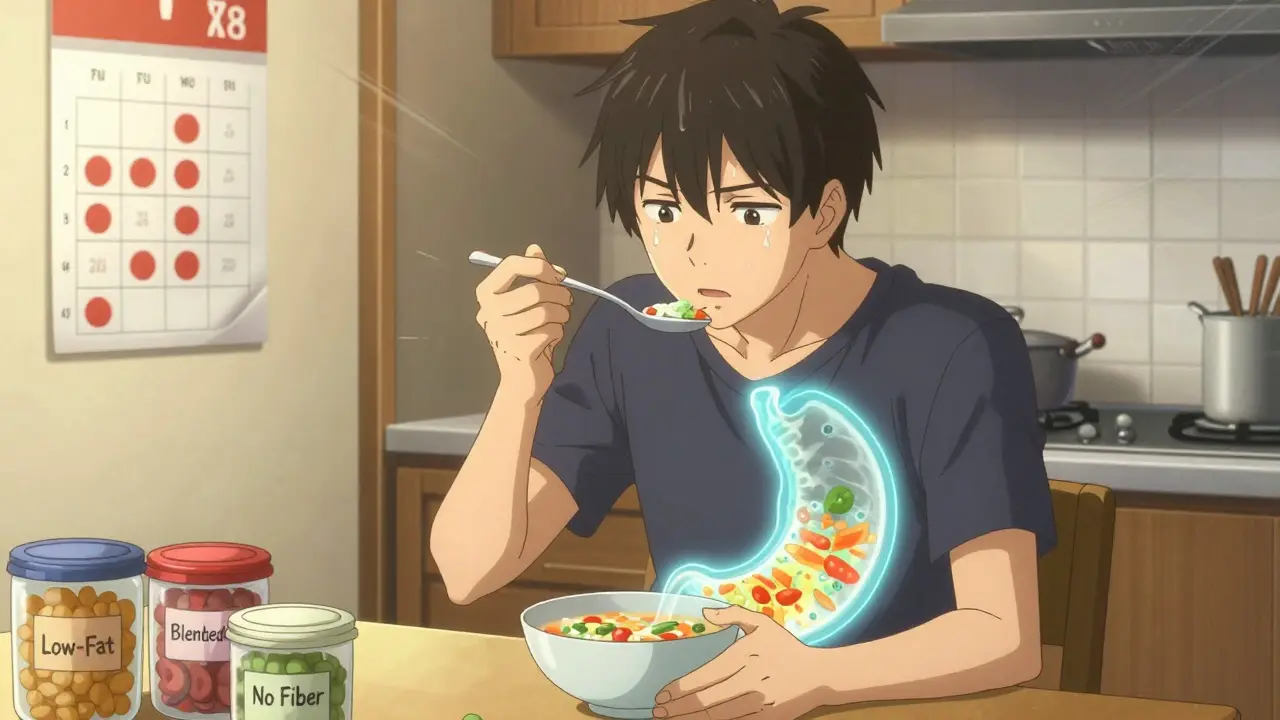
Gastroparesis isn’t just feeling full after a big meal. It’s when your stomach can’t move food into your small intestine like it should - even when there’s no blockage. People with this condition often feel nauseous after eating, vomit undigested food, or feel like they’ve eaten a full plate after just a few bites. For many, it’s not a one-time issue - it’s a daily struggle that changes how they eat, live, and even think about food.
What Really Happens in Gastroparesis?
Normally, your stomach relaxes to hold food, then contracts to grind it into a thin slurry before pushing it out. In gastroparesis, those contractions weaken or stop. The vagus nerve, which controls this process, gets damaged - often from diabetes, surgery, or unknown causes. Without proper nerve signals, food sits in the stomach for hours, sometimes days. This isn’t laziness. It’s a physical breakdown in how your digestive system works.
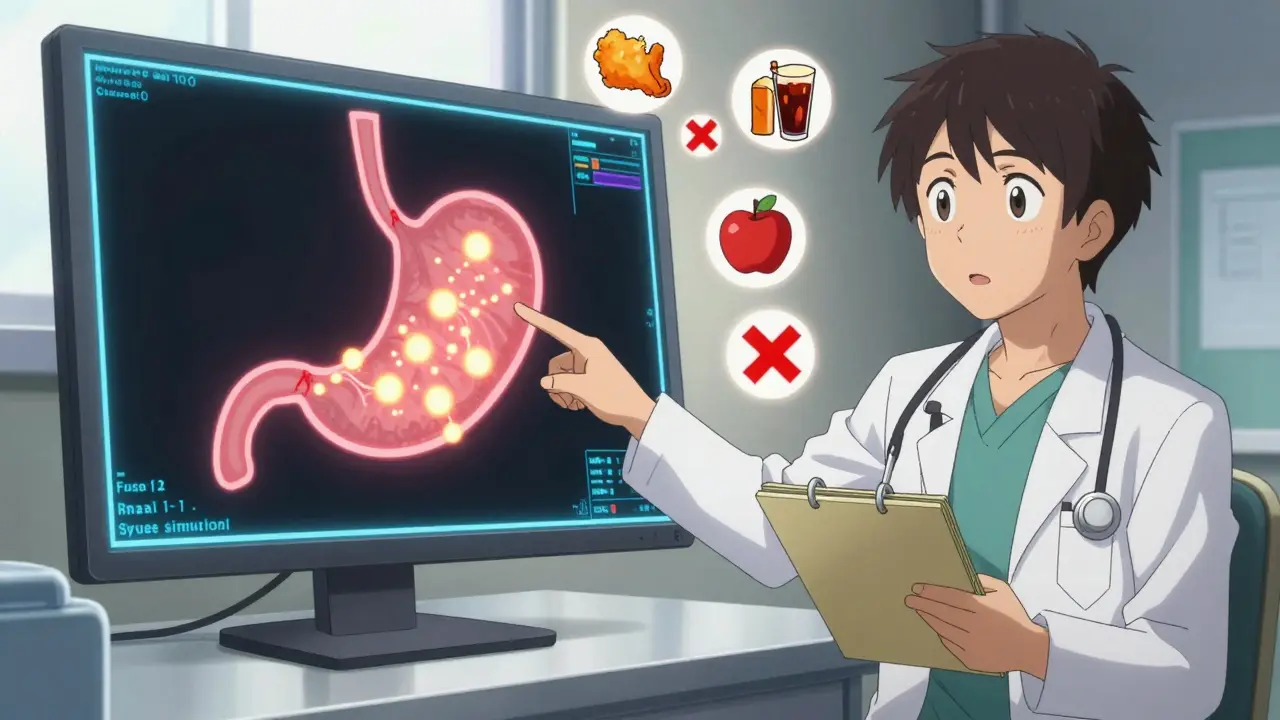
Doctors diagnose it when less than 40% of a meal leaves the stomach after two hours. That’s measured with a gastric emptying scan - a test where you eat food with a tiny bit of radioactive material, and cameras track how fast it moves. Many people wait years for this diagnosis because symptoms mimic other issues like acid reflux or IBS. But gastroparesis has a signature pattern: nausea and vomiting of undigested food hours after eating, not right away.
Who Gets Gastroparesis - And Why?
It’s not rare. About 4% of adults have it, but most don’t know it. Women are four times more likely to be diagnosed than men. The biggest risk factor? Diabetes. Up to half of people with type 1 diabetes and 30% of those with long-term type 2 diabetes develop gastroparesis. High blood sugar over time damages the vagus nerve. But not everyone with diabetes gets it, and not everyone with gastroparesis has diabetes.
One in three cases have no clear cause - called idiopathic gastroparesis. Another 13% follow stomach surgery, especially gastric bypass. Some connective tissue diseases like scleroderma can trigger it too. It’s not caused by eating too much fat or junk food - though those things make it worse.
What Symptoms Should You Watch For?
The top four symptoms show up in nearly every case:
- Nausea - happens in 9 out of 10 people
- Vomiting - often of food eaten hours earlier
- Early satiety - full after just a few bites
- Post-meal bloating - stomach feels swollen, tight, or distended
Other common signs: abdominal pain (65%), belching (45%), heartburn (35%), and weight loss. Some people lose more than 10% of their body weight. About 40% can’t hold down a full-time job because of unpredictable symptoms. Many avoid social meals because they fear vomiting or embarrassment.
Diet Is the First Line of Defense - Here’s How to Do It Right
Medications help, but diet changes are the foundation. Studies show 65% of people get better just by adjusting what and how they eat. You don’t need to starve yourself - you need to restructure meals.
Small portions. Aim for 5 to 6 meals a day. Each should be 1 to 1.5 cups - about the size of a baseball. Big meals overwhelm a weak stomach.
Low fat. Fat slows gastric emptying by 30 to 50%. Avoid fried foods, butter, cream, fatty meats, cheese, and full-fat dairy. Stick to lean proteins like chicken breast, turkey, fish, and tofu. Use cooking spray instead of oil.
Low fiber. Fiber is hard to digest. Raw vegetables, whole grains, nuts, seeds, and skins on fruits like apples or pears can turn into stubborn lumps. Peel, cook, and blend fruits and veggies. Applesauce? Fine. Apple slices? No. Cooked carrots? Yes. Raw carrots? No.
Blended or soft textures. If chewing isn’t enough, blend your food. Use a high-powered blender to make soups, smoothies, and purees. Particle size should be under 2mm - smaller than a grain of rice. This reduces the stomach’s workload. Many patients report 70% fewer symptoms when they switch to blended meals.
Separate liquids and solids. Drink fluids 30 minutes before or after meals, not with them. Mixing liquids and solids increases stomach volume by 40%, making bloating worse. Sip water slowly - 1 to 2 ounces every 15 minutes. Avoid gulping.
Avoid carbonation. Soda, sparkling water, and beer add gas to your stomach. That distension triggers nausea and pain. Stick to still water, herbal teas, or clear broths.
Don’t lie down after eating. Stay upright for at least two hours after a meal. Gravity helps move food along. Lying flat lets food pool in the stomach.
What Foods Work Best?
Here’s a simple list of safe options:
- White bread, plain crackers, refined pasta
- Well-cooked vegetables: carrots, zucchini, spinach (peeled and mashed)
- Soft fruits: bananas, melon, canned peaches or pears (in juice, not syrup)
- Lean meats: chicken, turkey, fish, ground beef (well-cooked, no gristle)
- Eggs, tofu, smooth peanut butter (no chunks)
- Low-fat dairy: cottage cheese, yogurt (without fruit chunks), kefir
- Clear broths, soups (blended), oatmeal (cooked soft)
Use a food diary. Write down what you eat and how you feel two hours later. Most people find 3 to 5 trigger foods - maybe it’s broccoli, almonds, or even mashed potatoes. Eliminate them one by one. People who track symptoms are 80% more likely to identify their personal triggers.
When Diet Isn’t Enough - What’s Next?
If you’re still vomiting or losing weight after 8 to 12 weeks of strict diet changes, talk to your doctor about other options.
Medications like metoclopramide can boost stomach contractions. But it’s risky after long-term use - it can cause involuntary movements called tardive dyskinesia. Domperidone is another option, though not FDA-approved in the U.S. and harder to get.
Gastric electrical stimulation (GES) is a device implanted under the skin that sends pulses to the stomach. It doesn’t cure gastroparesis, but 70% of patients report fewer vomiting episodes. It’s usually for people who don’t respond to meds.
Per-oral pyloromyotomy (POP) is a newer, minimally invasive procedure where a small cut is made in the muscle at the bottom of the stomach. It helps food pass through more easily. Success rates are 60 to 70% in clinical trials.
Feeding tubes or IV nutrition (TPN) are last-resort options. About 1 in 5 severe cases need them. TPN carries risks like infection and liver damage, so it’s only used when the body can’t absorb nutrients anymore.
Complications You Can’t Ignore
Left untreated, gastroparesis can lead to serious problems:
- Bezoars - hard balls of undigested food that can block the stomach. About 6% of patients get them; 2% need surgery to remove them.
- Dehydration and electrolyte loss - from constant vomiting. Low potassium can cause heart rhythm problems.
- Malnutrition - 30 to 40% of chronic cases lead to weight loss and nutrient deficiencies.
- Blood sugar swings - if you have diabetes, unpredictable stomach emptying makes glucose control nearly impossible. Food that sits for hours then suddenly dumps can spike your sugar.
People with gastroparesis are hospitalized about 3.5 times a year on average. Each stay lasts over 5 days. That’s why early, structured care matters.

What’s New in Gastroparesis Research?
The field is moving fast. In 2022, the FDA approved relamorelin, a drug that mimics a natural hormone to speed up stomach emptying. Early trials showed a 35% improvement. Other studies are testing probiotics - certain strains reduced symptoms by 30% in small groups.
Artificial intelligence is being used to analyze gastric scans more accurately than humans. One study showed 25% better diagnostic accuracy. Researchers are also exploring stem cell therapy to repair damaged nerves - early results show 20% improvement in motility after a year.
The biggest shift? Personalized treatment. Doctors now classify gastroparesis into three subtypes based on symptoms - nausea-dominant, pain-dominant, or emptying-dominant. That helps match the right treatment to the right person.
How to Get Support
Working with a registered dietitian who specializes in gastroparesis improves outcomes by 40%. They’ll help you build meal plans, check nutrient levels, and adjust as you go. Don’t try to do this alone.
Support groups matter too. Over half of patients report anxiety around eating. Many feel isolated because others don’t understand why they can’t eat a normal meal. Online communities and local meetups can help you feel less alone.
There’s no cure - yet. But with the right diet, support, and medical care, most people regain control. You don’t have to give up food. You just have to change how you eat.
Can gastroparesis go away on its own?
In rare cases, especially after surgery or infection, gastroparesis can improve over time. But for most people - especially those with diabetes - it’s a chronic condition. Symptoms can be managed, but the underlying nerve or muscle damage doesn’t reverse on its own. Early intervention improves long-term outcomes.
Is a liquid diet the only option?
No. While liquids are easier to digest, many people thrive on soft, blended, or pureed solid foods. The goal is not to live on shakes forever, but to reduce particle size and fat/fiber so the stomach doesn’t struggle. Most patients transition from liquids to soft solids over weeks or months, depending on symptom control.
Can I drink alcohol with gastroparesis?
Alcohol slows stomach emptying and can worsen nausea and dehydration. It also interferes with blood sugar control if you have diabetes. Most experts recommend avoiding it entirely. If you do drink, limit it to a tiny amount of clear liquor with no mixers - and only after consulting your doctor.
Why does my blood sugar spike after eating if food isn’t leaving my stomach?
Food sits in your stomach for hours, then suddenly empties all at once. This causes a delayed but sharp spike in blood sugar - often hours after eating. That’s why regular insulin timing doesn’t work. Many people with gastroparesis and diabetes need to use an insulin pump and adjust doses based on when food actually leaves the stomach, not when they eat it.
Are there any supplements that help?
Vitamin B12, iron, calcium, and vitamin D are commonly low due to poor absorption. A multivitamin without fiber or fillers is usually recommended. Probiotics like Lactobacillus and Bifidobacterium strains have shown promise in reducing bloating and nausea in early studies. Always check with your doctor before starting any supplement.
Next Steps if You Suspect Gastroparesis
- Keep a daily food and symptom log for two weeks. Note timing, portion size, and how you feel after eating.
- See your doctor. Ask for a gastric emptying study - don’t accept a diagnosis of IBS or reflux without it.
- Request a referral to a dietitian who specializes in motility disorders.
- Start with small, low-fat, low-fiber meals. Blend if needed. Separate liquids.
- If symptoms persist after 8 weeks, ask about medications or advanced options like GES or POP.
Living with gastroparesis isn’t easy. But with the right plan, you can eat again - safely, predictably, and without fear.