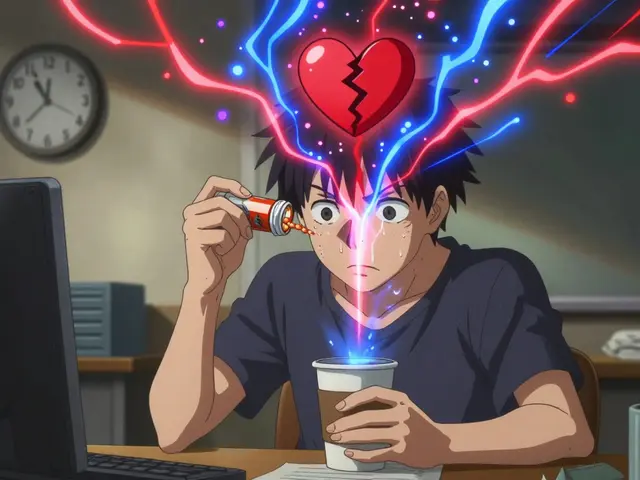
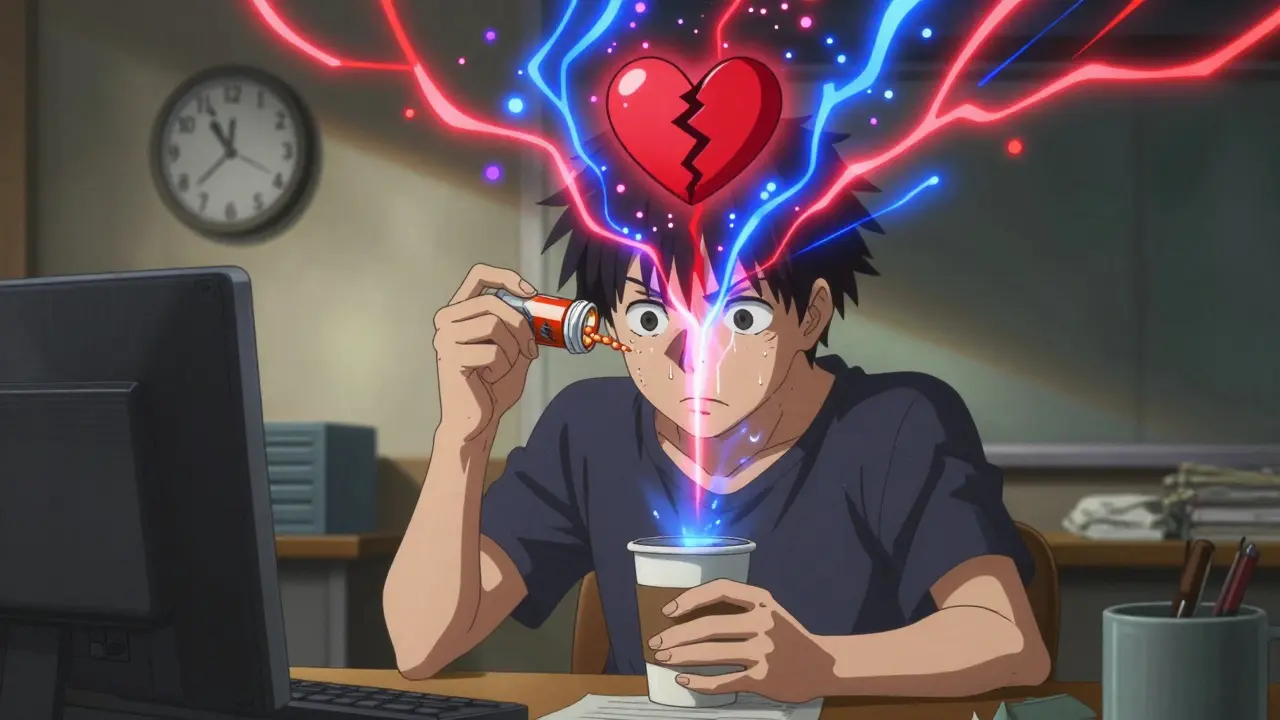
When you have ADHD, finding the right balance for focus can feel like walking a tightrope. Many people reach for coffee to help them stay on track-especially if they’re already taking medication like Adderall. But what happens when you mix caffeine with prescription stimulants? It’s not just about feeling more awake. This combo can either boost your focus or send your heart racing, your anxiety through the roof, or leave you crashing harder than ever. The truth is, this isn’t a simple "more is better" situation. It’s a delicate, sometimes dangerous, interaction that needs real attention.
How Caffeine and ADHD Medications Work Together
Caffeine and ADHD medications like Adderall both target the same part of your brain: the dopamine system. ADHD is linked to low dopamine activity, which makes it hard to focus, stay organized, or start tasks. Prescription stimulants fix this by blocking the reuptake of dopamine and norepinephrine, keeping more of these chemicals active in your brain. Caffeine does something similar-it blocks adenosine receptors, which indirectly boosts dopamine and makes you feel alert. So when you take both, you’re stacking two different paths to the same outcome.
But here’s the catch: Adderall is way stronger. Studies show it’s 3 to 5 times more effective at improving ADHD symptoms than caffeine alone. Caffeine might help a little with focus, but it doesn’t touch the core issues like impulsivity or emotional regulation the way medication does. Still, for some people, that little extra push from coffee makes a noticeable difference-especially if they’re on a low dose of medication or still finding the right fit.
The Hidden Risks: When Synergy Turns Dangerous
Both caffeine and Adderall are central nervous system stimulants. When you combine them, you’re not just adding effects-you’re multiplying them. That’s where things get risky.
Your heart is the first place it shows up. A 2022 study from the VA Hospital found that people taking both substances had a 37% higher chance of developing a rapid heartbeat (tachycardia) and a 29% higher chance of high blood pressure. That’s not a small uptick. For someone with a pre-existing heart condition-23% of adults with ADHD do-the risk jumps even higher. The American Heart Association warns that anyone with cardiovascular issues should keep daily caffeine under 200 mg. That’s about two small cups of coffee.
Then there’s anxiety. A 2023 analysis of Reddit’s r/ADHD community showed that 59% of users who combined caffeine with Adderall reported increased anxiety. One user wrote: "I feel amazing for the first two hours, then I’m shaking and panicking. Cutting to half-caf saved me." That’s not an outlier. In fact, a 2022 survey by NAMI found that 33% of adults using both substances needed medical help because of side effects-compared to just 8% who used medication alone.
And don’t forget the crash. Caffeine wears off in 3 to 7 hours. Adderall lasts 10 to 13 hours. When caffeine drops, your brain is still flooded with stimulant chemicals. That mismatch can trigger a brutal crash: fatigue, irritability, brain fog, and even rebound ADHD symptoms. It’s like running on a treadmill and suddenly stopping-your body isn’t ready.
What the Experts Say
Dr. Charles Parker, author of 20 Instant Lessons for ADHD, calls the combination a "double-edged sword." He says it can enhance focus but also amplify side effects, which is why he insists on careful titration. Dr. David Goodman from Johns Hopkins warns that combining two stimulants without medical supervision is asking for trouble. The FDA hasn’t approved caffeine as an ADHD treatment, and the American Academy of Pediatrics explicitly advises against it for kids and teens.
But not all research is negative. A 2020 study by Kahathuduwa et al. found that when caffeine was paired with L-theanine (a calming amino acid found in tea), it actually improved cognitive performance in kids with ADHD. The combo reduced mind-wandering and improved response control. That’s promising-but it’s not the same as just drinking coffee with your pill. L-theanine isn’t something you get from a Starbucks latte. It’s a supplement, and its effects are dose-specific.

Real-World Numbers You Can’t Ignore
Let’s break down what this looks like in practice:
- Caffeine limits: The FDA says 400 mg per day is safe for healthy adults. That’s about four 8-ounce cups of coffee. But if you’re on Adderall? You might need to cut that in half.
- Adderall half-life: It takes 65 hours (over 2 days) for your body to fully clear one dose. Caffeine clears in 5 hours on average. So even if you take your pill in the morning and coffee at noon, they’re still overlapping.
- Hidden caffeine: Energy drinks, chocolate, tea, and even some pain relievers contain caffeine. One energy shot can pack 200 mg-half your daily limit-before you even touch coffee.
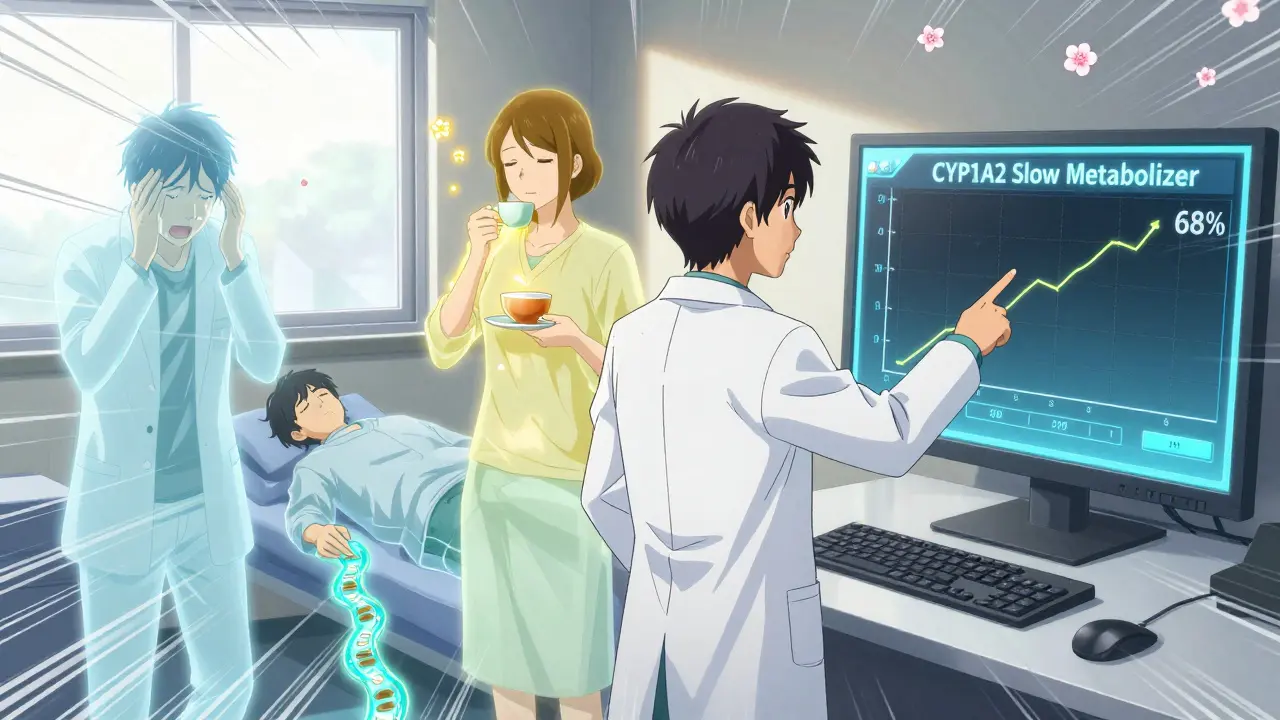
- Slow metabolizers: About 40% of people have a genetic variation (CYP1A2) that makes them process caffeine slowly. For them, even one cup can linger for hours, increasing risk.
Granite Mountain Behavioral Health Center tracked 1,200 patients and found that spacing caffeine and medication by 4 to 5 hours cut side effects by 68%. That’s a huge drop. It’s not about quitting coffee-it’s about timing it right.
How to Stay Safe If You’re Combining Them
If you’re already using caffeine with your ADHD medication, don’t panic. But do take action. Here’s how to do it safely:
- Start low. Try no more than 100 mg of caffeine (one small coffee) on days you take your medication. Watch for jitteriness, heart palpitations, or anxiety.
- Time it right. Wait at least 4 to 5 hours after taking your medication before drinking coffee. If you take Adderall at 8 a.m., wait until 1 p.m. or later for caffeine.
- Track everything. Use a notebook or app to log: time of medication, amount of caffeine, sleep quality, heart rate (if you have a wearable), and mood. Look for patterns over 2 to 4 weeks.
- Watch for hidden sources. Check labels on energy drinks, protein bars, gum, and even decaf coffee (yes, it still has caffeine).
- Listen to your body. If you feel your heart racing, get shaky, or feel panicked, stop caffeine immediately. These aren’t "just side effects"-they’re warning signs.
- Talk to your doctor. Bring your log. Ask about your metabolism. Some clinics now offer CYP1A2 genetic testing to see if you’re a slow metabolizer. If you are, caffeine may be riskier for you than for others.
The Bigger Picture: Why This Matters Now
The ADHD medication market is growing fast-projected to hit $24.6 billion by 2028. At the same time, global caffeine consumption hits 10 million metric tons a year. More people than ever are mixing the two. And the data shows it’s not working out well for everyone.
The FDA’s 2024 draft guidance points to a 27% rise in emergency room visits linked to stimulant-caffeine combos between 2019 and 2023. That’s not a coincidence. It’s a trend. And it’s not just about teens or college students. Adults with ADHD are doing this too-often without realizing how dangerous it can be.
The future may hold better solutions. Researchers are testing optimal L-theanine-to-caffeine ratios (3:1 seems promising), and personalized medicine based on genetics is on the horizon. But right now, the safest path is simple: don’t assume caffeine is harmless just because it’s natural. It’s a powerful drug. When combined with prescription stimulants, it’s not a hack-it’s a gamble.
When to Stop and Seek Help
If you experience any of these, stop caffeine immediately and contact your doctor:
- Heart rate over 120 bpm at rest
- Chest pain or tightness
- Severe anxiety or panic attacks
- Insomnia that lasts more than 2 days
- Uncontrollable shaking or tremors
These aren’t "normal" side effects. They’re red flags. And they’re more common than most people realize.
Can I drink coffee while taking Adderall?
Yes, but with caution. Many people do. However, combining caffeine with Adderall increases the risk of anxiety, rapid heartbeat, and high blood pressure. It’s safest to limit caffeine to 100 mg or less (one small coffee) and wait at least 4 to 5 hours after taking your medication. Always monitor how your body reacts and talk to your doctor before making changes.
Does caffeine make ADHD medication work better?
Sometimes, but not reliably. Caffeine can give a slight boost in alertness, but it doesn’t improve core ADHD symptoms like impulsivity or emotional regulation the way prescription stimulants do. In fact, studies show caffeine alone is 60-70% less effective than medication. For some, the combo feels better-but for many, it just adds side effects without real benefit.
Is decaf coffee safe with ADHD meds?
Decaf coffee still contains small amounts of caffeine-about 5-15 mg per cup. That’s usually low enough to be safe, especially if you’re not drinking multiple cups. But if you’re sensitive to stimulants or have heart issues, even decaf can add up. It’s safer to avoid it entirely if you’re already on a high dose of medication or have had side effects before.
What’s the best time to drink coffee if I take ADHD medication?
Wait at least 4 to 5 hours after taking your medication. Adderall peaks in 2-3 hours and stays active for 10-13 hours. Caffeine peaks in about 1 hour and lasts 3-7 hours. Overlapping them increases side effects. Spacing them out reduces risks while still letting you benefit from both.
Are energy drinks dangerous with ADHD meds?
Extremely dangerous. A single energy drink can contain 150-300 mg of caffeine-far above the recommended limit for someone on stimulants. Many also include other stimulants like guarana or taurine, which can worsen side effects. Avoid energy drinks completely if you’re on ADHD medication.
Can I replace my ADHD medication with caffeine?
No. Caffeine is not an approved or effective replacement for ADHD medication. While it may improve alertness, it doesn’t address the core neurological differences in ADHD. Studies show it’s 60-70% less effective than prescription stimulants. Relying on caffeine alone can lead to worsening symptoms and long-term problems with focus and productivity.