

Understanding Modern Hearing Aids
Over 1.5 billion people globally experience some degree of hearing loss, with hearing aids serving as the primary assistive technology for 34 million individuals who could benefit from them. Modern hearing aids have evolved far beyond simple amplifiers. Miller Reese Hutchison's carbon hearing aid in 1898 was just the start. Today's devices use AI-powered amplification, wireless connectivity, and advanced noise reduction to deliver clear sound in any environment.
Hearing aids are electronic devices designed to amplify sound for individuals with hearing loss. They evolved from simple amplifiers to sophisticated AI-driven systems. The first fully digital hearing aid, Widex's Senso, launched in 1995. Now, in 2026, devices like Starkey Edge AI process 290 million data points per second to optimize sound quality in real time.
Types of Hearing Aids: Styles and Specifications
Modern hearing aids come in several styles, each with unique benefits. Behind-the-Ear (BTE) models like the Phonak Naída Lumity L-UP offer 1-3 weeks of battery life with IP68 water resistance. They're designed for severe to profound hearing loss. Receiver-in-Canal (RIC) devices such as the Jabra Enhance Select 700 provide 24 hours of battery life with IP68 rating and LE Audio support. In-the-Ear (ITE) models including Signia Active Pro IX deliver 34 hours of battery life with IP68 protection and Bluetooth 5.2 connectivity. Completely-in-Canal (CIC) and Invisible-in-Canal (IIC) styles like Eargo's offerings prioritize cosmetic appeal but typically offer 16-20 hours of battery life with limited features due to size constraints.
| Type | Battery Life | Water Resistance | Key Features | Price Range |
|---|---|---|---|---|
| Behind-the-Ear (BTE) | 1-3 weeks | IP68 | Designed for severe to profound hearing loss | $3,500-$7,500+ |
| Receiver-in-Canal (RIC) | 24 hours | IP68 | LE Audio support, Bluetooth 5.2 | $1,000-$3,500 |
| In-the-Ear (ITE) | 34 hours | IP68 | Bluetooth 5.2 connectivity | $2,500-$5,000 |
| Completely-in-Canal (CIC) | 16-20 hours | Varies | Cosmetic appeal, limited features | $1,000-$2,500 |
| Invisible-in-Canal (IIC) | 16-20 hours | Varies | Most discreet option | $1,000-$2,500 |
The Fitting Process: OTC vs. Professional
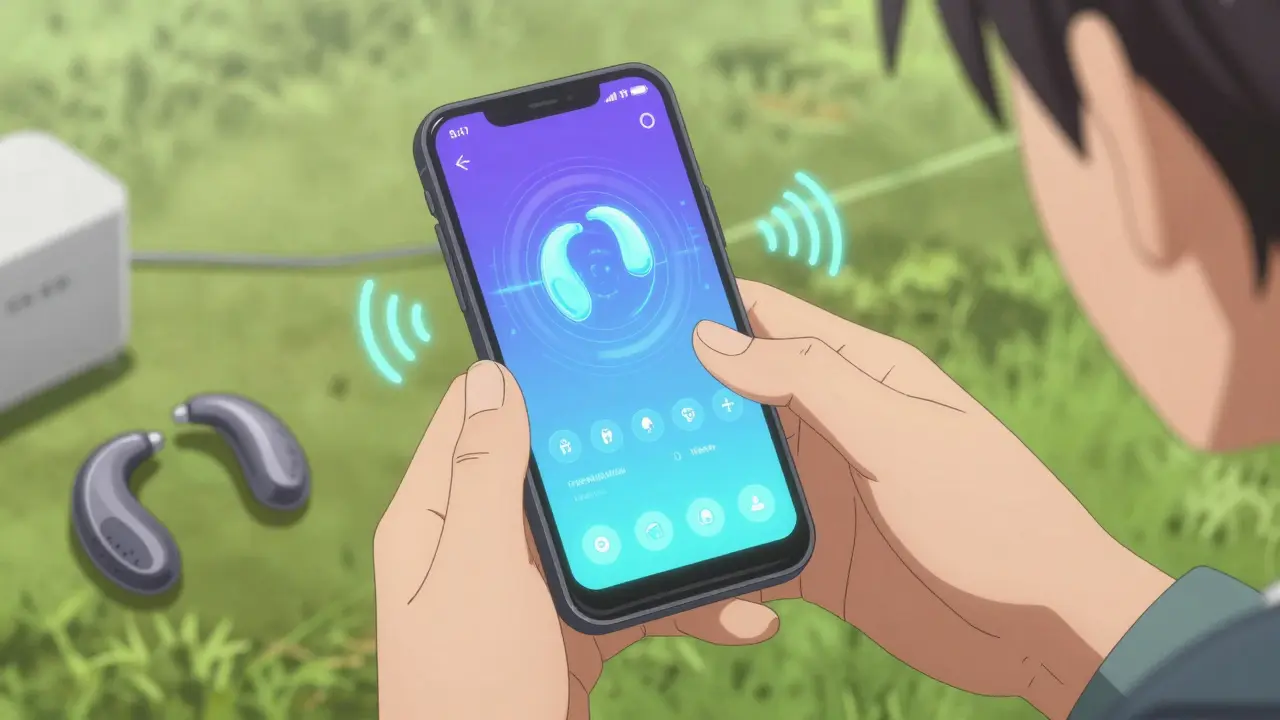
OTC hearing aids like Jabra Enhance Select 700 allow users to self-fit through a mobile app. HearingTracker's June 2025 tests show 85% of users complete setup in under 2.5 hours. This convenience is great for mild-to-moderate hearing loss. However, Dr. Mark Ross warns that 68% of OTC users in NIH trials experience suboptimal amplification due to self-fitting errors.
Prescription models require 3-4 appointments over 2-3 weeks. Adirondack Audiology notes this includes diagnostic testing, custom fitting, and follow-up adjustments. While more time-consuming, professional fitting ensures precise amplification tailored to your hearing profile.
Amplification Technology: What Powers Modern Devices
Dual-chip architecture is a game-changer. Dr. Brian Taylor from HearingTracker explains, "Phonak Audéo Infinio's dual-chip design reduces sound delay to just 0.4 milliseconds compared to industry averages of 5-7 milliseconds." This near-zero delay makes conversations feel natural, especially in noisy settings.
Modern hearing aids also feature 24+ processing channels for precise sound customization. Premium models like Starkey Edge AI analyze 290 million data points per second to adapt to changing environments. LE Audio support, now standard in devices like Widex MOMENT SmartRIC, improves music streaming quality and enables group listening via Auracast broadcasting.
Real-World Performance: User Feedback and Expert Insights
User reviews reveal clear patterns. Jabra Enhance Select 700 has a 4.7/5 rating from 1,247 verified purchases, with 89% praising its easy app-based fitting. Reddit's r/Hearing community notes 73% of LE Audio users report significant improvements in music streaming quality compared to older Bluetooth models.
However, issues persist. Eargo's battery life gets 62% negative reviews on Trustpilot for not meeting the 20-hour claim. Phonak Naída Lumity L-UP users often struggle with the physical size for small ears, though it's rated 4.6/5 for severe hearing loss. Common tips include using silica gel packets to extend battery life in humid conditions and enabling Auracast for group listening in restaurants.

Common Challenges and Solutions
Earwax blockage affects 42% of users monthly. The American Speech-Language-Hearing Association recommends weekly cleaning with manufacturer tools, which reduces malfunctions by 67%. Battery life is another frequent concern. While manufacturers claim 16-20 hours for smaller models, real-world use often falls short. Storing devices with silica gel packets helps prevent moisture-related issues.
Advanced features like environment-specific programs take 2-4 weeks to master. Jabra Enhance offers 24/7 chat support resolving 92% of issues in 15 minutes. Premium brands like Phonak provide audiologist support with 48-hour response times for non-urgent matters.
Future Trends in Hearing Aid Technology
ReSound's 2025 Vivia platform introduced MAV technology that reduces occlusion effect by 45%. Looking ahead, Starkey's 2026 roadmap includes blood oxygen monitoring and fall detection capabilities. Industry analysts predict 41% of buyers will choose telehealth options by 2027, up from 22% in 2024.
However, cybersecurity risks remain. University of Michigan research found 12% of Bluetooth-enabled hearing aids vulnerable to signal interception. Manufacturers are working on encryption upgrades to address this. The WHO projects 2.5 billion people will have hearing loss by 2050, ensuring continued innovation in this space.
What are the main types of hearing aids?
The main types are Behind-the-Ear (BTE), Receiver-in-Canal (RIC), In-the-Ear (ITE), Completely-in-Canal (CIC), and Invisible-in-Canal (IIC). BTE models are best for severe hearing loss, RIC offers a balance of features and comfort, ITE fits inside the ear, and CIC/IIC are the most discreet but have limited battery life and features.
How does OTC hearing aid fitting differ from prescription?
OTC hearing aids let you self-fit via a mobile app in under 2.5 hours, while prescription models require 3-4 appointments over 2-3 weeks. Professional fitting includes diagnostic testing and custom adjustments, ensuring precise amplification. However, 68% of OTC users in NIH trials experience suboptimal results due to self-fitting errors.
What is LE Audio and why is it important?
LE Audio is a Bluetooth standard that improves audio quality and efficiency for hearing aids. It supports features like Auracast broadcasting for group listening in restaurants and better music streaming. Devices like Widex MOMENT SmartRIC and Jabra Enhance Select 700 include LE Audio, which 73% of users report significantly enhances music experience compared to older Bluetooth models.
How long do hearing aid batteries last?
Battery life varies by type. BTE models typically last 1-3 weeks, RIC and ITE devices offer 24-34 hours, while CIC/IIC styles provide 16-20 hours. Real-world use often falls short of manufacturer claims, especially for smaller models. Using silica gel packets helps extend battery life in humid conditions by preventing moisture damage.
What are common challenges with hearing aids and how to solve them?
Earwax blockage affects 42% of users monthly. Weekly cleaning with manufacturer tools reduces malfunctions by 67%. Battery life issues can be mitigated by storing devices with silica gel packets. For advanced features like environment-specific programs, it takes 2-4 weeks to become proficient. Support varies: Jabra offers 24/7 chat support resolving 92% of issues in 15 minutes, while premium brands provide audiologist support with 48-hour response times.