
Levodopa Protein Timing Calculator
How Protein Affects Your Medication
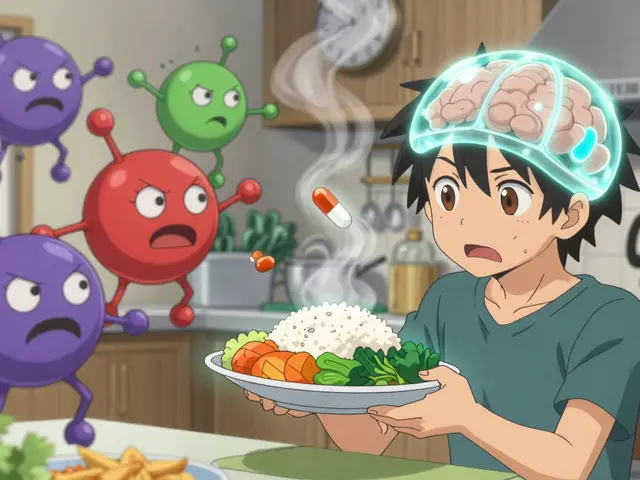
Protein competes with levodopa for absorption through the LAT1 transporter. More than 10g of protein in one meal can reduce levodopa absorption by 25-40%. The Protein Redistribution Diet (PRD) helps by keeping daytime protein low (7-10g) and concentrating protein at dinner.
Your Daily Protein Distribution
Results & Recommendations
Enter your protein amounts to see your distribution score
When you take levodopa for Parkinson’s disease, it’s not just about the pill - it’s also about what’s on your plate. Many people don’t realize that a steak, a bowl of beans, or even a glass of milk can quietly sabotage their medication. This isn’t guesswork. It’s science. And it affects up to half of everyone on long-term levodopa therapy.
Why Protein Ruins Your Levodopa
Levodopa doesn’t just float through your body and slip into your brain. It has to fight its way in. Both levodopa and the amino acids from protein - like leucine, phenylalanine, and tyrosine - use the same doorway: the LAT1 transporter. This gatekeeper sits in your gut and your blood-brain barrier. When you eat a high-protein meal, those amino acids flood the system. Suddenly, levodopa gets pushed aside. It can’t get absorbed as well. It takes longer to reach your brain. And when it does, there’s less of it.Studies show that a meal with more than 10 grams of protein can cut levodopa absorption by 25-40%. A 38-gram protein lunch - think chicken, cheese, and a side of lentils - can delay levodopa’s peak effect by over an hour. That delay? It turns into an ‘off’ period. Your hands shake. Your legs feel heavy. Walking becomes a chore. And you didn’t miss a dose. You just ate lunch.
Who’s Really Affected?
Not everyone with Parkinson’s has this problem. About 40-50% of people on levodopa for 8+ years start noticing it. That’s usually around the time motor fluctuations begin - the unpredictable swings between moving well (‘on’) and getting stuck (‘off’). The longer you’ve been on levodopa, the more likely protein is messing with your control. People in Hoehn & Yahr stages 3 or 4 - those who are walking with assistance or have balance issues - are the most vulnerable.It’s not about how much protein you eat total. It’s about when. A high-protein breakfast can wreck your morning mobility. A protein-heavy dinner? Might not hurt your daytime movement, but could affect sleep or overnight stiffness.
The Three Dietary Fixes
There are three main ways to fix this - and one works better than the rest.1. Low Protein Diet (LPD) - Cut total protein to 40-50 grams a day. For a 65kg person, that’s about 0.6-0.8g per kg. Sounds simple, right? But cutting protein that low means giving up eggs, meat, fish, dairy, beans, and even some bread. Many people lose weight. Some lose muscle. A 2022 survey found 31% of strict LPD users dropped over 5% of their body weight in six months. Not worth it if you’re already thin.
2. Protein Redistribution Diet (PRD) - This is the gold standard. Instead of cutting protein, you move it. You eat only 7-10 grams of protein during the day - breakfast and lunch - and save 80% of your daily protein for dinner. So your morning might be oatmeal with fruit and tea. Lunch? Rice, veggies, and a small portion of tofu. Dinner? Chicken breast, potatoes, and a side of cheese. Studies show PRD reduces ‘off’ time by nearly two hours a day and adds 30 minutes of reliable ‘on’ time. One Reddit user reported gaining 2.5 extra hours of mobility daily after switching.
3. Low-Protein Products (LPP) - These are specialty foods: low-protein bread, pasta, and flour. They help people stick to PRD by giving them more variety. But here’s the catch: only 22% of users say they feel more satisfied with them. They’re expensive. Hard to find. And they don’t fix the core problem - they just make the diet less boring.

Timing Matters - But It’s Not Perfect
Some doctors suggest taking levodopa 30-60 minutes before meals. It sounds smart. And for some people, it works. But it’s inconsistent. If your stomach moves slowly - common in advanced Parkinson’s - the pill might sit there while your food arrives. Or if you’re already late on your meds, waiting 45 minutes before eating means skipping breakfast entirely. One study showed success rates between 30% and 65%, depending on how advanced the disease was. It’s not a fix. It’s a band-aid.What Works Best? The PRD Edge
PRD beats LPD every time. In head-to-head trials, PRD reduced motor fluctuations 35% more than low-protein diets. Why? Because you’re not starving your body. You’re just timing it right. Your brain gets levodopa when it needs it - during the day. And you still get protein at night, when it won’t interfere with movement.And the best part? It works better the longer you’ve had Parkinson’s. If you’ve been on levodopa for over 8 years, PRD’s effectiveness jumps. That’s not a coincidence. It’s the disease progression catching up with the drug’s limitations.
Why People Quit
Here’s the ugly truth: most people stop.A 2023 review found 68% of patients abandon PRD within a year. Why? Social life. Family dinners. Holidays. The shame of saying no to spaghetti or grilled salmon. One user wrote on a Parkinson’s forum: ‘I miss eating with my grandchildren. I don’t want to be the weird uncle who eats cardboard noodles.’
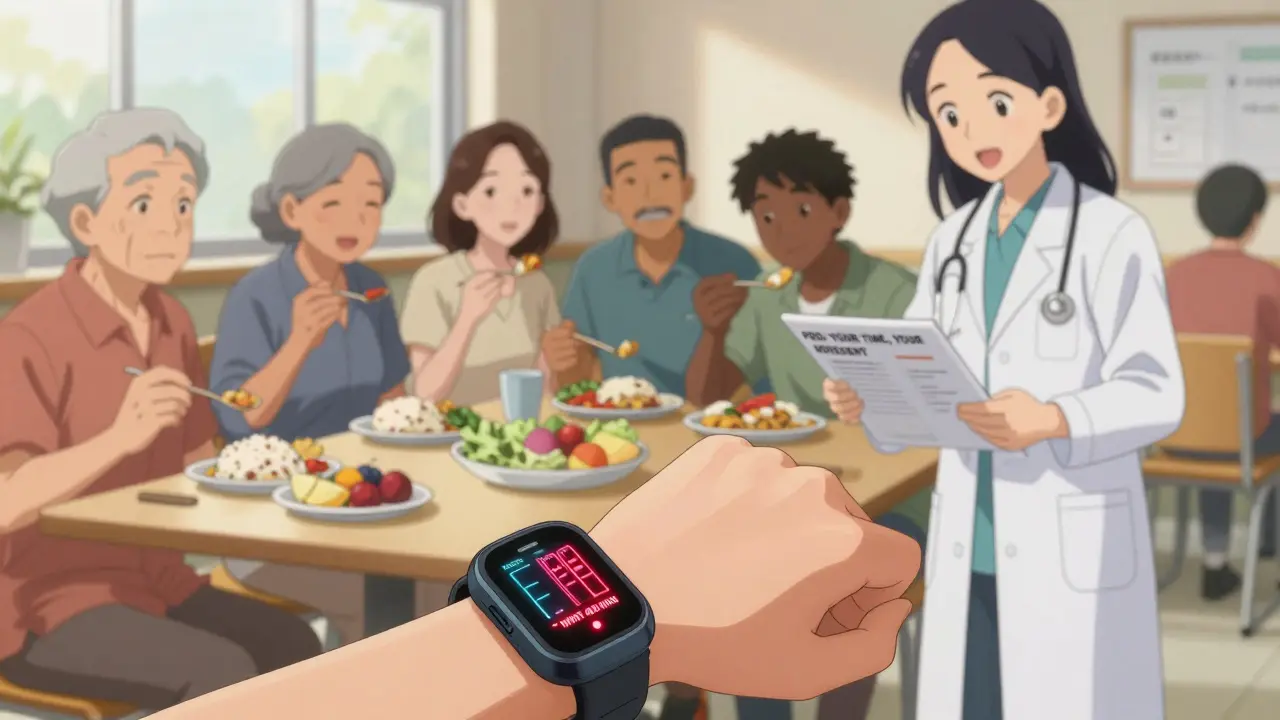
Another big reason? Lack of support. Trying to do this alone? Almost always fails. People who work with a dietitian for 3-6 weeks are 78% more likely to succeed. Customized meal plans - ones that include your favorite cultural dishes - boost adherence by 40%. A Chinese patient might swap tofu for low-protein rice cakes. A Mexican patient might use special low-protein tortillas. That’s the difference between quitting and sticking with it.
What You Shouldn’t Do
Don’t cut protein if you’re underweight (BMI under 20). Don’t go low-protein without checking your vitamin B12 and iron levels. About 22% of long-term PRD users develop deficiencies. Don’t assume your doctor will bring this up. Only 87% of movement disorder specialists routinely discuss protein interactions - meaning 13% might not know.And don’t blame yourself if you slip up. This isn’t about willpower. It’s about biology. The amino acids don’t care if you’re trying your best. They’re just doing their job - and blocking your medicine.
What to Do Instead
Start with a food diary. Track your meals and your ‘on/off’ times for two weeks. Look for patterns. Does your ‘off’ period always hit after lunch? That’s your clue.Try moving protein to dinner. For one week, eat only low-protein meals during the day: fruits, rice, pasta, vegetables, olive oil, and a little cheese. Have your protein at night. See if your mornings feel better.
Use a free app like MyFitnessPal. It tracks protein per meal. Set a daily goal of 50g, then shift it all to dinner. You’ll see how quickly it adds up.
Ask for help. Request a referral to a dietitian who knows Parkinson’s. Not just any dietitian. One who’s worked with neuro patients. They’ll give you real meals, not just rules.
And if you’re still struggling? Talk to your neurologist. Maybe your levodopa dose needs adjusting. Or maybe you’re a candidate for a new formulation - like extended-release or a gut-absorbing version - that’s less affected by food.
The Future Is Personal
Research is moving beyond ‘one diet fits all.’ New trials are testing ‘protein pacing’ - giving tiny amounts of protein every few hours to keep amino acid levels steady. Early results show 68% of participants had better mobility and stuck with it longer than on PRD.Another idea? Wearable sensors that track amino acids in real time, like glucose monitors for blood sugar. Imagine a device that tells you, ‘Your amino acids are high right now - wait 40 minutes before taking your pill.’ That’s coming.
For now, the best advice is simple: protein isn’t the enemy. Timing is. You don’t have to give up meat. You just have to give it the right time of day.
Can I still eat meat if I take levodopa?
Yes - but not at the wrong time. Eat meat, fish, eggs, or beans at dinner, not breakfast or lunch. This lets levodopa work during the day when you need it most. A 3-ounce serving of chicken at night won’t interfere with your daytime movement.
How much protein is too much for levodopa?
More than 10 grams of protein in one meal can start to interfere. A 38-gram protein lunch - like a grilled chicken sandwich with cheese - can reduce levodopa absorption by up to 40%. For safety, aim for under 7 grams per daytime meal.
Does protein affect levodopa absorption in the gut or the brain?
Both. Protein competes with levodopa in the intestines, reducing how much gets into your blood. But the bigger issue is at the blood-brain barrier - where levodopa needs to cross into your brain. Even if some levodopa gets into your bloodstream, high amino acid levels block it from entering the brain. That’s why protein restriction helps even when blood levels look normal.
Should I take levodopa on an empty stomach?
It helps - but only if you can manage it. Taking levodopa 30-60 minutes before eating improves absorption. But if your stomach empties slowly (common in Parkinson’s), waiting might not help. Try it for a few days and track your symptoms. If your ‘on’ time improves, keep doing it. If not, focus on protein timing instead.
Can a low-protein diet cause weight loss?
Yes - and that’s dangerous. People on strict low-protein diets often lose muscle and weight. About 31% lose over 5% of their body weight in six months. If you’re already thin (BMI under 20), avoid protein restriction. Instead, use protein redistribution and focus on calorie-dense, low-protein foods like oils, fruits, and rice.
How long does it take to see results from a protein redistribution diet?
Most people notice improvements in 1-2 weeks. But full benefits - like fewer ‘off’ periods and more stable movement - usually show up after 3-4 weeks. Keep a symptom diary to track changes. It’s the best way to know if it’s working for you.
Do I need to buy special low-protein foods?
No - but they can help. You can follow PRD with regular groceries: rice, pasta, vegetables, fruit, and oils for daytime meals. Low-protein bread or pasta makes it easier and more satisfying, but they’re expensive and hard to find. Only use them if you’re struggling to stick with the plan.
Is this problem the same for all Parkinson’s medications?
No. This only happens with levodopa. Other Parkinson’s drugs - like dopamine agonists (pramipexole, ropinirole), MAO-B inhibitors (selegiline), or COMT inhibitors (entacapone) - aren’t affected by dietary protein. If you’re on multiple meds, only levodopa needs this kind of dietary management.
What if I can’t stick to the diet?
You’re not alone. Most people don’t stick with it long-term. That doesn’t mean you failed. Talk to your doctor. Maybe your levodopa dose can be adjusted. Or maybe you’re a candidate for a newer formulation like Duodopa or a gut-absorbing version. There are other options - you just need to ask.
Can I still enjoy social meals?
Yes - but plan ahead. If you’re going to a dinner party, eat a low-protein lunch. Take your levodopa 45 minutes before you leave. At the meal, eat mostly carbs and veggies, skip the meat and cheese, and enjoy the company. You don’t have to eat nothing - just avoid the protein. Most people won’t even notice. And you’ll still get your ‘on’ time.