
Every year, Americans spend over $650 billion on prescription drugs. That’s more than any other country in the world. But here’s the surprising part: generics fill 90% of all prescriptions, yet they make up only 12% of total drug spending. Meanwhile, brand-name drugs-just 10% of prescriptions-account for 88% of the cost. This isn’t magic. It’s the power of generic drugs cutting prices by 80 to 85% the moment a patent expires.
How Generics Work: Same Drug, Lower Price
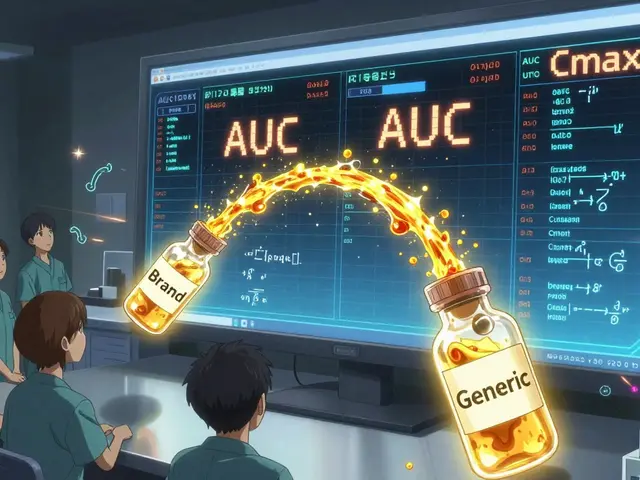
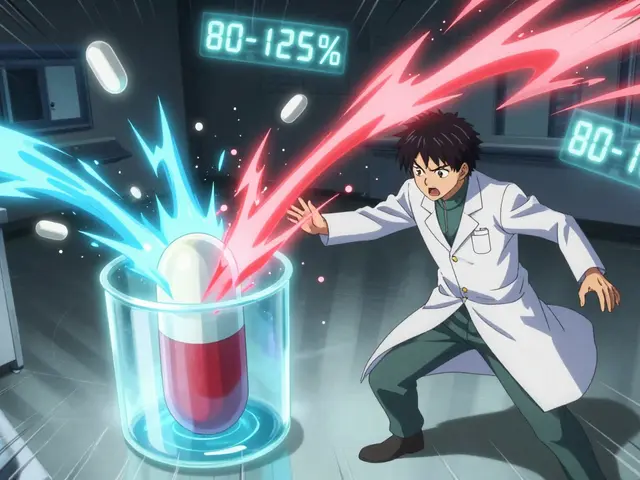
A generic drug isn’t a copy. It’s the exact same medicine as the brand-name version. Same active ingredient. Same dose. Same way it works in your body. The only differences? The name, the color, the shape, and the price. The inactive ingredients-like fillers or dyes-might be different, but they don’t affect how the drug treats your condition. The FDA requires generics to prove they’re bioequivalent. That means if you take a generic version of a drug, your body absorbs it at the same rate and to the same extent as the brand-name version. The testing isn’t easy. Manufacturers run studies with 24 to 36 healthy volunteers, taking blood samples over 72 hours to measure how the drug moves through the system. The results must fall within 80% to 125% of the brand’s levels. If it doesn’t, the FDA won’t approve it. The process is fast and cheap compared to brand-name development. A generic drug takes about 10 to 12 months to get approved and costs around $1 million to file. A new brand-name drug? It takes 10 to 15 years and costs over $2.6 billion. That’s why generics can be so affordable.The Real Numbers: Billions in Savings
In 2024, Americans filled 3.9 billion generic prescriptions. That’s 90% of all prescriptions. Those pills cost $98 billion total. Meanwhile, 435 million brand-name prescriptions cost $700 billion. That’s an 88% cost difference for just 10% of the volume. The savings aren’t small. In 2023 alone, generics saved the U.S. healthcare system $445 billion. That’s more than the entire annual budget of the Department of Education. And it’s still growing. Every time a new generic hits the market, prices drop even further. Studies show each additional generic competitor cuts the price of a drug by 11% to 15%. Take insulin. Brand-name Humalog used to cost $350 a month-even with insurance. After generic insulin lispro became available, the same dose dropped to $25. That’s a 93% drop. People who were skipping doses or splitting pills because they couldn’t afford it could now take their full dose. That’s not just money saved. That’s lives saved.Why Generics Are Better Than Other Cost-Cutting Tricks
You’ve probably heard about other ways to cut drug costs: step therapy, price negotiation, value-based pricing. But none of them come close to generics. Step therapy-making you try cheaper drugs first-saves about 12% to 15% per treatment. Medicare’s new price negotiation program, which started in 2026, is expected to cut prices by 38% to 79% on just 10 drugs. But even that only applies to Medicare, which covers about a third of all drug spending. Generics? They cut prices by 80% to 85% the moment they arrive. And they work for every drug, every patient, every plan. The Congressional Budget Office found that generic competition reduces prices by 90% within a year of patent expiration. Medicare negotiation? Only 42%. The difference is simple: generics create real competition. When multiple companies make the same drug, they fight for your business by lowering prices. Brand-name companies don’t have that pressure until the patent runs out.
The Biosimilar Gap: Where Generics Can’t Go Yet
Not all drugs can be copied easily. Biologics-drugs made from living cells, like Humira, Enbrel, or insulin-are too complex. You can’t just mix chemicals in a lab. That’s where biosimilars come in. Biosimilars aren’t exact copies, but they’re designed to work the same way. They’re typically 15% to 35% cheaper than the brand-name biologic. That’s less than generics, but still huge when you’re talking about drugs that cost $10,000 to $20,000 a year. Here’s the problem: only 10% of biologics have biosimilar alternatives. And 90% of the biologics that will lose patent protection in the next five years don’t have a single biosimilar in development. Why? Because they’re harder to make. The FDA approval process is longer. Manufacturers are scared of lawsuits. And pharmacy benefit managers (PBMs) often push for brand-name drugs because they get bigger rebates. Europe uses biosimilars at a 70% to 85% rate. The U.S.? Only 25% to 30%. That’s a $133 billion missed opportunity by 2025.Why Don’t More People Get Generics?
If generics are so great, why do so many people still pay full price for brand-name drugs? One reason: pharmacy benefit managers. PBMs are middlemen between insurers, pharmacies, and drugmakers. They negotiate rebates. But here’s the twist: sometimes, the rebate on a brand-name drug is so big that the PBM makes more money if you pay more for it. So they put the brand-name drug on the lowest copay tier-and the generic on a higher one. A 2024 report from Express Scripts found that 45% of commercial insurance plans charge higher copays for generics than for brand-name drugs. That’s backward. You’re being punished for choosing the cheaper option. Another issue: doctors don’t always know. A 2024 study found only 37% of physicians could correctly identify when a generic substitution was allowed. They might not know the FDA’s Orange Book codes-which tell you if a generic is interchangeable. Some states require a doctor’s permission to switch for drugs like warfarin or levothyroxine, even if the FDA says it’s safe. And then there’s the fear. Some patients swear their brand-name drug works better. That’s often the placebo effect. But for drugs with a narrow therapeutic index-where even a tiny difference in blood levels can cause harm-there’s real concern. Levothyroxine, used for thyroid conditions, has had reports of patients feeling worse after switching to generic. The FDA says it’s still safe, but doctors sometimes keep patients on brand-name to avoid the risk.
Supply Chains and the Hidden Risks
Most of the active ingredients in generic drugs come from India and China. During the pandemic, when factories shut down, 300+ drug shortages hit the U.S. Most of them were generics. Why? Because manufacturers had no backup. No one makes these drugs in the U.S. anymore. The FDA has flagged 127 drugs at risk of shortage due to poor manufacturing quality. And with 80% of API production overseas, the system is fragile. If a storm hits a factory in India, or a trade policy changes, you could see shortages of antibiotics, blood pressure meds, or even insulin. The Inflation Reduction Act tried to help by capping insulin at $35 a month for Medicare patients. That forced companies like Eli Lilly to drop their list prices from $275 to $25. But that’s only for Medicare. Commercial insurers still charge more.What’s Next for Generics?
The future of generics is clear: more of them, faster. But it’s not automatic. Patent thickets-where brand companies file over 140 patents on one drug to delay generics-are still common. The FTC found these delays add 17 months to generic entry. That costs consumers $3.5 billion a year. “Authorized generics”-where the brand company sells its own generic version-are another problem. They block competition by flooding the market with a cheap version they control. That cuts price drops by 25% to 30% compared to true generic competition. The FDA’s 2024 Biosimilars Action Plan aims to cut approval times in half. That’s good. But without policy changes-like banning pay-for-delay deals, limiting authorized generics, and requiring PBMs to prioritize generics-it won’t be enough. The real win? Expanding access to biosimilars. If 90% of biologics had biosimilars within a year of patent expiry, the U.S. could save $234 billion over the next decade. That’s not a guess. It’s the Congressional Budget Office’s projection.What You Can Do
If you’re paying for prescriptions:- Always ask your pharmacist: “Is there a generic?”
- Check GoodRx or SingleCare for cash prices. Sometimes the generic without insurance is cheaper than the brand with it.
- If your plan charges more for generics, call your insurer. Ask why. You might be able to switch plans.
- For chronic conditions like high blood pressure, diabetes, or cholesterol, generics are almost always the best choice. There’s no reason to pay more.
- If you switch to a generic and feel worse, tell your doctor. It’s rare, but it happens-especially with thyroid meds or seizure drugs.
Are generic drugs as safe and effective as brand-name drugs?
Yes. The FDA requires generics to have the same active ingredient, strength, dosage form, and route of administration as the brand-name drug. They must also prove bioequivalence-meaning your body absorbs them at the same rate and level. Over 90% of generics are rated as therapeutically equivalent by the FDA. Millions of patients use them safely every day.
Why do some people say generics don’t work as well?
Sometimes, it’s the inactive ingredients. Fillers or dyes in generics can cause mild side effects like stomach upset in sensitive people. For drugs with a narrow therapeutic index-like warfarin or levothyroxine-even tiny changes in absorption can cause symptoms. That’s why some doctors keep patients on brand-name versions. But for most drugs, these differences don’t matter. Patient reviews on Drugs.com show generics have nearly identical efficacy ratings to brand-name drugs.
Why are some generics more expensive than others?
It’s about competition. If only one company makes a generic, it can charge more. When multiple companies enter the market, prices drop fast. A drug with five generic makers might cost $5 a month. The same drug with only one maker could cost $40. That’s why it’s worth checking prices across pharmacies and using tools like GoodRx.
Can I switch from a brand-name drug to a generic without asking my doctor?
In most cases, yes. Pharmacists can substitute generics unless your doctor writes "dispense as written" or the drug is on a list requiring prescriber approval (like thyroid meds or seizure drugs). But it’s always a good idea to tell your doctor you’re switching. They can monitor for any unusual reactions, especially if you have a chronic condition.
Do insurance plans encourage generic use?
Medicare Part D plans automatically substitute generics 98% of the time. But commercial insurers? Only 58% do. Some even charge higher copays for generics because pharmacy benefit managers get bigger rebates from brand-name makers. Always check your plan’s formulary. If your generic costs more than the brand, ask your insurer why-and consider switching plans during open enrollment.
What’s the difference between a generic and a biosimilar?
Generics are exact copies of small-molecule drugs made with chemicals. Biosimilars are similar-but not identical-to complex biologic drugs made from living cells. They’re not exact copies because biologics are too intricate to replicate perfectly. Biosimilars are 15% to 35% cheaper than brand-name biologics, while generics are 80% to 85% cheaper than brand-name small-molecule drugs.
Why aren’t there more biosimilars in the U.S.?
Three main reasons: high development costs, legal risks, and rebate systems. Biologics are expensive and hard to make. Companies are afraid of lawsuits. And pharmacy benefit managers often favor brand-name biologics because they get bigger rebates, even if the biosimilar is cheaper. Europe has much higher adoption because their systems reward cost savings, not rebates.