Running out of a critical medication is stressful enough without wondering if it’s even available anywhere. Whether you are a pharmacist managing hospital inventory or a patient trying to fill a prescription, knowing where to look for real-time supply data is vital. The FDA Drug Shortage Database is the official federal resource maintained by the U.S. Food and Drug Administration's Center for Drug Evaluation and Research (CDER) that provides real-time information on current and resolved drug shortages in the United States. It is not just a list; it is the primary tool used to track supply chain disruptions for medically necessary drugs.
You might be asking why this specific database matters so much. Since the implementation of mandatory reporting requirements under the Food and Drug Administration Safety and Innovation Act (FDASIA) of 2012, manufacturers have been required to report shortages. This means the data here is legally backed, unlike many informal lists you might find online. Understanding how to navigate this resource can save you time and ensure you get the right treatment without unnecessary delays.
Why Use the Official FDA Database?
The FDA database stands out because it is the gold standard for verification. While other resources exist, the FDA list only includes products where demand exceeds supply on a nationwide level. This strict threshold ensures that what you see is a confirmed, significant issue rather than a minor local hiccup. According to FDA Commissioner Robert M. Califf, this transparency directly impacts patient care when medications are scarce.
Here is what makes the FDA database unique compared to other sources:
- Legal Mandate: Manufacturers face penalties up to $10,000 per day for non-compliance with reporting, ensuring high data integrity.
- NDC Specificity: Every listed product includes its National Drug Code (NDC), covering 100% of entries. This allows you to pinpoint exact formulations, which is crucial since shortages often affect only specific strengths or packaging sizes.
- Real-Time Updates: The database is updated daily with new and resolved shortages, giving you the most current snapshot of the market.
However, it is important to know its limits. The database excels at documenting existing shortages but offers minimal early warning for emerging disruptions. As noted by industry analysts, there can be a 7-10 day lag between a manufacturer confirming an issue and it appearing in the database. For clinical decision support and alternative therapy suggestions, you will likely need to cross-reference with other tools like the American Society of Health-System Pharmacists (ASHP) resource.
How to Access the Database: Web and Mobile Options
Getting into the system is straightforward, but choosing the right interface depends on your needs. You have three main ways to access this information.
- Web Interface: The primary portal is located at
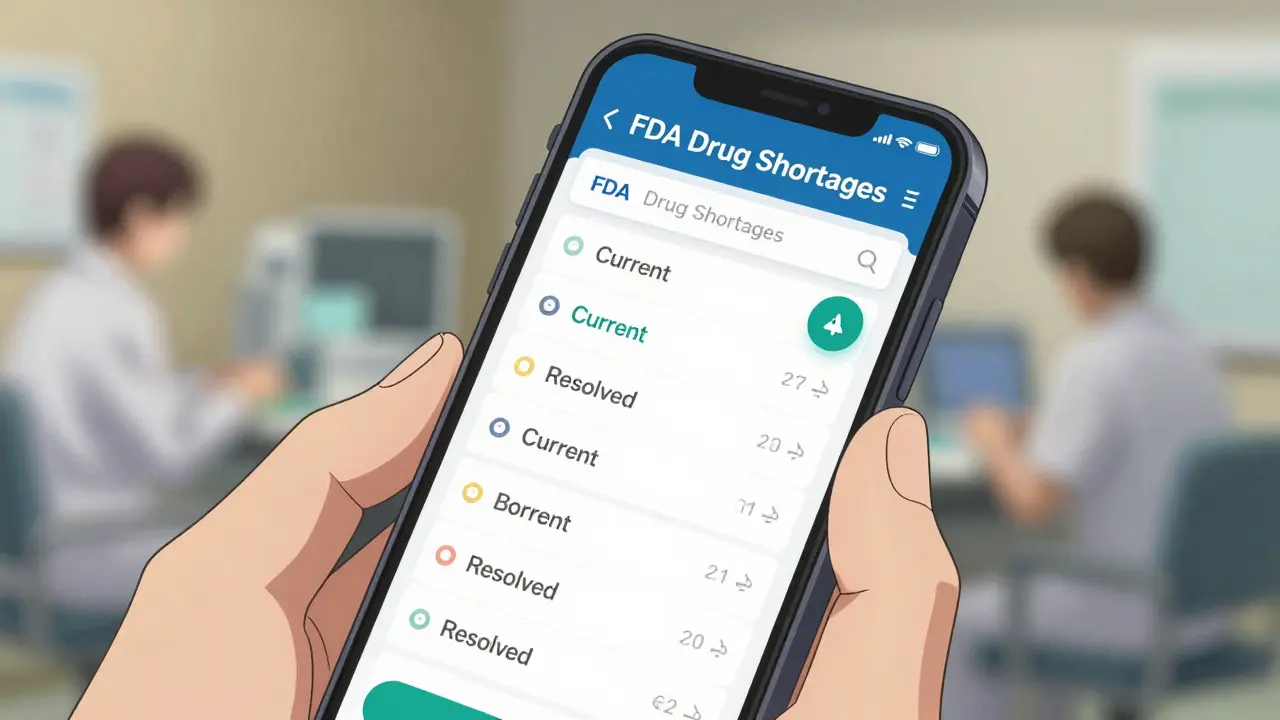
www.accessdata.fda.gov/scripts/drugshortages/default.cfm. This is best for detailed searches where you need to see full manufacturer details and regulatory status. It requires no registration and works on any browser. - Mobile App: The 'FDA Drug Shortages' app, launched in September 2022, is available for free on iOS and Android. It has been downloaded over 150,000 times and offers push notifications for critical shortages. This is ideal for pharmacists on the go who need quick alerts.
- Data.gov Dataset: For those needing machine-readable data, the dataset on data.gov is updated weekly. This is less useful for individual patients but valuable for researchers or large health systems integrating shortage data into their own software.
If you are using the mobile app, note that while basic access is open to everyone, advanced features like reporting suspected shortages require email verification. The app supports iOS 12.0+ and Android 8.0+, making it compatible with most modern devices.
Step-by-Step Guide to Checking Availability
Knowing how to search effectively is key. A generic search might tell you a drug is short, but it won’t tell you if *your* specific prescription is affected. Follow these steps to get accurate results.
| Step | Action | Why It Matters |
|---|---|---|
| 1 | Enter Generic Name or Active Ingredient | Start broad to see all related shortages. Brand names may not always appear as expected. |
| 2 | Filter by NDC Number | Critical step. 62% of shortages impact only certain formulations. Check if your specific NDC is listed. |
| 3 | Review 'Reason for Shortage' | Understand if the issue is manufacturing, quality, or raw material. This helps predict duration and alternatives. |
| 4 | Check Status Field | Look for 'Current', 'Resolved', or 'Discontinued'. Note that 'Resolved' means supply meets demand, not necessarily full restoration. |
| 5 | Verify Extended Use Dates | If applicable, check the separate 'Search List of Extended Use Dates' page for products with approved extended expiration dates. |
A common mistake users make is misinterpreting the 'resolved' status. In a 2024 usability study, 28% of providers incorrectly assumed 'resolved' meant the supply was back to normal levels. It simply means the immediate crisis is over. Always verify with your supplier before assuming stock is fully replenished.
FDA vs. ASHP: Which Resource Should You Trust?
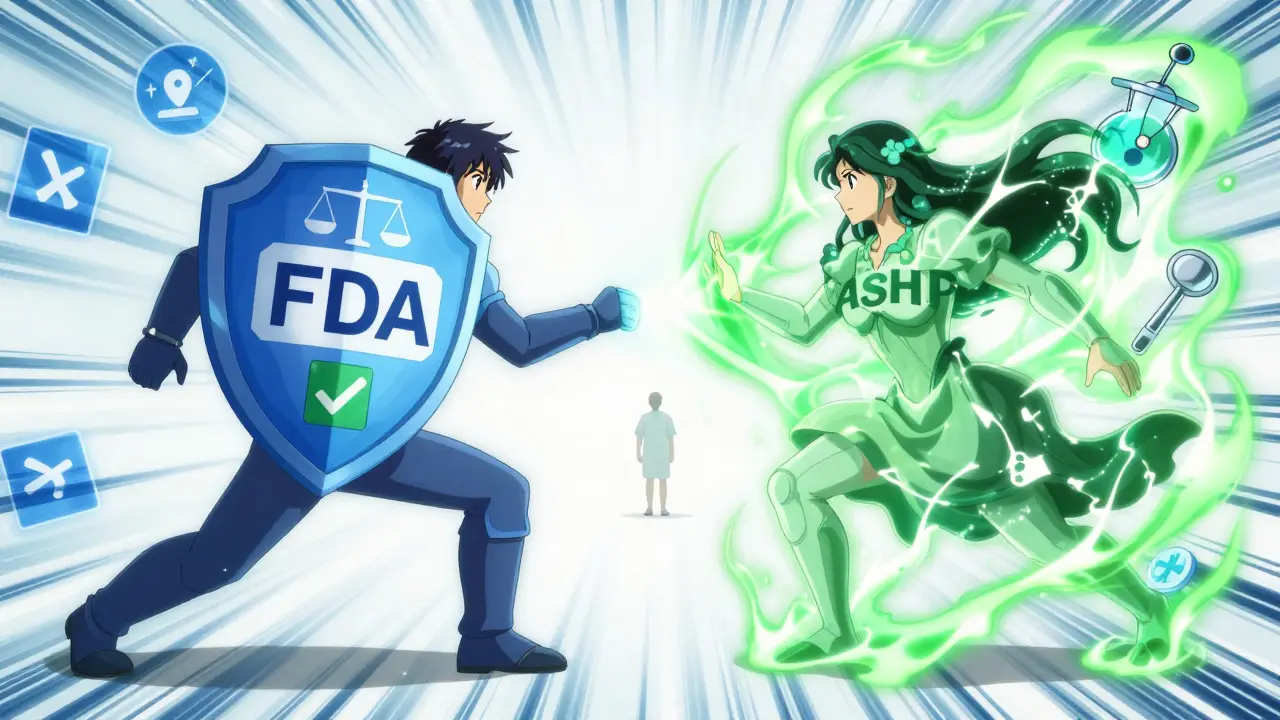
You will often hear about the ASHP Drug Shortages list alongside the FDA database. Both are valuable, but they serve different purposes. The FDA database is authoritative and legalistic, while ASHP is clinical and practical.
According to a 2023 comparative analysis, ASHP typically lists 15-20% more products than the FDA. This is because ASHP includes localized or temporary supply issues that do not meet the FDA’s national shortage threshold. If you are looking for clinical management recommendations or alternative therapy suggestions, ASHP is often preferred by healthcare providers. However, for verifying if a shortage is officially recognized and checking specific NDCs, the FDA database is unmatched.
Most professionals use both. A 2024 survey found that 68% of respondents checked the FDA database first for verification but consulted ASHP for management strategies. Think of the FDA database as the source of truth for *what* is short, and ASHP as the guide for *how* to handle it.
Common Pitfalls and How to Avoid Them
Even with a robust database, errors happen. Here are some frequent issues users encounter and how to mitigate them.
- Reporting Lag: As mentioned, there can be a 7-10 day delay. If you suspect a shortage that isn’t listed, contact
[email protected]. Do not wait for the database to update if patient care is at risk. - Vague Reason Codes: 37% of surveyed pharmacists reported difficulty interpreting the FDA’s 'reason for shortage' codes. These codes can be technical. Cross-reference with ASHP’s plain-language explanations if you are unsure.
- Lack of Regional Data: The FDA database tracks national shortages. It does not show regional distribution issues. If a drug is not listed as short nationally but you cannot find it locally, the issue may be logistical rather than a national supply failure.
To stay ahead, subscribe to the FDA’s Drug Shortages email updates, sent every Tuesday and Friday. This proactive approach helps you anticipate issues before they hit your pharmacy or home.
Future Developments and Improvements
The FDA is actively working to improve the database. Recent developments include enhanced search functionality launched in July 2024, allowing filtering by manufacturer, dosage form, and therapeutic category. This was a direct response to user feedback highlighting the need for more granular searches.
Looking ahead, the FDA’s 2024-2026 roadmap prioritizes AI-driven shortage prediction models. The goal is to reduce the reporting lag from days to hours and ultimately predict shortages before they occur. Additionally, a planned integration with the National Association of Boards of Pharmacy’s Verified-Accredited Wholesale Distributors database aims to improve tracking of distribution-level shortages.
While these improvements are promising, the current database remains reactive rather than preventive. Until predictive capabilities are fully realized, relying on multiple sources and maintaining open communication with suppliers is essential.
Is the FDA Drug Shortage Database free to use?
Yes, the FDA Drug Shortage Database is completely free and publicly accessible. There are no subscription fees or registration requirements for basic access via the web interface or mobile app.
How often is the FDA Drug Shortage Database updated?
The database is updated daily with new and resolved shortages. The mobile app also receives regular updates, and the machine-readable dataset on data.gov is updated weekly.
What does 'Resolved' mean in the FDA database?
'Resolved' indicates that the supply currently meets demand, ending the official shortage status. However, it does not necessarily mean that inventory levels have returned to pre-shortage norms. Suppliers may still have limited stock.
Can I report a drug shortage to the FDA?
Yes, you can report suspected shortages by emailing [email protected]. If you use the mobile app, you can also report shortages directly through the app after verifying your email address.
Does the FDA database list brand-name drugs?
Yes, the database lists both brand-name and generic drugs. However, searching by generic name or active ingredient is often more effective as it captures all related formulations.