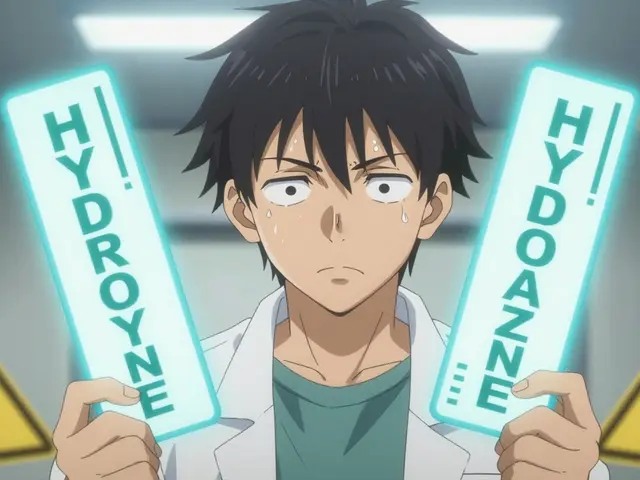
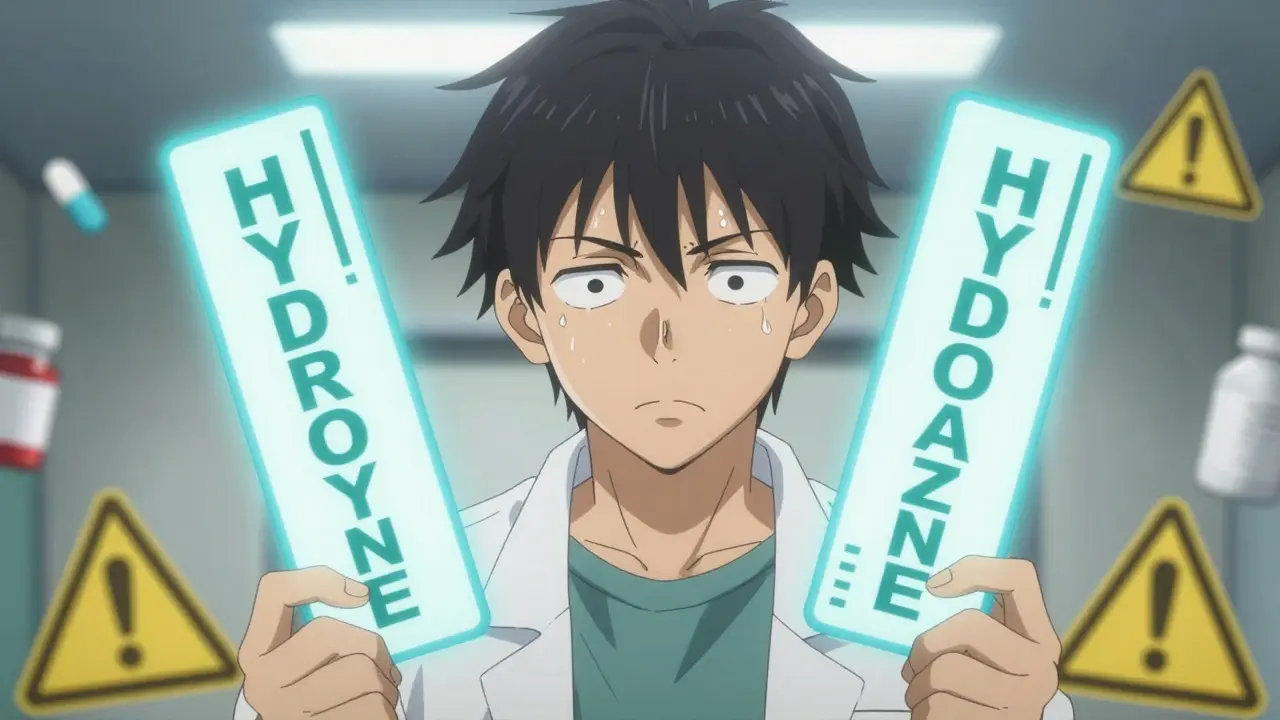
Every year, thousands of patients in the U.S. get the wrong medication-not because of a mistake in dosage, but because two drug names look or sound too similar. Look-alike and sound-alike (LASA) drug names are one of the most common causes of preventable medication errors. You might think pharmacies and hospitals have it under control, but the truth is, even with technology, these errors still happen. And they’re not rare. The Institute for Safe Medication Practices says LASA errors make up about 25% of all reported medication mistakes. That’s one in every four errors. And some of them lead to serious harm-or even death.
What Makes a Drug Name Look or Sound Similar?
It’s not just about spelling. Two drugs can be dangerously close if they share the same first few letters, end the same way, or sound alike when spoken aloud. For example:
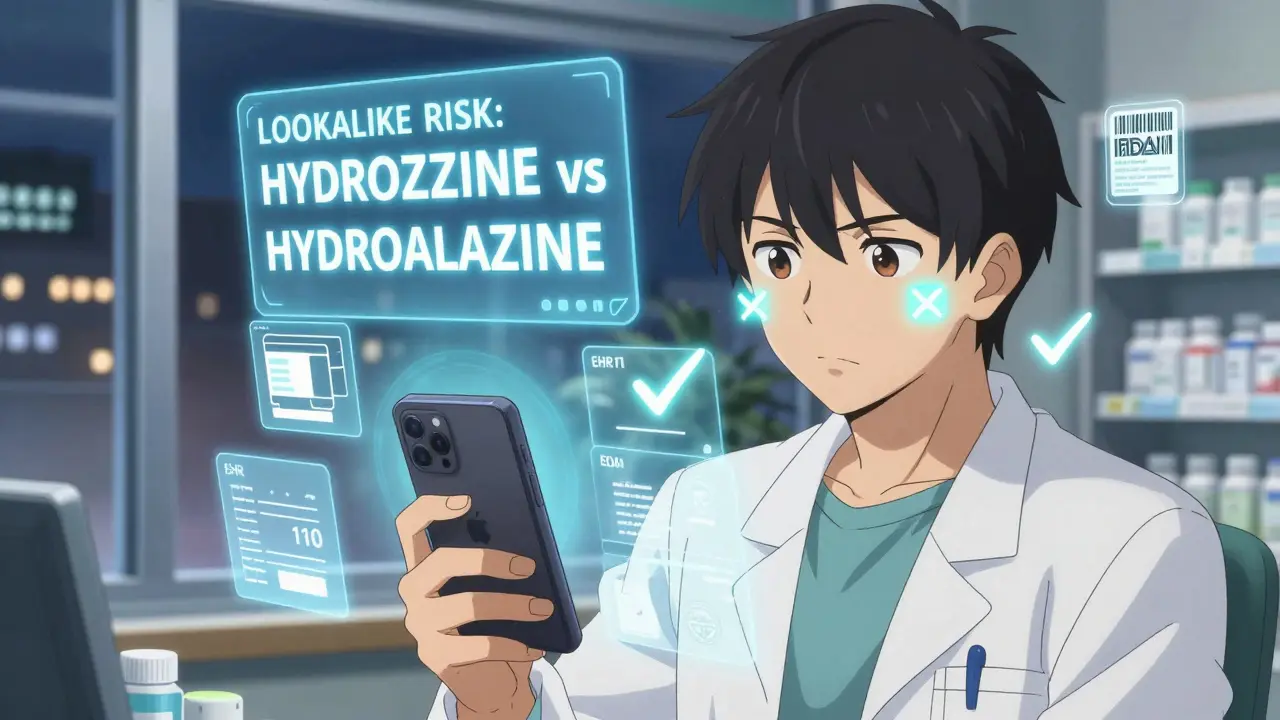
- HydroXYzine vs. HydroALazine
- DoXEpamine vs. DoBUtamine
- CISplatin vs. CARBOplatin
- Valtrex (valACYclovir) vs. Valcyte (valGANciclovir)
These aren’t random typos. They’re real drug names approved by the FDA. The problem is, when a pharmacist is rushing, or a nurse is tired, or a doctor writes a quick note, the brain fills in the gaps. It sees “hydro” and assumes the rest. That’s why the FDA and other safety groups started pushing for tall man lettering-a system that uses uppercase letters to highlight the differences.
Tall Man Lettering: The Visual Clue That Saves Lives
Tall man lettering (TML) isn’t just a design choice. It’s a safety tool. The idea is simple: capitalize the parts of the drug name that make it different. So instead of writing “hydroxyzine” and “hydralazine,” you write:
hydroXYzine and hydroALazine
That small change makes a big difference. A 2006 study in Human Factors found that TML reduces visual confusion by about 32%. But it’s not perfect. If the labels are printed poorly, or if the screen is small, or if the letters aren’t capitalized consistently, the system breaks down.
The FDA officially recommends TML for 35 high-risk drug pairs as of 2024. That list includes insulin names like Humalog and Humulin, blood thinners like Lovenox and Heparin, and seizure meds like Lamictal and Lamisil. These are the drugs that, if mixed up, can kill someone.
Why TML Alone Isn’t Enough
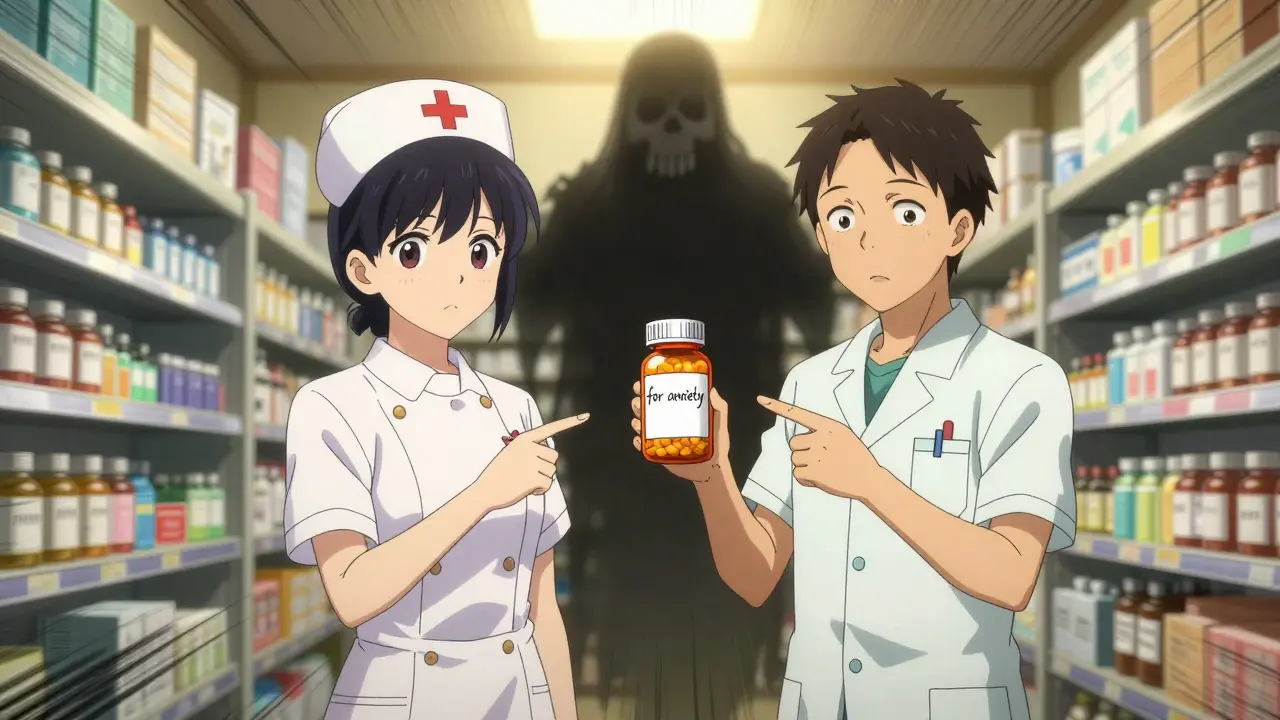
Here’s the hard truth: Tall man lettering helps, but it’s not a fix-all. A 2022 study in the Journal of Patient Safety showed that TML alone reduces errors by 32%. But when you add color coding-like putting red borders around high-risk names-the error rate drops to 47%. Add one more layer: writing the reason the drug was prescribed right on the label (e.g., “for anxiety” or “for high blood pressure”), and effectiveness jumps to 59%.
Why? Because people don’t just rely on visuals. They rely on context. If you see “hydroxyzine” and you know the patient has allergies-not anxiety-you’re less likely to hand it over by mistake. That’s why hospitals like Johns Hopkins cut LASA errors by 67% by combining TML, color cues, and purpose-of-treatment notes.
And then there’s barcode scanning. It’s the gold standard. Scanning a drug before giving it to a patient stops 89% of errors. But it’s expensive. Hospitals spend an average of $153,000 to install the system. Not every clinic can afford it. So for most places, TML is the first line of defense.
Where Things Go Wrong: Handwritten Prescriptions and Bad Labels
Technology helps, but human habits still cause the most problems. In Reddit threads and pharmacy forums, nurses and pharmacists say the biggest source of LASA errors isn’t the EHR system-it’s handwritten prescriptions. One nurse wrote: “I had to call the doctor three times because the ‘C’ in Citalopram looked like a ‘T’ in their scribble.”
According to the American Society of Health-System Pharmacists, 41% of LASA errors come from poor handwriting. Another 29% happen because labels are printed too small, faded, or on shiny paper that glares under fluorescent lights. Even if the system uses tall man lettering, if the label says “hydroxyzine” in all lowercase, the safety feature is gone.
And it’s not just pharmacies. Automated dispensing cabinets (ADCs) like Pyxis machines often show TML correctly-but the electronic medical record doesn’t. One ICU nurse said: “The EHR shows hydroCO
Whether you’re a patient, a nurse, or a pharmacist, you can reduce your risk. The FDA and ISMP recommend a simple three-step process every time you handle a high-risk drug: This process cuts errors by 52%, according to a 2022 study in the American Journal of Health-System Pharmacy. It’s not glamorous. It’s slow. But it works. You don’t have to wait for the system to fix itself. You can protect yourself: One patient in Cleveland noticed her new pill looked like her old one, but the label said “Hydroxyzine” instead of “Hydralazine.” She called her doctor. It was a mix-up. She didn’t get sick. She just asked a question. Things are improving. The FDA added 12 new drug pairs to its TML list in late 2023. By December 2024, all U.S. hospitals and pharmacies must use TML for all 35 high-risk pairs. The National Council for Prescription Drug Programs now has a real-time LASA data standard that lets EHRs, pharmacies, and supply chains warn each other instantly. Some hospitals are testing smartphone apps that use camera AI to scan pill bottles and flag look-alike names. Mayo Clinic’s pilot program caught 94% of mismatches. Google’s Med-PaLM 2 AI can predict confusion risk with 89% accuracy. But the biggest change? The push to make purpose-of-treatment mandatory on every prescription. If you see “Hydroxyzine (for anxiety)” instead of just “Hydroxyzine,” you’re less likely to give it to someone with high blood pressure. That simple addition could save thousands of lives. Look-alike names aren’t going away. New drugs are always being made, and names will always overlap. The answer isn’t to stop making drugs-it’s to make systems smarter. Tall man lettering helps. Barcodes help. AI helps. But the real safety net? People paying attention. Every time you read a label twice. Every time you ask a question. Every time you speak up when something feels off-you’re not just following protocol. You’re preventing a mistake that could have been fatal. The system isn’t perfect. But you can be part of the fix.How to Protect Yourself: A 3-Step Check
What You Can Do as a Patient
The Future: AI, Apps, and Better Systems
Final Thought: Safety Is a System, Not a Feature