

What Exactly is Pet Dander?
Pet dander consists of tiny, invisible flakes of skin shed by cats, dogs, and other animals. Unlike common myths, it's not your pet's hair causing allergies-it's proteins in dander, saliva, and urine. The main culprits are Fel d 1 for cats and Can f 1 for dogs. These proteins stick to surfaces and stay airborne for hours, making them hard to avoid.
According to the American Lung Association (2023), pet dander affects roughly 10% of Americans. These particles are so small and sticky that they cling to furniture, carpets, and even clothing. They can linger in your home for months-even after your pet is gone.
HEPA Filters: Your First Line of Defense
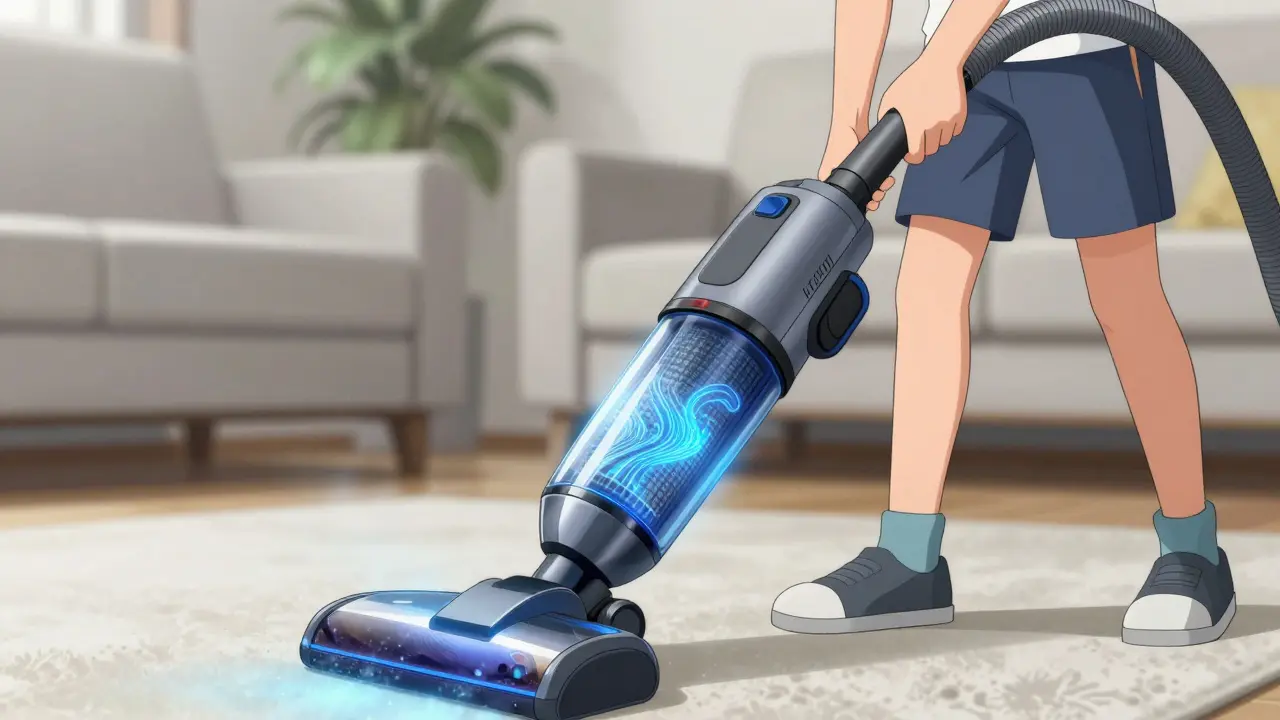
Standard vacuums often miss pet dander because of its microscopic size. HEPA filters trap 99.97% of particles down to 0.3 microns. Research from Filtrete (2023) shows HEPA vacuums capture 30-50% more dander than regular models. Pair them with an air purifier for your main living area. Baz Allergy (2023) reports HEPA air purifiers reduce airborne allergens by 40-60% when properly sized.
For best results, replace HEPA filters every 6-12 months. A quality HEPA vacuum costs $150-$300, and a room-sized air purifier runs $100-$250. This upfront investment pays off in fewer allergy symptoms.
Create Pet-Free Zones (Especially Bedrooms)
Dr. Sandra Hong, an allergist at Cleveland Clinic, calls this the single most effective move: "Designating the bedroom as a pet-free zone reduces nighttime symptoms by up to 40% in clinical studies." Pets carry allergens on their fur, and sleeping in the same room means prolonged exposure during your most vulnerable hours-when your body's trying to heal.
Start simple. Keep your bedroom off-limits to pets. Use a physical barrier like a baby gate if needed. Wash bedding weekly at 130°F (54°C) to kill allergens. This step alone can transform your sleep quality and daily energy.
Hard Flooring Beats Carpeting
Carpets act like dander sponges. Allergy Fort Worth (2023) found hard surfaces like hardwood, tile, or linoleum hold 50-75% less pet dander than carpeted floors. If you can't replace carpet entirely, use washable area rugs and vacuum them daily with a HEPA vacuum.
When replacing flooring, choose materials that are easy to clean. Avoid high-pile rugs. Even small changes, like removing rugs from high-traffic areas, make a noticeable difference in allergen levels.
Daily Cleaning Habits That Work
Consistency matters more than intensity. Here's what works:
- Vacuum 2-3 times weekly with a HEPA-filter vacuum. Focus on areas where pets spend time.
- Wash pet bedding weekly at 130°F (54°C). This temperature kills allergens effectively.
- Use lint rollers daily on furniture and clothing. They remove 70-85% of surface dander instantly.
- Wash hands after petting to prevent transferring allergens to your face. This cuts transfer by 90%.
Kaiser Permanente (2023) reports that 75% of people who follow these steps see symptom improvement in 4-6 weeks. It's not about perfection-just consistent effort.

Medical Options When Allergies Persist
When environmental controls aren't enough, medical help can bridge the gap. Over-the-counter antihistamines like Zyrtec or Claritin work for 60-70% of mild allergy sufferers within an hour. For long-term relief, immunotherapy (allergy shots) has an 80-85% success rate after 3-5 years of treatment. A newer option is the FDA-approved Odactra tablet for cat allergies, which offers similar results without shots.
Consult an allergist to find the right treatment. They can test your specific sensitivities and create a personalized plan. Remember, medication works best when combined with home strategies.
Debunking the "Hypoallergenic" Myth
There's no such thing as a truly hypoallergenic pet. Dr. David Stukus, a pediatric allergist at Nationwide Children's Hospital, says, "No dog or cat breed is hypoallergenic. All produce allergens, though individual variation exists." Breeds like poodles or Siberian cats may produce fewer allergens, but they still shed dander. Relying on "hypoallergenic" claims can lead to false confidence and worsened symptoms.
Instead of focusing on breed, test your reaction to specific animals. Visit a shelter or breeder to spend time with a pet before adopting. Your personal tolerance matters more than marketing labels.
Common Challenges and Solutions
Implementing these strategies takes effort. Here's how to overcome common hurdles:
- Resistant pets: Cat owners report 60% struggle with bathing. Start slow-use damp cloths for quick cleanups, then gradually introduce baths. Reward with treats.
- Cost concerns: HEPA filters need replacement every 6-12 months ($20-$50). Budget for this upfront. Many air purifiers have filter replacement alerts to remind you.
- Time constraints: Vacuuming takes 15-20 minutes per session. Do it while watching TV or listening to music. Small, regular efforts beat infrequent deep cleans.
Remember: 50-70% reduction in allergens is achievable with consistent effort. You don't need to be perfect-just persistent.
Can I still have pets if I have allergies?
Yes! Many people manage pet allergies successfully with the right strategies. HEPA filters, pet-free zones, and consistent cleaning can reduce allergens enough to live comfortably with pets. Over 75% of allergy sufferers see symptom improvement when following these steps.
Are there truly hypoallergenic pets?
No. All cats and dogs produce allergens, though some breeds may produce less. Terms like "hypoallergenic" are marketing labels, not scientific facts. Test your reaction to individual pets before adopting.
How long does it take to see results from dander reduction strategies?
Most people notice symptom improvement within 4-6 weeks of consistent effort. This includes daily lint rolling, weekly vacuuming with HEPA filters, and keeping pets out of bedrooms. Full allergen reduction takes 3 months of consistent practices.
What's the most effective single change I can make?
Creating a pet-free bedroom. Studies show this reduces nighttime allergy symptoms by up to 40%. Your bedroom is where you spend a third of your life-keeping it allergen-free gives your body the best chance to recover during sleep.
Do air purifiers really help with pet dander?
Yes. HEPA air purifiers reduce airborne pet allergens by 40-60% in standard rooms. Place them in your main living area and bedroom for maximum effect. Look for models with true HEPA filters and the right size for your room.