

Blood Pressure Medication & Licorice Checker
Check Your Risk
This tool determines if licorice consumption could interfere with your blood pressure medication based on clinical guidelines.
When you're managing high blood pressure, every pill matters. But what you eat or drink - even something as simple as licorice candy or herbal tea - can quietly undo all your hard work. If you're taking blood pressure medication and consuming licorice root, you might be in for a dangerous surprise: your meds could stop working. This isn't a myth. It's a well-documented, clinically proven interaction that sends people to the ER every year.
How Licorice Root Sabotages Your Blood Pressure Meds
Licorice root isn't just a sweet treat. The real problem lies in a compound called glycyrrhizin. This natural substance, found in the root of Glycyrrhiza glabra, mimics the hormone aldosterone. That means it tricks your kidneys into holding onto salt and water while flushing out potassium. The result? More fluid in your bloodstream, higher blood volume, and a sharp spike in blood pressure.
Here's the kicker: this doesn't just raise your numbers. It directly fights the drugs you're taking. ACE inhibitors like lisinopril? Their ability to relax blood vessels drops by 30-50%. ARBs like losartan? Effectiveness falls by about 25%. Even calcium channel blockers like amlodipine lose 15-20% of their power. And if you're on a potassium-sparing diuretic like spironolactone? Licorice can completely cancel it out - sometimes in under a week.
One 2015 study found that people who ate just 100 mg of glycyrrhizin daily for two weeks saw systolic blood pressure jump as high as 30 mmHg. That's the difference between a controlled 130 and a dangerous 160. And it's not rare. Over 150 case reports worldwide have linked licorice to uncontrolled hypertension in people on blood pressure meds.
What You’re Actually Eating (And What You Think You’re Eating)
Most people don’t realize they’re consuming licorice root. In the U.S., about 95% of licorice-flavored candy uses anise oil - not real licorice. But that 5%? It’s enough to cause trouble.
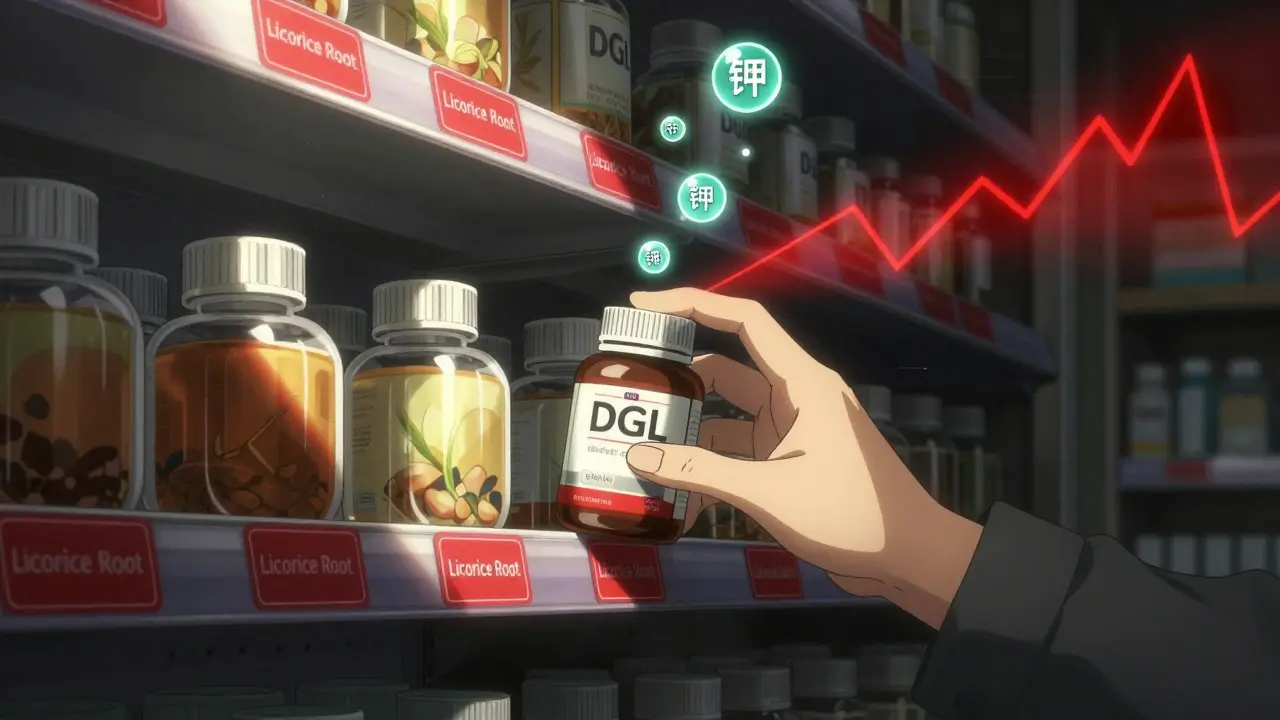
Look at the label. If it says Glycyrrhiza glabra, licorice extract, or licorice root, you’re getting glycyrrhizin. If it says anise oil or fennel, you’re safe. Many herbal teas, cough syrups, and even some tobacco products contain real licorice root. And it’s not just candy - supplements labeled "for digestion" or "immune support" often include it too.
One 2018 survey found that 30% of herbal laxatives and 25% of traditional Chinese medicine formulas contain licorice root. Patients don’t know they’re taking it. Doctors don’t always ask. And the labels? Often silent. A 2021 study found that only 37% of supplement labels warn about blood pressure interactions.
Who’s at Risk - And How Fast It Happens
You don’t need to binge on licorice for weeks. Even moderate daily use can cause problems. For most people on blood pressure meds, consuming more than 50 grams of real licorice candy per day (roughly 50 mg of glycyrrhizin) can trigger effects within days. Some patients saw spikes in blood pressure after just three days.
It’s not just about the dose - it’s about timing. Glycyrrhizin has a half-life of 14 hours, but its effects on your kidneys can linger for up to two weeks after you stop. That means if you had a few pieces of licorice last week and your BP is suddenly rising, it might be why.
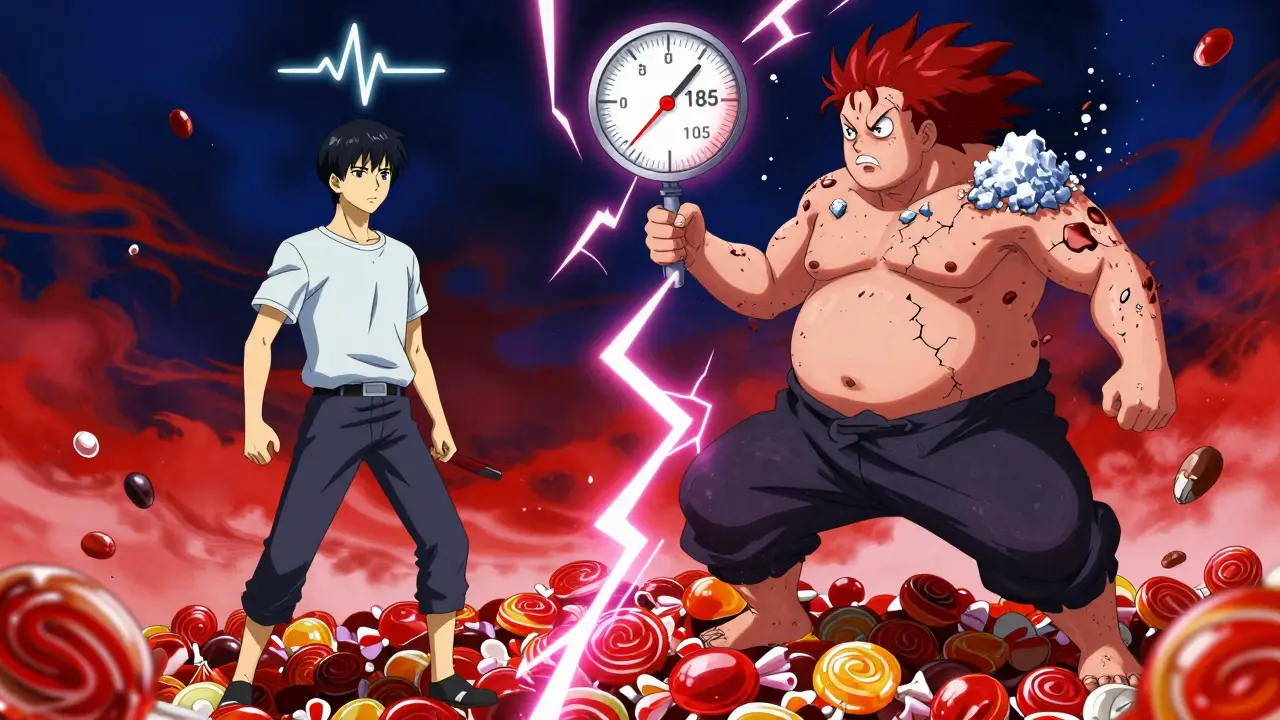
People on potassium-sparing diuretics are at the highest risk. One case report from New Zealand described a 55-year-old man whose blood pressure soared to 210/115 after starting licorice tea - he needed hospitalization. Another patient on lisinopril went from 130/80 to 185/105 in 10 days. These aren’t outliers. They’re typical.
What Happens to Your Body - Beyond High BP
High blood pressure is just the tip of the iceberg. Glycyrrhizin causes real biochemical damage:
- Potassium drops by 0.5-1.5 mmol/L - enough to cause muscle cramps, weakness, or even dangerous heart rhythms.
- Fluid retention increases plasma volume by 5-15% - making your heart work harder.
- Enzyme interference blocks 11β-hydroxysteroid dehydrogenase type 2 - the same enzyme that keeps cortisol from overstimulating your blood pressure receptors.
And here’s the scary part: some studies suggest licorice may also interfere with how your liver processes meds. One 2019 study found it inactivates CYP3A4 - the enzyme that breaks down amlodipine and other common drugs. Other research says it might speed up drug clearance. The result? Unpredictable, dangerous swings in how your meds work.
What You Should Do - Step by Step
If you’re on blood pressure medication:
- Check every product - candy, tea, supplements, cough syrup. Look for "Glycyrrhiza glabra," "licorice root," or "licorice extract."
- Switch to deglycyrrhizinated licorice (DGL) - if you need licorice for digestion or inflammation, DGL contains less than 1% glycyrrhizin and is safe.
- Stop all licorice root - even if you think it’s "just a little." The risk isn’t worth it.
- Ask your pharmacist - they can scan your supplements and tell you what’s hidden in them.
- Get your potassium checked - if you’ve consumed licorice in the last month, ask for a blood test. Levels below 3.5 mmol/L are a red flag.
The American Heart Association says patients on antihypertensives should avoid all products with real licorice root. No exceptions. No "just a little."
The Bigger Picture - Why This Keeps Happening
There’s no federal requirement in the U.S. to label glycyrrhizin content on supplements. The FDA classifies licorice as "Generally Recognized As Safe" - but only for flavoring, not medicinal use. Meanwhile, the EU requires warning labels on any product with more than 10 mg of glycyrrhizin per serving. The U.S. doesn’t.
Supplement makers don’t have to prove safety before selling. They don’t have to test for interactions. And consumers? They assume "natural" means "safe." That’s a deadly assumption when it comes to licorice and blood pressure meds.
Even the industry is shifting. More brands now use DGL in digestive supplements. But that doesn’t help if you’re buying the wrong kind. You need to know what’s in your bottle.
Future rules might change. The FDA’s proposed Dietary Supplement Listing Act of 2023 could require manufacturers to list active ingredients - including glycyrrhizin. But until then, you’re the only one who can protect yourself.