

When your medication changes, your mind doesn’t always keep up
You’ve been on the same antidepressant for two years. Your anxiety has calmed. You sleep through the night. You’re finally feeling like yourself again. Then your pharmacy calls: Your brand-name sertraline is no longer covered. We’re switching you to the generic. You don’t think much of it. It’s the same drug, right?
But three days later, you wake up with a pounding headache. Your thoughts feel foggy. You’re crying for no reason. Your partner says you’ve become distant. You don’t recognize your own emotions. You start to wonder: Is this me-or is this the pill?
This isn’t rare. In fact, it’s more common than most people realize. Around 1 in 9 people on psychiatric medications switch drugs within 90 days, often because insurance changes, cost pressures, or doctor recommendations. But what happens inside your head during that switch? It’s not just chemistry. It’s psychology. And it’s often ignored.
The brain doesn’t see ‘bioequivalent’-it feels instability
Doctors talk about bioequivalence like it’s a guarantee. The FDA says generic medications must deliver the same amount of active ingredient as the brand name. Sounds simple. But your brain doesn’t care about milligrams. It cares about consistency.
Take paroxetine. A 2019 review found that 68% of negative psychological reactions during switches happened not between brand and generic-but between two different generic versions. Why? Because generics can vary slightly in fillers, coatings, and release timing. For someone whose nervous system has adapted to one exact formula over months or years, even a small shift can feel like a earthquake.
One patient on PatientsLikeMe described switching from one generic citalopram to another: “It was like someone turned off the light in my mind. I couldn’t feel joy. I couldn’t cry. I just… floated.” She spent three weeks in emotional numbness before panic attacks returned-something she hadn’t had in over two years.
These aren’t just anecdotes. A 2023 study tracking 40,000 people found that those who switched antidepressants were significantly more likely to report worsening mood, sleep disruption, and even suicidal thoughts-even when the new drug was technically ‘better’ for their diagnosis.
Switching isn’t just about the drug-it’s about your identity
People don’t just take psychiatric meds. They live with them. Over time, the medication becomes part of your story. It’s the reason you got out of bed. The reason you showed up to work. The reason you didn’t disappear.
When you switch, you’re not just changing a chemical. You’re losing a version of yourself that had finally found stability. That’s why so many patients describe feeling like they’ve lost their identity during a switch.
One woman in a 2023 study said: “I didn’t just lose my calm-I lost the person I became because of the medicine. The version of me that could handle stress, that could talk to people, that could laugh again. When the drug changed, I felt like I was being erased.”
This isn’t just emotional. It’s neurological. The brain forms patterns around stable medication use. When those patterns break, the nervous system goes into a kind of shock. That’s why people report electric-shock sensations, dizziness, and brain zaps-symptoms so common they have a name: discontinuation syndrome.
The American Psychiatric Association added this to the DSM-5 in 2013. But most patients still aren’t warned about it. And when they’re not warned, they assume they’re failing. That shame makes everything worse.
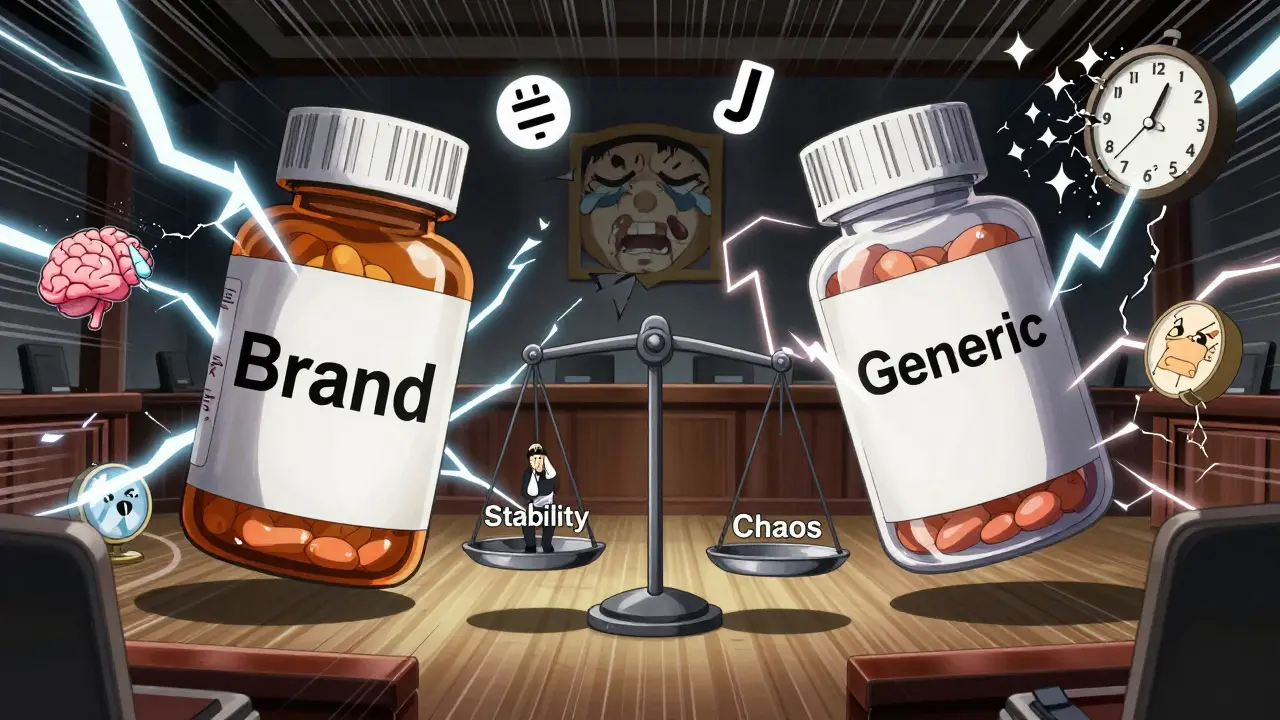
Generic switches aren’t the real problem-unplanned switches are
Here’s the truth: switching isn’t always bad. Sometimes it’s necessary. Maybe your current med causes weight gain. Maybe it’s making you too sleepy. Maybe it just stopped working.
The real issue isn’t switching-it’s unplanned switching.
When a switch is rushed, done without warning, or forced by insurance, the psychological toll skyrockets. A 2022 survey found that 74% of patients felt less confident in their treatment after an unexpected switch. Many reported feeling betrayed by their doctor or pharmacist.
Compare that to patients who were part of a slow, guided transition. In studies where doctors used cross-tapering-gradually reducing the old drug while introducing the new-patients reported 37% fewer psychological side effects. The key? Time. Communication. Control.
One doctor in Portland told me: “I used to think switching meds was just a paperwork issue. Then I had a patient come in after a forced switch. She said, ‘I didn’t feel like I was in my body anymore.’ That’s when I realized: I’m not just prescribing pills. I’m managing someone’s sense of self.”
Who gets left behind when meds change?
Not everyone experiences switching the same way. Your income, education, and access to care shape how you handle it.
People with higher incomes and college degrees are 25% less likely to switch antidepressants. Why? Because they can afford to stay on brand-name drugs. They have the time to advocate for themselves. They’re more likely to find doctors who listen.
Meanwhile, those earning under $30,000 a year are 33% more likely to have negative psychological outcomes during a switch. Many can’t afford follow-up visits. They can’t take time off work to monitor symptoms. They’re pressured to accept whatever the pharmacy gives them.
This isn’t just unfair-it’s dangerous. When your mental health depends on consistency, and the system keeps changing your meds without warning, you’re not just at risk for relapse. You’re at risk for losing trust in the entire system.
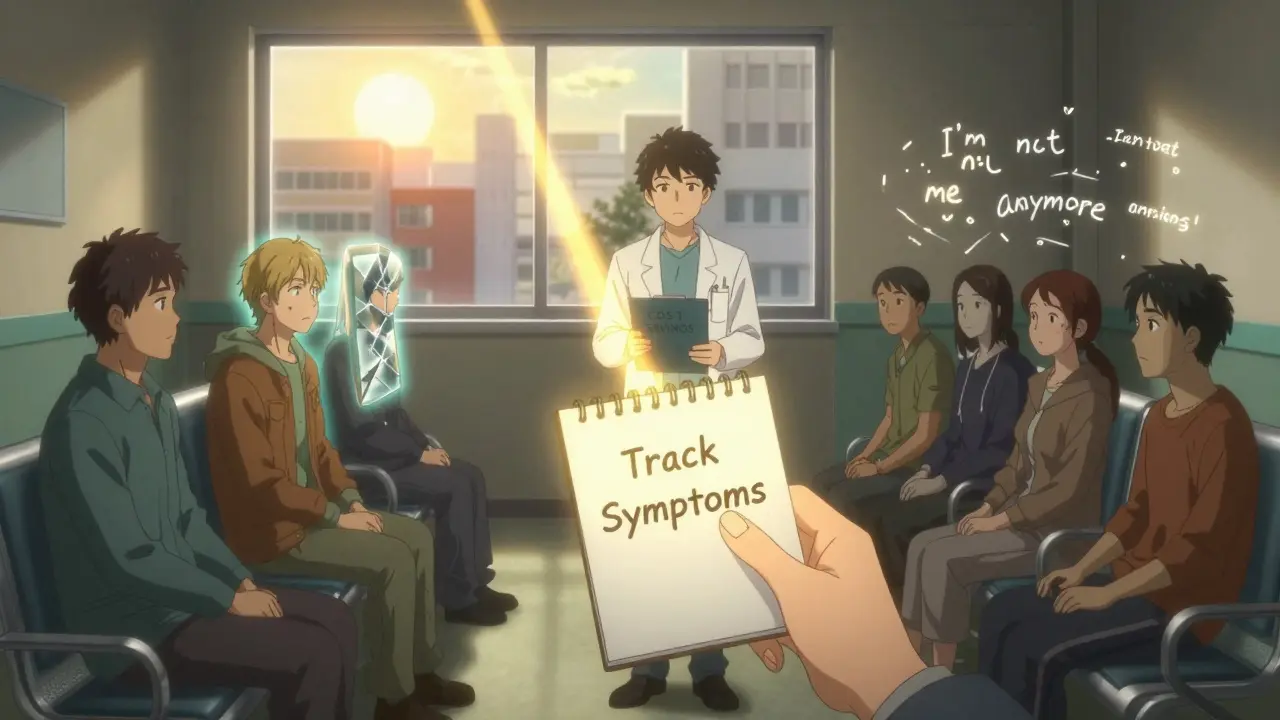
What you can do to protect your mental health during a switch
If you’re about to switch medications, here’s what actually helps:
- Ask for a cross-taper. Don’t stop cold. Ask your doctor to slowly reduce your current med while slowly adding the new one. This takes 2-4 weeks, but it cuts side effects in half.
- Request the same generic manufacturer. If you’ve done well on a specific generic, ask your pharmacy to keep it. Not all generics are made the same.
- Track your symptoms daily. Use a simple notebook or app. Note mood, sleep, energy, and any strange sensations. This gives you data to show your doctor.
- Know your half-life. Medications like paroxetine (21-hour half-life) need slower tapers than fluoxetine (96-hour half-life). If your doctor doesn’t know this, ask for a referral to a psychopharmacologist.
- Speak up if you feel off. If you start feeling worse after a switch, don’t wait. Call your doctor within 48 hours. Don’t assume it’s ‘just adjustment.’
And if your doctor dismisses your concerns? Get a second opinion. Your mental health isn’t a cost-saving measure.
The system is broken-but your voice isn’t
Right now, the U.S. healthcare system treats psychiatric meds like lightbulbs: interchangeable, replaceable, cheap. But your brain isn’t a lightbulb. It’s a complex, delicate system that takes months-or years-to find balance.
Insurance companies don’t track psychological outcomes after switches. Electronic health records rarely flag when a patient has been switched. Only 37% of clinics even have a protocol for it.
But change is coming. The FDA is launching a new surveillance system in 2024 to track real-world psychological effects of switching. Digital tools like Pear Therapeutics’ reSET app are already helping patients monitor symptoms during transitions-with 27% fewer hospitalizations in trials.
The real solution? Not more pills. Not cheaper generics. But respect. Respect for the fact that your mind remembers what your body forgets. Respect for the time it takes to stabilize. Respect for the fact that you’re not just a data point-you’re a person.
If you’ve been switched without warning, you’re not broken. You’re responding exactly as a human nervous system should.
Why do I feel worse after switching to a generic antidepressant?
It’s not always the active ingredient. Generic medications can differ in inactive ingredients, coatings, and how slowly the drug is released. For people whose brains have adapted to one specific formula, even tiny changes can trigger withdrawal-like symptoms-dizziness, brain zaps, anxiety spikes, or emotional numbness. Studies show 68% of negative reactions happen between different generic versions, not between brand and generic.
Can switching meds cause suicidal thoughts?
Yes. A 2022 NAMI survey found that 37% of people experienced suicidal ideation during a medication switch. This isn’t because the new drug is ‘bad’-it’s because abrupt changes destabilize the nervous system. The risk is highest with antidepressants that have short half-lives, like paroxetine, and when switches happen without tapering. Always report worsening mood immediately.
How long does it take to adjust after switching psychiatric meds?
It varies. For most antidepressants, it takes 2-6 weeks to stabilize. But psychological symptoms like anxiety, emotional flatness, or brain fog can linger longer-sometimes up to 3 months. The key is patience and monitoring. If symptoms worsen after 4 weeks, talk to your doctor. You may need to adjust the taper or switch back.
Is it safe to switch from one generic to another?
It’s not inherently unsafe-but it’s risky without planning. Many patients stabilize on one generic version, then get switched to another by the pharmacy without notice. Studies show this is a major cause of relapse and psychological distress. Always ask to stay on the same generic manufacturer. If your insurance won’t cover it, ask your doctor to write a medical necessity letter.
Should I avoid switching meds altogether?
No. Sometimes switching is necessary-for side effects, ineffectiveness, or cost. But it should never be done without a plan. The safest approach is a slow cross-taper, close monitoring, and open communication with your provider. Don’t let cost or convenience override your mental stability.
What’s the difference between cross-tapering and abrupt switching?
Cross-tapering means slowly reducing your old medication while slowly introducing the new one-usually over 2-4 weeks. This gives your brain time to adjust. Abrupt switching means stopping one drug and starting another immediately. That shocks the nervous system and increases risk of withdrawal symptoms, relapse, and emotional distress by 37%.
Can pharmacogenetic testing help predict if I’ll react badly to a switch?
Some companies offer genetic tests that claim to predict how you’ll respond to certain meds. While promising, they’re not yet reliable enough for routine use. Only 15% of primary care providers use them regularly, and evidence is still limited. They might help in complex cases-but they’re not a substitute for careful clinical monitoring during a switch.
Next steps: What to do if you’re switching now
If you’re in the middle of a switch and feeling off:
- Write down every symptom, even small ones.
- Call your doctor within 48 hours-don’t wait for your next appointment.
- Ask: “Was this switch planned? Can we go back to my old med while we figure this out?”
- If your doctor won’t help, find a psychopharmacologist or mental health clinic that specializes in medication management.
You’re not overreacting. You’re not weak. You’re responding to a biological and psychological disruption-and you deserve care that respects that.