When you pick up a prescription, you might see two names on the label: one you recognize, and another that looks like a string of letters and numbers. If you’ve ever wondered why your doctor prescribed one over the other-or why your pharmacy switched your meds without asking-you’re not alone. The truth is, most people don’t know the difference between generic and brand-name medications. And that’s okay. What matters is knowing how to talk to your doctor about it.
They’re the Same Medicine, Just Cheaper
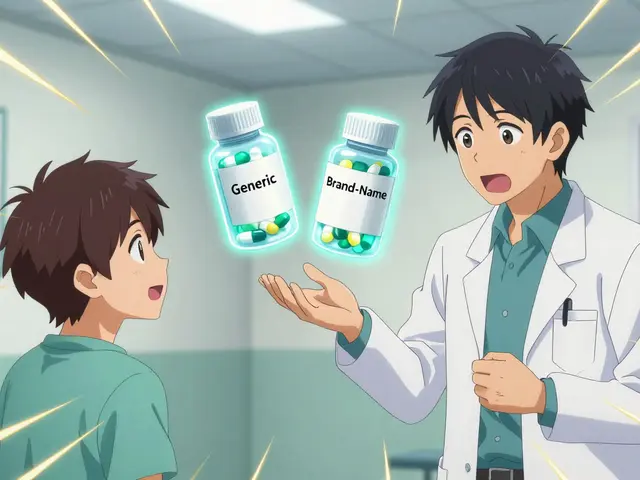
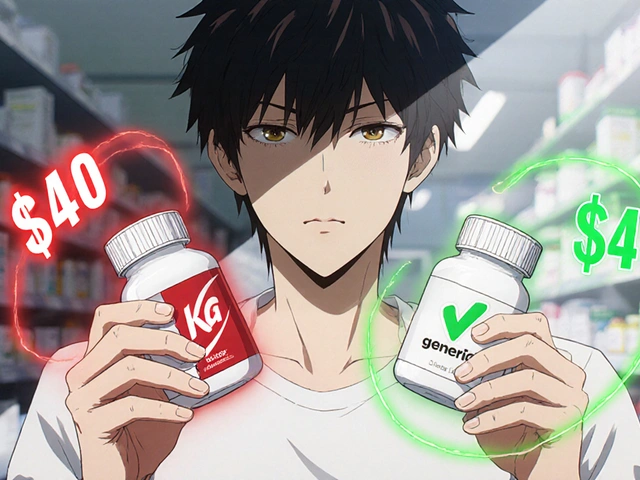
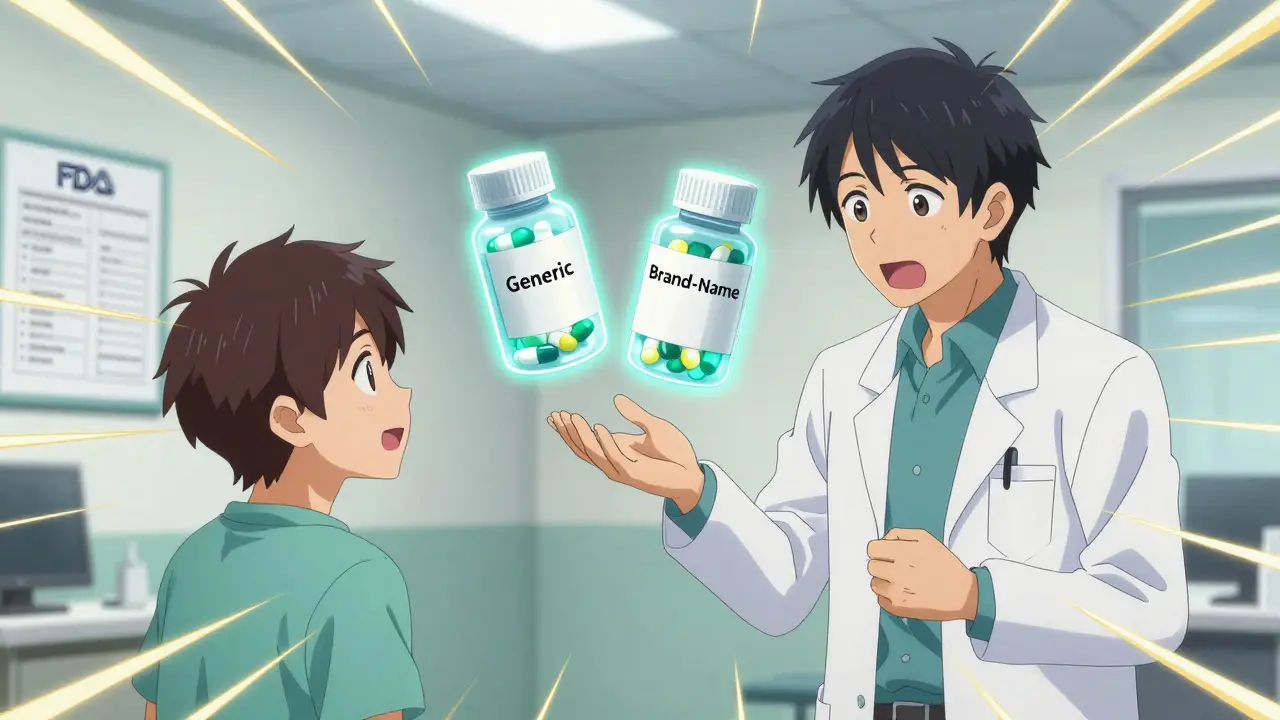
Generic drugs aren’t "weaker" or "inferior" versions of brand-name drugs. They’re exact copies in every way that counts. The active ingredient-the part that actually treats your condition-is identical. So is the dose, how it’s absorbed, how fast it works, and how long it lasts. The U.S. Food and Drug Administration (FDA) requires generics to meet the same strict standards for safety, strength, purity, and effectiveness as the original brand-name drug. In fact, the FDA says generics work the same way and carry the same risks and benefits.So why do they cost so much less? Because generic manufacturers don’t have to pay for the original research, clinical trials, or marketing campaigns. Those costs were already covered by the brand-name company during its patent period. Once the patent expires, other companies can make the same drug. That competition drives prices down-often by 80 to 85%. In the U.S., generics save patients and the healthcare system billions every year. Between 2007 and 2016 alone, they saved $1.67 trillion.
Why Do They Look Different?
If you’ve ever opened a pill bottle and thought, "This isn’t the same medicine," you’re not crazy. Generics often look different: different color, shape, size, or even taste. That’s not a mistake. U.S. trademark laws prevent generic drugs from looking exactly like the brand-name version. So manufacturers change the inactive ingredients-like dyes, fillers, or coatings-to make them visually distinct.These inactive ingredients don’t affect how the drug works. But they can cause minor differences in how quickly the medicine enters your bloodstream. The FDA allows a small range-up to 20%-in absorption rates. In reality, most generics fall within just 3.5% of the brand-name version. For 9 out of 10 people, this difference is completely invisible in how they feel or how well the drug works.
When Might You Need the Brand-Name Version?
There are rare exceptions. For certain medications with a narrow therapeutic index-where even tiny changes in dosage can cause serious side effects or treatment failure-some doctors prefer to stick with the brand-name version. These include drugs like warfarin (a blood thinner), levothyroxine (for thyroid conditions), and some anti-seizure medications.Even here, the FDA says approved generics are safe and effective. But some patients report feeling different after switching, even if blood tests show no change. This could be due to the nocebo effect-when expecting a problem causes real symptoms. Still, if you’ve had a bad reaction to a specific generic version, tell your doctor. They can note "dispense as written" on your prescription so the pharmacy can’t switch it without approval.

What Your Pharmacist Can Tell You
Your pharmacist is often the first person to notice when a generic is substituted. In many states, pharmacies are required by law to fill a prescription with the generic version unless the doctor specifically says otherwise. That’s not a trick-it’s a cost-saving rule built into the system.If you’re confused or worried, ask your pharmacist. They’re trained to explain these switches. A 2022 study found that 78% of patient concerns about generics were resolved just by talking to a pharmacist. They can tell you why the pill looks different, what the inactive ingredients are, and whether any known issues exist with that particular manufacturer.
How to Bring It Up With Your Doctor
Don’t wait until you’re handed a new bottle. Bring this up during your appointment. Here’s how:- Ask: "Is there a generic version of this medication?"
- Ask: "Will the generic work just as well for my condition?"
- Ask: "Are there any reasons I should take the brand-name version instead?"
- Be honest: "I’m worried about the cost. Can we go with the generic?"
Doctors aren’t pushing brand-name drugs because they’re better-they’re often just following what’s been prescribed before. Many don’t realize how much patients are paying out of pocket. If you mention money, they’ll usually be happy to switch you to a cheaper option.
What Patients Really Say
Surveys show that 89% of people who switch from brand-name to generic drugs report no difference in how they feel. At Kaiser Permanente, 92% of patients were satisfied after their pharmacist explained the switch-even though 17% initially panicked when they saw a different-looking pill.On Reddit, some users report feeling off after switching to generics for seizure meds or thyroid drugs. But these cases are rare, and often tied to switching between different generic manufacturers rather than going from brand to generic. One patient wrote: "I switched from brand to generic levothyroxine and my TSH levels jumped. My doctor switched me back, and it stabilized." That’s not a failure of generics-it’s a reminder that consistency matters. If you’re stable on one version, don’t switch unless your doctor says so.
Cost Isn’t Just About the Pill
A $50 brand-name pill might seem like a small price compared to a hospital bill. But if you skip doses because you can’t afford it, that’s when real harm happens. Studies show that high drug costs lead people to cut pills in half, delay refills, or stop taking them altogether. That’s far more dangerous than any theoretical difference between a generic and brand-name drug.Generic drugs aren’t just a budget option-they’re a public health tool. They help people stay on their meds. And staying on your meds is the best way to avoid complications, ER visits, and long-term damage.
What’s Changing Right Now
The FDA approved 745 generic drugs in 2022-a 12% increase from the year before. More patents are expiring, and new generics are hitting the market faster than ever. Thanks to the Generic Drug User Fee Amendments (GDUFA), approval times have dropped from 36 months to just 10.Still, challenges remain. Some complex drugs-like inhalers, eye drops, and biologics-are harder to copy. For those, biosimilars (not generics) are being developed. And supply chain issues still cause shortages. About 45% of generic drug shortages trace back to problems at just one manufacturing plant.
But the trend is clear: generics are here to stay. And they’re saving lives-not just money.
Final Thought: Ask, Don’t Assume
You don’t need to be a pharmacist or a doctor to make smart choices about your meds. You just need to ask the right questions. If your doctor says, "This is the best option," ask why. If your pharmacy switches your pill without telling you, ask why. If you feel different after a switch, speak up.Medication isn’t one-size-fits-all. But cost shouldn’t be the reason you don’t get the care you need. Generics are safe. They’re effective. And they’re your right to choose.
Are generic medications as effective as brand-name drugs?
Yes. Generic medications contain the same active ingredients, work the same way, and meet the same FDA standards for safety, strength, purity, and effectiveness as brand-name drugs. The FDA requires them to be bioequivalent, meaning they deliver the same therapeutic results. For most people, there’s no noticeable difference in how well they work.
Why do generic pills look different from brand-name ones?
U.S. trademark laws prevent generic drugs from looking identical to brand-name versions. So manufacturers change the color, shape, size, or coating using different inactive ingredients-like dyes or fillers. These don’t affect how the drug works, only how it looks or tastes. The active ingredient remains unchanged.
Can I ask my doctor to prescribe only brand-name drugs?
Yes. You can ask your doctor to write "dispense as written" or "no substitution" on your prescription. This tells the pharmacy not to switch to a generic version. But unless there’s a medical reason-like a rare sensitivity or narrow therapeutic index drug-it’s usually better to try the generic to save money.
Should I be worried if my pharmacy switches my generic brand?
Most people won’t notice a difference. Generics from different manufacturers are all approved by the FDA and must meet the same standards. But if you’re on a medication with a narrow therapeutic index-like warfarin or levothyroxine-and you feel different after a switch, tell your doctor. Consistency matters in these cases, and your doctor can help you stay on the same version.
Do generics have more side effects than brand-name drugs?
No. Generics have the same side effect profile as brand-name drugs because they contain the same active ingredient. If you experience new side effects after switching, it’s more likely due to changes in inactive ingredients, the nocebo effect (expecting a problem), or switching between different generic manufacturers-not because generics are inferior.
How much money can I save by using generics?
On average, generics cost 80-85% less than brand-name drugs. For many prescriptions, that means saving $40-$100 per month. In the U.S., generics save patients and the healthcare system $8-10 billion annually in out-of-pocket costs alone. Over a year, switching to generics can easily save hundreds or even thousands of dollars.
Are there any drugs that don’t have generic versions?
Yes. Some complex medications-especially biologics like insulin, rheumatoid arthritis treatments, and cancer drugs-don’t have true generics. Instead, they have biosimilars, which are highly similar but not identical. These are newer and often still expensive. But for most common drugs-antibiotics, blood pressure meds, antidepressants, and cholesterol drugs-generics are widely available and affordable.