Naloxone Co-Prescribing Risk Assessment Tool
Assess Your Risk Factors
This tool evaluates whether naloxone co-prescribing is recommended based on CDC guidelines. Enter your opioid dose and select risk factors to see your personalized assessment.
Your Risk Assessment
Morphine Milligram Equivalents (MME):
Selected Risk Factors:
Recommended: Naloxone co-prescribing is for you.
Why This Matters
Naloxone is a life-saving medication that reverses opioid overdoses by blocking opioid receptors in the brain. It's not about judgment—it's about preparedness. One spray can save a life.
Key facts:
- 73% of naloxone sales are now generic (costing $25-$50)
- Medicare/Medicaid covers naloxone with little to no copay
- Most people can administer it with no training
When a doctor prescribes opioids for chronic pain, they’re not just giving you medicine-they’re giving you a risk. Opioids work, but they can slow your breathing to a dangerous level, especially at higher doses or when mixed with other drugs. That’s where naloxone co-prescribing comes in. It’s not about assuming you’ll overdose. It’s about making sure someone nearby can act fast if something goes wrong.
What Is Naloxone, and How Does It Work?
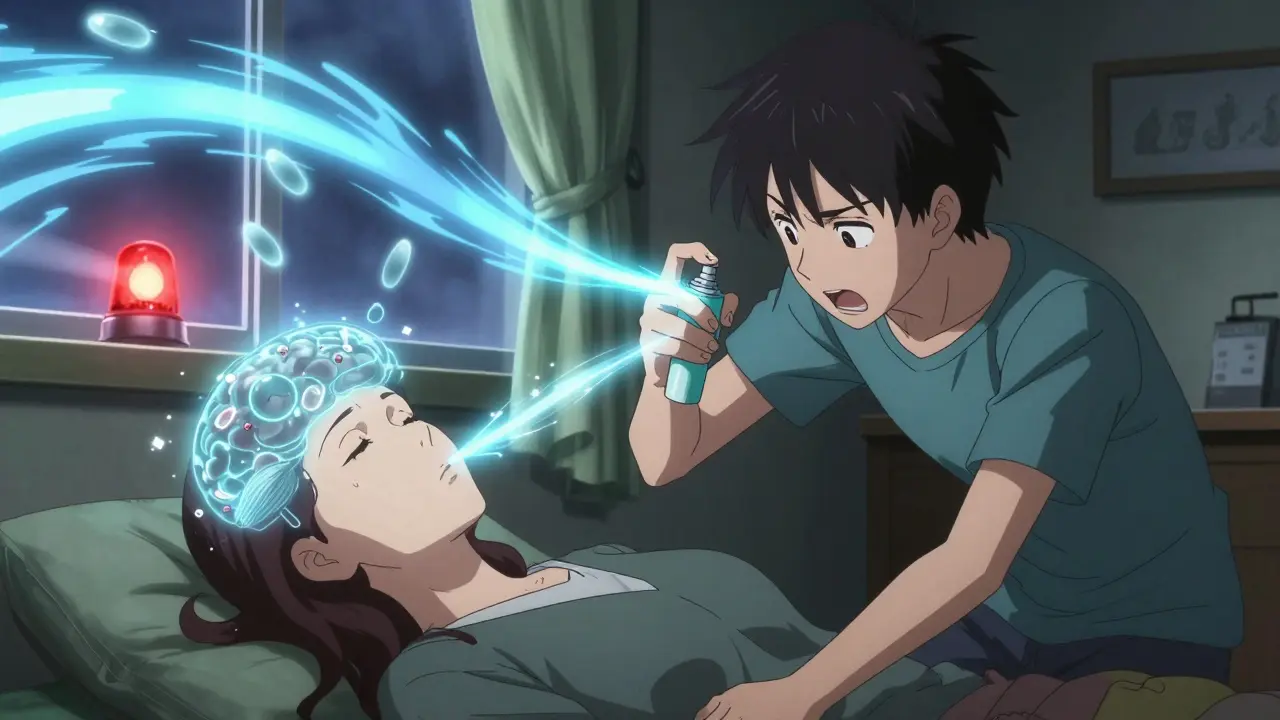
Naloxone is a simple, life-saving drug. It’s been around since the 1960s and was approved by the FDA in 1971. It doesn’t treat pain. It doesn’t get you high. It does one thing: it kicks opioids off the brain’s receptors. When someone overdoses, opioids lock onto those receptors and shut down breathing. Naloxone rushes in, pushes them out, and lets the person breathe again-usually within minutes.
You don’t need to be a doctor to use it. Today, most naloxone comes in a nasal spray. You just spray it into one nostril. No needles. No training. That’s why it’s so powerful. A family member, friend, or even a stranger can use it in an emergency.
Who Gets Naloxone With Their Opioid Prescription?
The CDC says you should get naloxone if you’re on opioids and have any of these risk factors:
- Taking 50 morphine milligram equivalents (MME) or more per day
- Using benzodiazepines like Xanax or Valium at the same time
- Having a history of substance use disorder
- Having COPD, sleep apnea, or other breathing problems
- Using alcohol heavily
- Having depression, anxiety, or other mental health conditions
- Recently getting out of jail or prison
That last one matters. People who’ve been in prison often lose their tolerance to opioids. If they go back to using the same dose they used before, their body can’t handle it. Overdose risk spikes.
Some states go further. New York requires naloxone to be offered to every patient getting an opioid prescription. California only requires it if the dose is over 90 MME/day. The rules vary by state, but the science doesn’t: higher dose + other risk factors = higher chance of overdose.
Why This Isn’t Just a Good Idea-It’s Proven
A 2019 study in the Annals of Internal Medicine looked at nearly 2,000 patients. Those who got naloxone with their opioid prescription had 47% fewer emergency room visits for opioid issues and 63% fewer hospital stays. That’s not luck. That’s data.
Another study found that for every 10% increase in naloxone distribution, opioid deaths dropped by 1.2%. That might sound small, but when you’re talking about tens of thousands of deaths a year, even a 1% shift saves lives.
One primary care clinic in rural Kentucky started co-prescribing naloxone in 2021. Since then, they’ve documented 17 overdoses reversed by family members using the nasal spray. These aren’t theoretical numbers. These are real people breathing again because someone had the right tool at the right time.
What About the Pushback?
Not everyone is on board. Some patients feel insulted. They think, "You think I’m going to overdose?" One provider on Reddit said 60% of their patients refuse naloxone because they see it as judgment.
But here’s the thing: it’s not about suspicion. It’s about safety. Think of it like a fire extinguisher in your home. You don’t think you’ll start a fire. But if you do, you’re glad it’s there.
Sarah Johnson, a chronic pain patient in Ohio, felt the same way at first. "I was offended," she said. But when her teenage son accidentally took her pills last year, the naloxone nasal spray saved his life. "I’m so grateful," she told a nonprofit. "I didn’t know what to do. But I had the spray. And I used it."
Doctors, too, are hesitant. A 2021 survey found 68% of primary care providers feel uncomfortable bringing up overdose risk. They worry about damaging trust. But training helps. Simple phrases like, "This is just like a seatbelt-you hope you never need it, but you’re glad it’s there," make the conversation easier.
Cost and Access: Is It Affordable?
Generic naloxone nasal spray costs between $25 and $50 at most pharmacies. The brand-name Narcan® used to be $130-$150, but after its patent expired in 2022, generic versions flooded the market. Now, 73% of sales are generic.
Insurance covers it. Thanks to the SUPPORT Act of 2018, Medicare, Medicaid, and most private plans cover naloxone with little to no copay. Many pharmacies keep it on the shelf without a prescription. Some states even let pharmacists give it out without a prescription at all.
Still, access isn’t equal. Urban pharmacies stock it 85% of the time. Rural pharmacies? Only 42%. That gap matters. If you live in a small town and your doctor prescribes naloxone, but the nearest pharmacy doesn’t carry it, you’re out of luck.
How It Works in Practice
Here’s what happens when a doctor co-prescribes naloxone:
- Check the risk. They look at your opioid dose (using the CDC’s MME calculator), check for other drugs you’re on, and ask about your history.
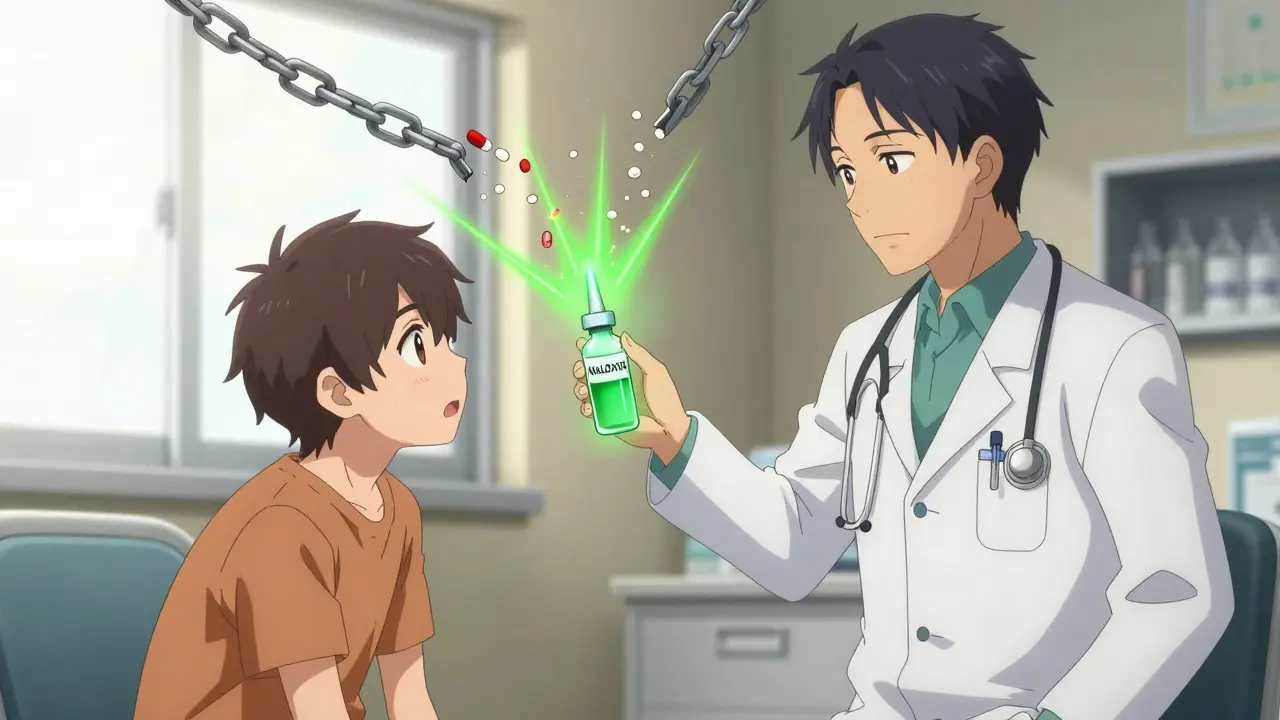
- Talk about it. They explain why they’re offering it-not as a judgment, but as a safety net.
- Prescribe and teach. You get the spray, and they show you how to use it. They also tell you to teach someone else-your partner, your sibling, your neighbor.
The training is simple. The Indian Health Service uses a four-step method called S.L.A.M.:
- Signs of overdose (unresponsive, slow breathing, blue lips)
- Life-saving steps (call 911, check breathing)
- Address naloxone (spray in one nostril)
- Monitor until help arrives (overdose can come back)
Most people remember it. And when they need it, they act.
What’s Changing Now?
The CDC updated its guidelines in August 2023. Now, if you’ve had a non-fatal overdose in the past year-even if you’re on a low dose-you should get naloxone. That’s a big shift. It’s no longer just about dose. It’s about history.
The FDA approved the first generic naloxone nasal spray in April 2023. That’s driving prices down even more. And by 2025, a long-acting version could be approved-one dose that lasts for days, not minutes. That could change everything.
The Biden administration has committed $1.9 billion to overdose prevention in 2024, with $500 million going directly to naloxone distribution. That’s not just policy-it’s action.
It’s Not a Cure. But It’s a Lifeline.
Naloxone doesn’t fix addiction. It doesn’t replace treatment. But it buys time. It gives someone a second chance. A chance to get help. A chance to live.
For patients on opioids, it’s not about fear. It’s about preparedness. For families, it’s peace of mind. For doctors, it’s responsibility.
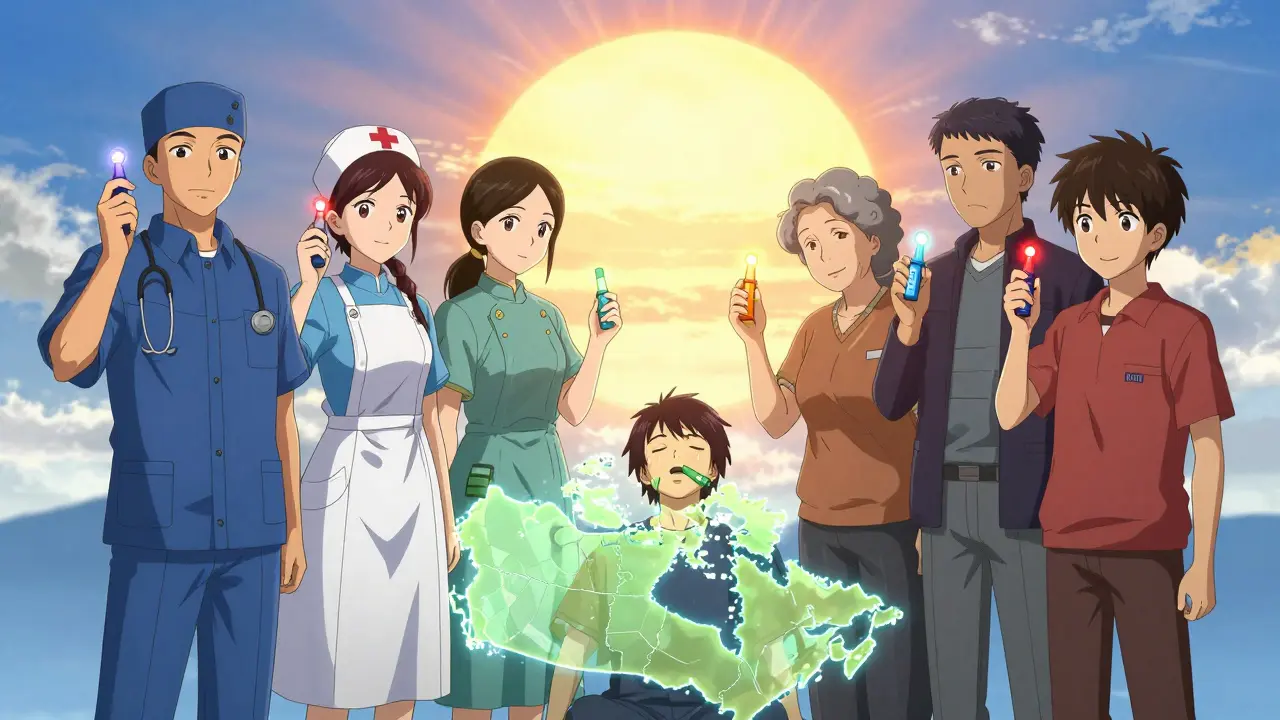
If you’re prescribed opioids, ask for naloxone. If you’re a family member, learn how to use it. If you’re a provider, offer it. Because in the middle of an overdose, seconds matter. And naloxone is the fastest thing we have to stop it.