When your lungs start to feel heavy, your cough won’t quit, and even breathing feels like a chore, it’s not just a cold. It could be pneumonia - and not all pneumonia is the same. The type you have changes everything: how you feel, how it’s treated, and even how dangerous it can be. Three main kinds of pneumonia exist - bacterial, viral, and fungal - and knowing the difference isn’t just medical jargon. It’s the line between getting better quickly and facing serious complications.
Bacterial Pneumonia: The Sudden Onset
Bacterial pneumonia hits fast. One day you might feel fine; the next, you’re running a high fever - 102°F to 105°F - with chills, sharp chest pain when you breathe, and a cough that brings up thick, yellow or green mucus. Sometimes, you even see blood in it. Your lips or fingernails might turn blue because your body isn’t getting enough oxygen. This isn’t a slow burn. It’s a full-on assault on your lungs.
The usual culprit? Streptococcus pneumoniae. This one bacterium causes about half of all community-acquired pneumonia cases in the U.S. It’s the reason doctors reach for antibiotics so often. Other bacteria like Haemophilus influenzae, Staphylococcus aureus, and Legionella pneumophila (which causes Legionnaires’ disease) also show up, especially in older adults or people with other health problems.
On an X-ray, bacterial pneumonia looks like a solid white patch - often just on one side of the lung. That’s called lobar consolidation. It means the tiny air sacs (alveoli) are filled with pus and fluid, not air. Your immune system responds by sending in neutrophils, white blood cells that swarm the infection like firefighters. But if the bacteria have a thick capsule - like S. pneumoniae does - they can hide from your body’s defenses. That’s why some cases get worse fast.
Treatment? Antibiotics. Penicillin, azithromycin, or levofloxacin are common choices. But here’s the catch: if you take antibiotics for something that’s not bacterial, you’re not helping yourself. You’re just helping drug-resistant bacteria grow. The CDC says nearly 30% of outpatient antibiotic prescriptions are unnecessary. That’s why getting the right diagnosis matters more than ever.
Viral Pneumonia: The Slow Burn That Turns Dangerous
Viral pneumonia doesn’t come crashing in. It creeps up. You start with a runny nose, sore throat, maybe a low-grade fever. Then, after a few days, your cough gets worse. Your muscles ache. You feel exhausted. Your fever might climb to 100-102°F, but it’s rarely the high spike you see with bacterial cases.
This type makes up about one-third of all pneumonia cases. The usual suspects? Influenza (flu), RSV (especially in kids and older adults), and SARS-CoV-2 (the virus behind COVID-19). Rhinovirus and human metapneumovirus are also common, especially during cold and flu season.
On an X-ray, viral pneumonia looks different. Instead of one solid white patch, you see a hazy, spread-out pattern across both lungs. That’s called interstitial infiltrates. It means the infection is attacking the tissue between the air sacs, not filling them with pus. Your body’s response is messier - more inflammation, more mucus, less pus.
Antibiotics won’t touch this. You need rest, fluids, and sometimes antivirals. Oseltamivir (Tamiflu) can help if you catch the flu early. Remdesivir is used for severe COVID-19 pneumonia. But here’s the real danger: viral pneumonia often sets the stage for a second infection - bacterial pneumonia. About 25-30% of people hospitalized with flu end up with a bacterial superinfection, usually from S. pneumoniae or S. aureus. That’s why doctors watch closely after a viral illness. If your fever spikes again after starting to feel better, it’s not a relapse - it’s a new threat.
Fungal Pneumonia: The Hidden Threat
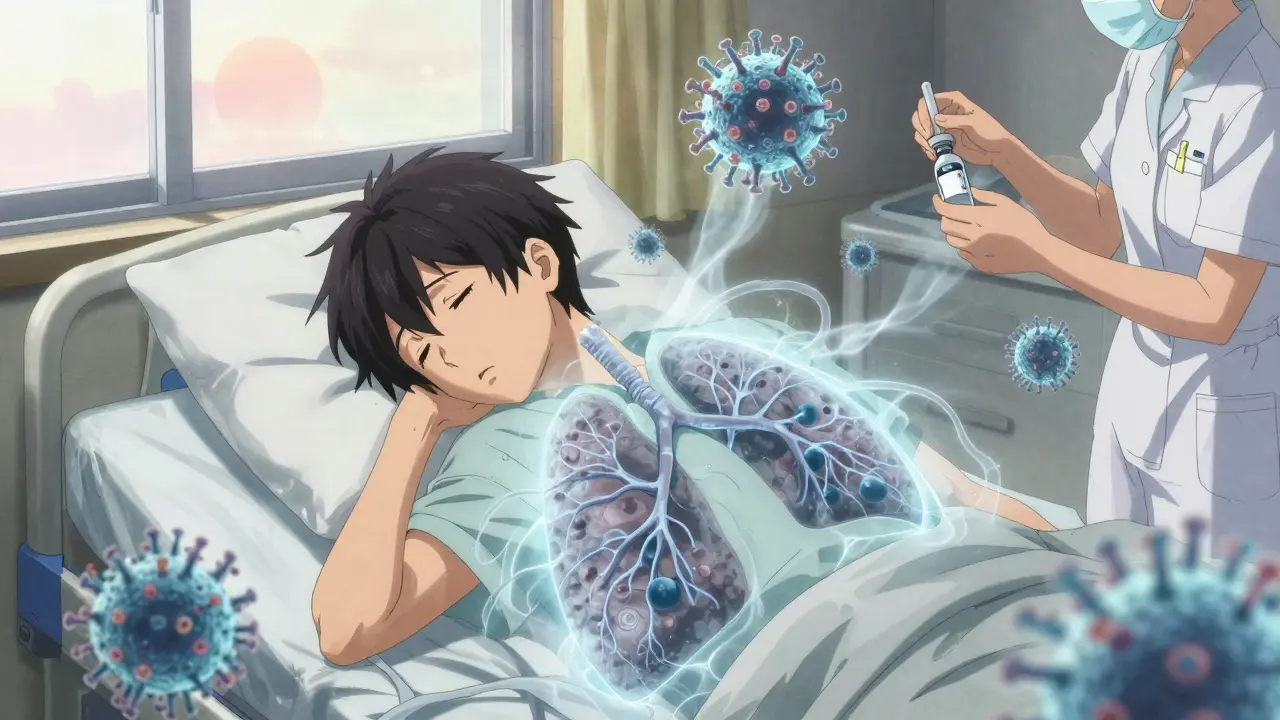
Fungal pneumonia is rare - under 5% of cases - but it’s deadly if missed. You won’t get it from a coworker or your kids. You get it from the soil, dust, or bird droppings. If you’re healthy, your immune system handles it without you even knowing. But if you’re immunocompromised - due to HIV, chemotherapy, organ transplants, or long-term steroid use - your body can’t fight back.
In the U.S., three fungi cause most cases: Coccidioides (Valley fever), Histoplasma (found in bat and bird droppings), and Blastomyces (common in the Midwest and Southeast). Farmers, construction workers, landscapers, and cave explorers have higher exposure. In endemic areas like Arizona or the Ohio River Valley, up to 65% of adults have been exposed to Histoplasma - most never got sick.
Symptoms? Fever, dry cough, fatigue, night sweats. Sometimes nausea or joint pain. It can look just like bacterial or viral pneumonia. That’s why it’s often misdiagnosed. Chest X-rays might show patchy shadows or nodules, but they don’t tell you it’s fungal. You need special tests - sputum cultures, blood antigen tests, or PCR panels - to confirm.
Treatment isn’t antibiotics. It’s antifungals: fluconazole, itraconazole, or for severe cases, amphotericin B. These drugs are stronger, longer-lasting, and come with more side effects than typical antibiotics. Recovery can take months. And if you’re not diagnosed quickly, the infection can spread beyond your lungs - to your brain, skin, or bones.
How to Tell Them Apart - And Why It Matters
Here’s the quick guide:
- Bacterial: Sudden fever over 102°F, thick colored mucus, one-sided lung sounds, X-ray shows a solid white patch. Treated with antibiotics.
- Viral: Gradual onset, low to moderate fever, dry cough, both lungs affected on X-ray, no improvement with antibiotics. May need antivirals.
- Fungal: Slow symptoms, often in high-risk groups, exposure to soil/dust, X-ray unclear, no response to antibiotics. Requires antifungals and lab testing.
Getting it wrong has real consequences. Taking antibiotics for viral pneumonia doesn’t cure you - it just makes future infections harder to treat. The CDC links unnecessary antibiotic use to a 35% increase in resistant bacteria in communities. That’s not just a statistic. It’s someone’s next pneumonia that won’t respond to the usual drugs.
Today, doctors have better tools. Multiplex PCR tests can check for over 20 viruses and bacteria from one nasal swab. Results in hours. That’s changing how we treat pneumonia - faster, smarter, and with fewer mistakes.

Prevention: What Actually Works
You can’t avoid all pneumonia, but you can cut your risk big time.
- For bacterial pneumonia: Get the pneumococcal vaccine. There are two: PCV20 (Prevnar 20) and PPSV23. Recommended for all adults 65+ and kids under 2. It cuts infection risk by 60-70%.
- For viral pneumonia: Get your flu shot every year. It reduces pneumonia risk by 40-60%. Stay up to date on your COVID-19 vaccines. They cut pneumonia risk by 90% in the first few months after vaccination.
- For fungal pneumonia: Avoid dust in high-risk areas. Wear a mask when gardening, cleaning chicken coops, or exploring caves. If you’re immunocompromised, talk to your doctor about preventive antifungals.
Even with vaccines, only 68% of adults 65+ are fully protected against pneumococcal disease. That’s a gap. Every unvaccinated person is a potential source of spread - especially to babies and older adults.
Who’s Most at Risk?
Pneumonia doesn’t care about your job or your income. But it does care about your age and health.
- Children under 2 - their immune systems are still learning.
- Adults over 65 - immune response slows down.
- Smokers - your lungs are already damaged. Risk is 2.3 times higher.
- People with COPD, heart disease, or diabetes - your body’s already fighting other battles.
- Anyone on immunosuppressants - your body can’t mount a strong defense.
Death rates vary by type. Bacterial pneumonia kills 5-7% of hospitalized patients. Viral pneumonia kills 3-5%, but can hit 9% in older adults with flu. Fungal pneumonia? Up to 10-15% in those with weak immune systems. That’s why early diagnosis saves lives.
Don’t wait for a fever to spike. If you’ve had a cold for more than a week, your breathing is getting harder, or you feel worse instead of better - see a doctor. Don’t guess what kind of pneumonia you have. Get tested. Get the right treatment. Your lungs are counting on it.
Can you have pneumonia without a fever?
Yes, especially in older adults or people with weakened immune systems. Instead of a fever, they might feel unusually tired, confused, or have a lower-than-normal body temperature. A cough, shortness of breath, or chest pain are more reliable signs.
Is pneumonia contagious?
The germs that cause pneumonia can be contagious - especially viral and some bacterial types. You can catch them through coughs or sneezes. But you don’t catch pneumonia itself - you catch the virus or bacteria that might lead to it. Whether it turns into pneumonia depends on your immune system and health.
How long does pneumonia last?
Bacterial pneumonia often improves within a week of starting antibiotics, but fatigue can last weeks. Viral pneumonia may take 1-3 weeks to clear, and fungal pneumonia can take months. Recovery time depends on your age, health, and how quickly you got treatment.
Can you get pneumonia twice?
Yes. Having pneumonia once doesn’t give you immunity. Different germs can cause it each time. That’s why vaccines are so important - they protect against the most common and dangerous types, like pneumococcus and flu.
Should I go to the ER for pneumonia?
Go to the ER if you have trouble breathing, chest pain, confusion, a high fever that won’t go down, or your lips or fingernails turn blue. These are signs your body is struggling to get oxygen. Don’t wait - pneumonia can turn life-threatening fast.