Drug Safety Signal Calculator
How Sentinel vs. FAERS Detect Drug Safety Signals
This tool demonstrates how the FDA Sentinel Initiative detects drug safety signals compared to traditional reporting systems like FAERS. Enter your estimates below to see how Sentinel's methodology provides more accurate risk assessment by knowing the total number of patients exposed to the drug.
Key Insight
Why FAERS Underestimates Risk
When a new drug hits the market, doctors and patients trust it’s safe. But safety isn’t proven just by clinical trials. Those studies involve thousands, not millions. And rare side effects? They often don’t show up until the drug is used by hundreds of thousands of people. That’s where the FDA Sentinel Initiative comes in. It doesn’t wait for complaints. It actively hunts for problems using real-world data from millions of patients across the U.S.
What Is the FDA Sentinel Initiative?
The FDA Sentinel Initiative is a national system built to monitor the safety of prescription drugs, vaccines, biologics, and medical devices after they’re approved and in wide use. Launched in 2008 under the FDA Amendments Act, it was created to fix a major gap: traditional reporting systems like FAERS (the FDA Adverse Event Reporting System) rely on doctors and patients to voluntarily report side effects. But most never do. Studies show only 1% to 10% of serious adverse events get reported. Sentinel changes that. Instead of waiting for reports, Sentinel uses big data to actively scan healthcare records. It doesn’t collect data in one place. It doesn’t need to. It asks questions across a network of trusted partners-insurance companies, hospitals, clinics-who keep their own data secure. The FDA sends out a query: “How many people on this drug had a stroke in the last three months?” Each partner runs that same query on their own data. Then they send back only the results, not the patient names or raw records. Privacy stays protected. Safety gets better.How It Works: The Distributed Network Model
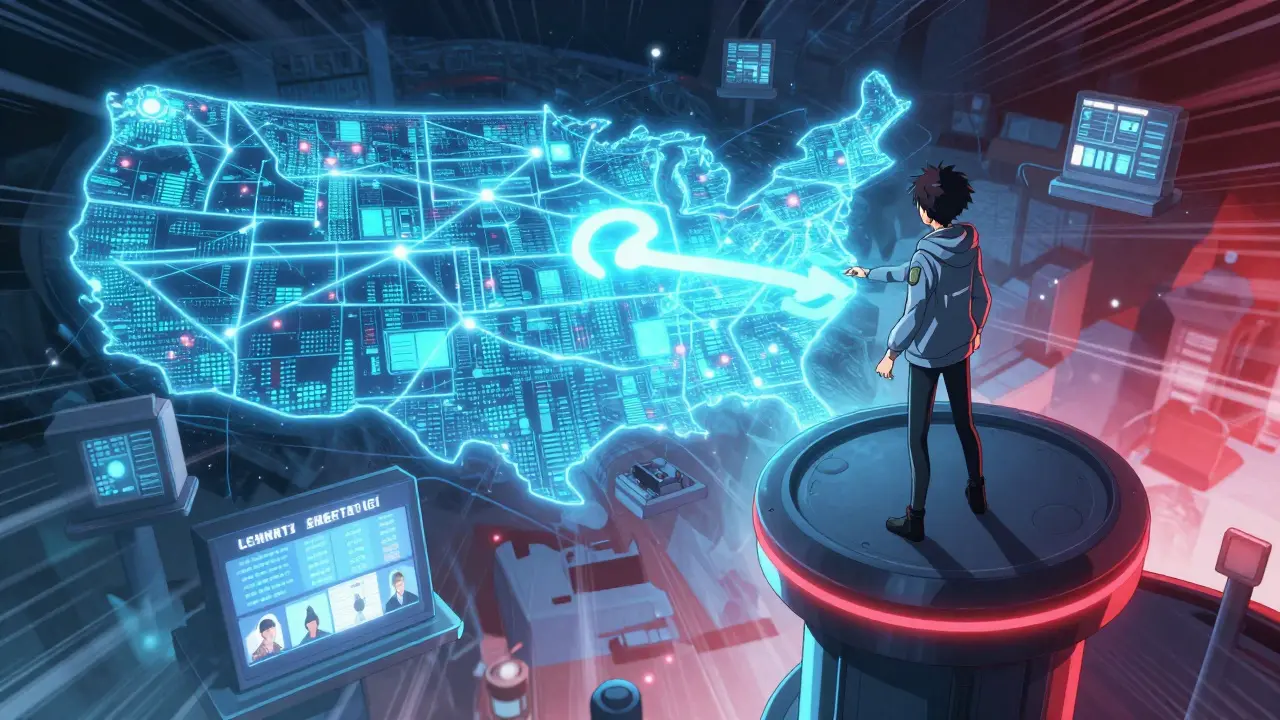
Think of Sentinel like a decentralized search engine for drug safety. It’s not a single database. It’s a network of 20+ major data partners, including giants like Humana, Kaiser Permanente, and Medicare claims systems. Each holds electronic health records, insurance claims, pharmacy logs, and lab results for tens of millions of patients. When the FDA spots a potential signal-say, a spike in heart inflammation after a new vaccine-they don’t call up each hospital. They use the Sentinel Secure Query Portal to send a standardized analytical program to every partner. That program runs inside each partner’s firewall. It counts cases, adjusts for age, gender, other medications, and pre-existing conditions. Then it sends back a summary: “We saw 12 cases of myocarditis in 500,000 vaccine recipients.” This approach is brilliant. It avoids privacy violations. It keeps data ownership with the original providers. And it scales. If one partner has 10 million patients and another has 2 million, both can contribute. The system adds them up. By 2023, Sentinel was analyzing data from over 250 million Americans-more than 75% of the U.S. population.From Claims to Clinical Notes: The Shift to EHRs
Early on, Sentinel relied mostly on insurance claims data. That’s useful-it tells you what was billed: a diagnosis code, a prescription, a hospital visit. But it doesn’t tell you why. Was the patient admitted because of a drug reaction? Or because they fell down the stairs? Claims data can’t answer that. That’s why the FDA pushed hard to bring in electronic health records (EHRs). EHRs contain doctor’s notes, lab results, vital signs, and progress reports. A note like “patient developed rash 48 hours after starting new antibiotic” is gold. But EHRs are messy. They’re written in free text. A nurse might write “rash on arm,” while a doctor says “urticaria.” Enter the Sentinel Innovation Center. Since 2019, they’ve been building tools to make sense of this chaos. They use natural language processing (NLP)-a type of AI-to scan thousands of clinical notes and pull out relevant symptoms. Machine learning helps identify patterns. Is “itchy skin” always linked to drug X? Or is it just a coincidence? One recent project compared Sentinel findings to clinical trial data for a new diabetes drug. The results matched closely. That gave regulators confidence: Sentinel could reliably detect safety signals without waiting for years of post-market studies.
Why It’s Better Than Old-School Reporting
Before Sentinel, the FDA mostly relied on FAERS. Here’s how that system fails:- Underreporting: Most side effects go unreported
- No denominator: You don’t know how many people took the drug
- Delayed: It takes months or years to spot trends
- No control group: Hard to tell if the problem is the drug or something else
Real Impact: Cases Where Sentinel Saved Lives
Sentinel isn’t theoretical. It’s changed policy. In 2017, it found a higher risk of kidney injury in patients taking a common diabetes drug when combined with a certain blood pressure medication. The FDA issued a safety alert. Prescriptions dropped by 30% in six months. Hospitalizations for kidney failure fell. In 2020, Sentinel detected an unexpected spike in Guillain-Barré syndrome after a new shingles vaccine. The signal was subtle-just 1.5 extra cases per million doses. FAERS had missed it entirely. The FDA reviewed the data, confirmed the risk, and updated the vaccine label. No deaths occurred. But without Sentinel, that risk might have gone unnoticed for years. Even more impressive: Sentinel helped validate the safety of COVID-19 vaccines in real time. The Postmarket Rapid Immunization Safety Monitoring (PRISM) system, built on Sentinel’s framework, tracked over 100 million vaccine doses in under six months. It confirmed the rare risk of myocarditis in young men-but also showed the benefits vastly outweighed the risks. That data helped calm public fears.Challenges and Limitations
Sentinel isn’t perfect. It still struggles with:- Missing data: Not all patients visit doctors regularly. Rural populations or those without insurance may be underrepresented.
- Data quality: Coding errors happen. A heart attack might be mislabeled as chest pain.
- Rare events: If a side effect happens in 1 in 500,000 people, even Sentinel might not catch it fast enough.
- Complex queries: Running a study requires trained epidemiologists. It’s not easy for a small clinic to use.

The Future: Sentinel 3.0 and Global Influence
In 2023, the FDA announced a $304 million investment in what’s being called Sentinel 3.0. This next phase will focus on:- Deeper EHR integration: Pulling in data from wearables, home monitors, and patient-reported outcomes
- Advanced AI: Using generative models to simulate what would happen if a drug was given to different populations
- Global partnerships: Sharing methods with the EU, Japan, and Canada to build a worldwide safety network
Who Uses Sentinel?
It’s not just the FDA. The system serves:- Pharmaceutical companies: They use it to monitor their own drugs and respond to safety signals faster
- Researchers: Academic teams run studies using Sentinel data to publish findings in peer-reviewed journals
- Other federal agencies: CDC, NIH, and CMS use Sentinel to track vaccine safety and drug utilization
- International regulators: Health Canada and the EMA consult Sentinel findings when reviewing new drugs
Final Thoughts
The FDA Sentinel Initiative is one of the most important public health tools you’ve never heard of. It turns the passive, broken system of reporting side effects into an active, data-driven safety net. It doesn’t guess. It counts. It compares. It learns. It’s not magic. It’s engineering. It’s statistics. It’s smart software running on secure networks, built by scientists who understand both medicine and data. And it’s working-every day, quietly, saving lives by catching problems before they become epidemics. If you take medication, you’re already benefiting from it. You just don’t know it.How is Sentinel different from the FDA’s FAERS system?
FAERS is a passive reporting system where doctors, patients, or manufacturers voluntarily submit adverse event reports. It’s prone to underreporting and lacks context like how many people used the drug. Sentinel is active-it pulls data from millions of real-world healthcare records and calculates risk using known exposure numbers. It finds patterns FAERS misses and gives regulators faster, more reliable answers.
Does Sentinel collect personal health information?
No. Sentinel never collects or stores individual patient records. Data stays with the original provider-like a hospital or insurance company. The FDA sends out encrypted analytical queries. Results are aggregated and anonymized before they reach the FDA. No names, no addresses, no Social Security numbers are ever shared.
Can researchers outside the FDA use Sentinel data?
Yes. Since 2019, the Sentinel Innovation Center has offered demonstration projects where academic researchers and industry scientists can propose studies. They must follow strict protocols and get approval, but they can use the same tools and data partners as the FDA. Over 50 independent studies have been conducted using Sentinel since 2020.
How long does a Sentinel safety analysis take?
A typical safety assessment takes 4 to 12 weeks, depending on complexity. That’s much faster than traditional epidemiological studies, which can take years. For urgent signals-like a new drug linked to liver failure-the FDA can get preliminary results in under two weeks.
Is Sentinel used only in the U.S.?
The system is U.S.-based and funded, but its methods are being adopted globally. The European Medicines Agency, Health Canada, and Japan’s PMDA have all studied Sentinel and are building similar distributed networks. The goal is to create a global safety network where data can be shared securely across borders without violating privacy laws.