Getting prescribed a life-changing medication is only the first step. For millions of Americans, the real challenge comes when they walk up to the pharmacy counter and see the price tag. A single month’s supply of a specialty drug can cost $1,000 or more. But what if you didn’t have to pay that? That’s where prescription assistance programs come in - direct help from the drug makers themselves.
These aren’t charity handouts or vague promises. They’re real, working programs run by companies like Pfizer, Merck, and Eli Lilly. In 2022 alone, pharmaceutical manufacturers gave out $24.5 billion in financial help to patients. That’s not a typo. Over 12.7 million people used these programs last year to get the medicines they need. And it’s only getting bigger - experts predict spending will hit $38 billion by 2027.
Two Types of Help: Copay Cards vs. Patient Assistance Programs
Not all assistance is the same. There are two main types, and knowing the difference could save you thousands.
Copay assistance programs are for people who have insurance - but their insurance doesn’t cover enough. These come as physical cards or digital coupons you show at the pharmacy. The manufacturer pays the difference between what your insurance says you owe and the full price of the drug. For example, if your copay is $200 but the drug costs $800, the program might cover $600. Some programs cap how much they’ll pay per year - anywhere from $1,000 to $25,000. Others limit it per month, often between $50 and $200. A few even ask you to pay a small monthly fee, like $10, to keep using the card.
These programs mostly target brand-name drugs, especially specialty medications for conditions like rheumatoid arthritis, cancer, or severe asthma. About 68% of all copay assistance goes to these high-cost drugs. And 85% of specialty drugs now offer some kind of manufacturer copay help.
Patient Assistance Programs (PAPs) are for people without insurance or with very limited coverage. These programs give you the medication for free or at a deeply reduced cost - sometimes just $15 per prescription. To qualify, you usually need to prove your income is below 200% to 400% of the Federal Poverty Level. For a family of four in 2023, that meant earning less than $30,000 to $60,000 a year. You’ll need to submit tax returns, pay stubs, and sometimes a doctor’s note confirming you need the drug.
What You Can’t Use These Programs For
There are big restrictions - and they’re not always obvious.
If you have Medicaid or Medicare, you might be shut out. Many PAPs explicitly say they don’t serve people on government insurance. Why? Because Medicare Part D rules say manufacturer assistance can’t count toward your out-of-pocket costs that get you out of the coverage gap. So even if you get free drugs from a PAP, it doesn’t help you reach catastrophic coverage. That means you could stay stuck paying high prices longer.
And here’s another twist: 78% of state Medicaid programs ban the use of copay cards entirely. They argue that when manufacturers lower your out-of-pocket cost, it encourages doctors to prescribe pricier brand-name drugs instead of cheaper generics - which drives up overall drug spending. In fact, one study estimated copay assistance added $1.4 billion to total drug costs in a single year.
Some programs won’t help you if you have any other prescription coverage, even private insurance. One in three PAPs require you to have no other drug coverage at all. That leaves a huge gap for people who have insurance but still can’t afford their meds.
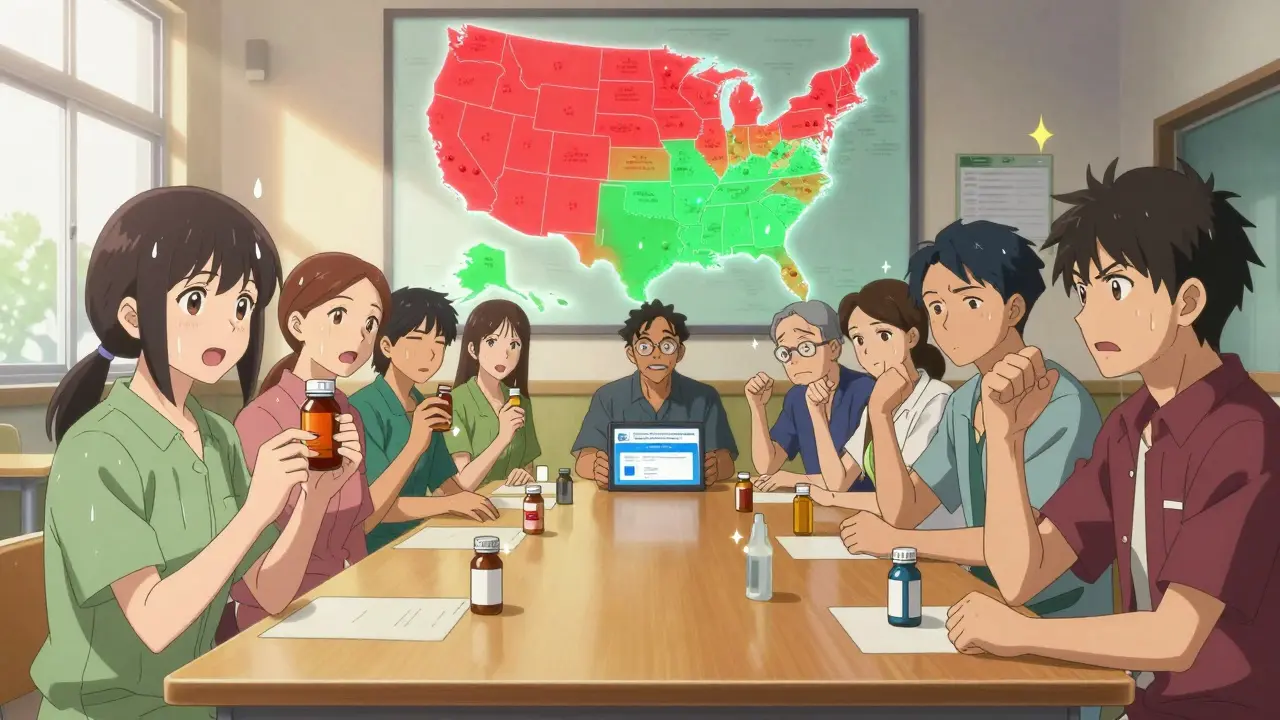
How to Actually Get Help - Step by Step
Knowing these programs exist isn’t enough. You need to apply. And it’s not always easy.
Start with the Medicine Assistance Tool (MAT), a free, confidential website run by the pharmaceutical industry. It lets you search over 900 programs by drug name, condition, or income level. You can find everything from Teva’s free generic asthma inhalers to Eli Lilly’s insulin assistance program.
For copay cards: Once you find a match, print the card or save it on your phone. Present it at the pharmacy when you pick up your prescription. The pharmacy staff will process it automatically - no extra paperwork for you. Some programs even link directly to pharmacy systems so the discount applies without you lifting a finger.
For PAPs: It’s more involved. You’ll need to fill out a detailed application, often with your doctor’s help. They’ll need to sign off on your medical need. You’ll submit proof of income - two recent pay stubs or your last tax return. Some programs ask for a photo ID and proof of residency. The whole process can take 45 to 60 minutes per application. And you might need to reapply every year.
Don’t give up if your first application gets denied. Many programs have appeal processes. And if one company says no, check another. The same drug might be offered by multiple manufacturers with different rules.
Why So Many People Miss Out
Even though these programs exist, most people who qualify never use them.
A 2022 survey found only 37% of eligible patients even knew these programs were available. That’s less than four in ten. Why? Because doctors rarely bring them up. Pharmacies don’t always explain them. And the application process feels overwhelming.
Also, many patients assume if they have insurance, they’re not eligible. But that’s not true. Even with insurance, you might owe hundreds per month. Copay cards are designed for exactly that situation.
And then there’s the stigma. Some people feel ashamed asking for help. Others think it’s too good to be true. But these aren’t scams. They’re legitimate programs backed by billion-dollar companies trying to keep their customers alive - and legally compliant.

The Bigger Problem: Why These Programs Exist at All
It’s important to understand why these programs are necessary. They exist because drug prices in the U.S. are wildly out of control. A drug that costs $100 in Canada might cost $1,200 here. Manufacturers set prices, and insurers negotiate discounts behind closed doors. Patients are left paying the difference.
These assistance programs are a band-aid on a broken system. They help individuals, but they don’t fix the root problem. Critics say they let drug companies keep prices high, knowing they’ll just give some of it back as assistance. And they do - manufacturers spend billions on marketing, advertising, and executive pay while offering billions in patient help.
But for the person standing at the pharmacy with a $700 insulin bill, the system doesn’t matter. What matters is getting the medicine. And right now, these programs are the only thing standing between many people and serious health consequences.
What’s Changing in 2026
Regulators are starting to pay attention. As of January 2024, 22 states have passed laws to limit or require transparency around copay assistance. California now requires companies to report how much they spend on these programs. The federal government is also pushing for more oversight.
Insurance companies are fighting back too. Nearly 80% of major insurers now use something called a “copay accumulator.” This means even if you use a copay card, the discount doesn’t count toward your deductible or out-of-pocket maximum. So you still have to pay more before your insurance kicks in fully. That’s a big deal - it makes the card feel useless, even when you’re approved.
On the bright side, technology is helping. The Medicine Assistance Tool now connects directly with major pharmacy chains. Some apps can scan your prescription and automatically show you which manufacturer programs you qualify for. It’s getting easier - just not easy enough.
One thing’s clear: If you’re struggling to pay for your meds, you’re not alone. And help is out there - if you know where to look.
Can I use manufacturer assistance if I have Medicare?
You can use copay assistance programs if you have Medicare, but it won’t count toward your Part D out-of-pocket costs that get you out of the coverage gap. Many Patient Assistance Programs (PAPs) won’t help you at all if you’re on Medicare. Always check the specific program rules - some will still give you free drugs, but you’ll remain in the donut hole longer.
Do I need to reapply every year for PAPs?
Most do. You’ll typically need to submit updated proof of income and medical need each year. Some programs offer continuous coverage if your situation doesn’t change, but you’ll still need to confirm eligibility annually. Missing a deadline means losing your free medication.
Can I use copay cards with generic drugs?
Rarely. Copay assistance programs are almost always for brand-name drugs. Generic drugs are already low-cost, so manufacturers don’t offer discounts on them. If you’re paying too much for a generic, your pharmacy may have its own discount program - but it won’t come from the drug maker.
What if I make too much for PAPs but still can’t afford my meds?
You might still qualify for copay assistance, even if you earn above the PAP limit. Many people who make $50,000 or more still owe $300+ monthly for specialty drugs. Copay cards don’t have strict income caps - they’re based on insurance coverage, not earnings. Check the Medicine Assistance Tool for options.
Are these programs safe and legal?
Yes. These are legitimate programs created by pharmaceutical companies under federal and state guidelines. They’re not scams. However, be cautious of third-party websites claiming to offer “free coupons” - stick to official manufacturer sites or the Medicine Assistance Tool to avoid fraud.
How long does it take to get approved for a PAP?
Approval usually takes 2 to 4 weeks. Some programs offer expedited processing for urgent cases - like if you’re running out of medication. Call the program directly and explain your situation. Many will send you a starter supply while your application is reviewed.
Can I use more than one assistance program at once?
Yes, if they’re for different medications. You can use a copay card for your insulin and a PAP for your rheumatoid arthritis drug. But you can’t stack multiple programs for the same drug. Each program allows only one discount per prescription.
What if my doctor won’t help me fill out the PAP application?
Call the manufacturer’s patient support line directly. Many have dedicated staff who can help you complete the paperwork or even contact your doctor on your behalf. You don’t need your doctor’s approval to start the process - just their signature on the form. If they refuse, ask for a referral to a patient advocate or social worker.