Drug Interactions: What You Need to Know Before Taking Multiple Medications
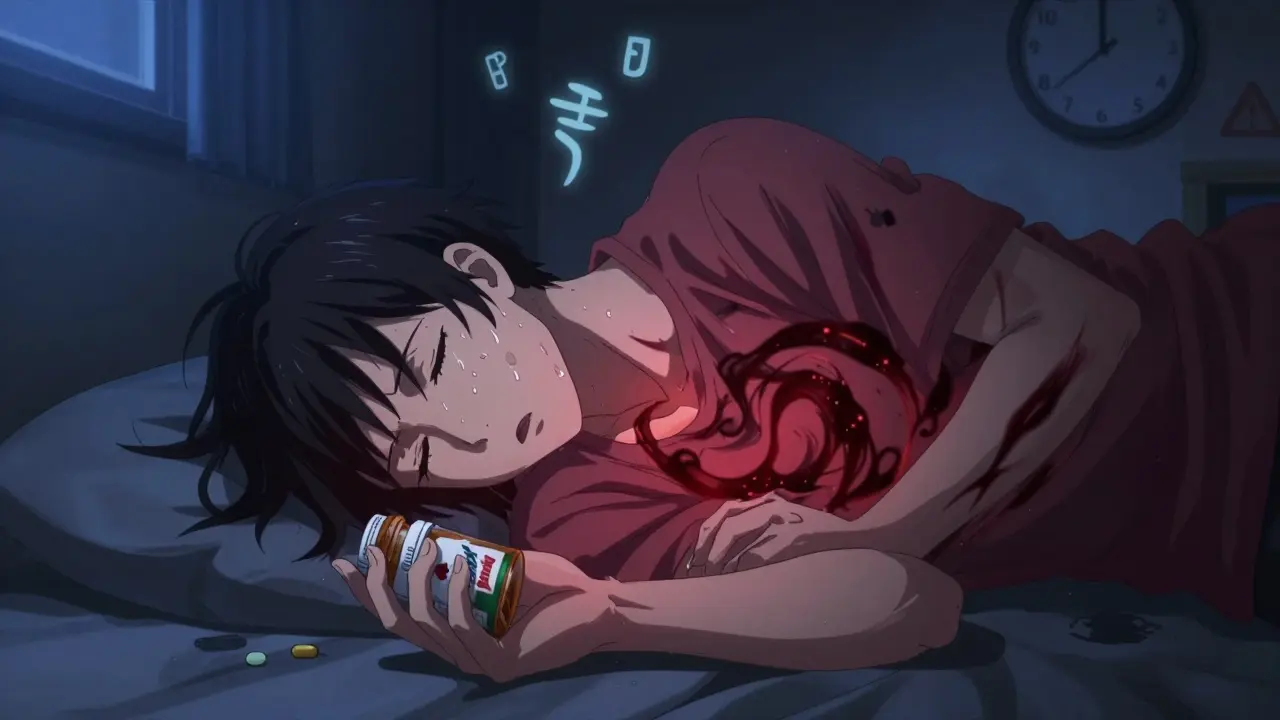
When you take more than one medication, drug interactions, happen when two or more drugs affect each other’s behavior in your body, changing how they work or increasing side effects. Also known as medication interactions, they’re not rare—they’re common, and often preventable. A simple mix like goldenseal and your blood pressure pill can mess with your liver enzymes, making one drug too strong or too weak. That’s not theory. It’s why people end up in the ER.
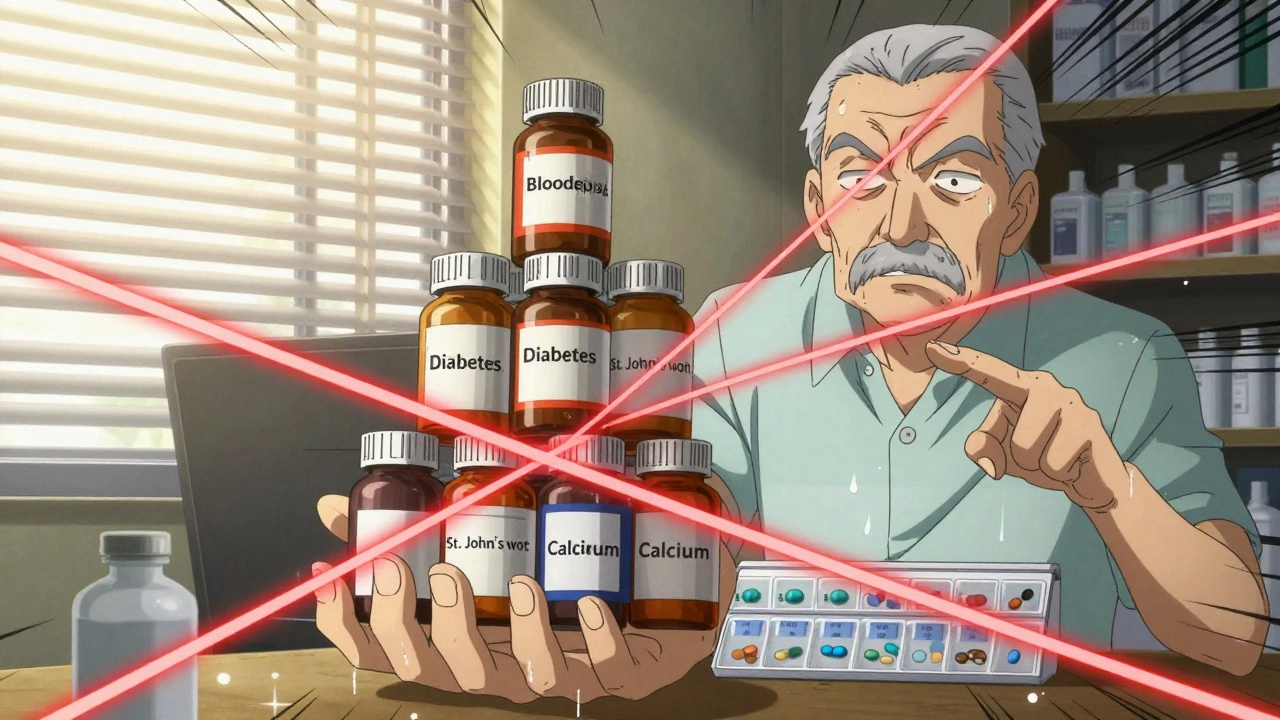
These interactions don’t just happen between prescription drugs. herbal supplements, like St. John’s wort or goldenseal, are often seen as harmless, but they actively interfere with how your body processes medications. They can block liver enzymes—specifically the CYP450 system—that break down drugs like antidepressants, blood thinners, or even birth control. Even something as simple as grapefruit juice can stop your body from processing statins safely. And it’s not just about side effects. Sometimes, the interaction makes the drug useless. If you’re on a thyroid med and taking calcium supplements without spacing them out, you might as well not be taking it at all.
liver enzymes, are the body’s main cleanup crew for drugs, and many medications either boost or slow them down. When that balance shifts, your body either breaks down a drug too fast (so it doesn’t work) or too slow (so it builds up to toxic levels). That’s why your pharmacist asks what vitamins and teas you take. It’s not small talk—it’s life-saving. The same goes for older adults on five or more meds. The more pills you take, the higher the chance one will quietly mess with another. And if you’ve ever been discharged from the hospital with a new list of drugs, you’re at peak risk. That’s when mistakes happen: forgotten doses, wrong timing, hidden interactions.
You don’t need to memorize every possible combo. But you do need to know the red flags: new dizziness after starting a supplement, unexplained fatigue, or a drug that suddenly stops working. Keep a simple list of everything you take—prescriptions, over-the-counter pills, herbs, even CBD. Bring it to every doctor visit. Ask your pharmacist: "Could this mix hurt me?" They’re trained to catch what doctors miss. And if you’re on a chronic condition like high blood pressure or diabetes, a single interaction could undo months of progress.
What follows is a collection of real-world guides that show you exactly how these interactions play out. From how goldenseal blocks liver enzymes to why your birth control might fail with certain antibiotics, you’ll find clear, no-fluff breakdowns of the most common—and dangerous—mixes. These aren’t theory pages. They’re what people actually need to stay safe.