

Have you ever felt like your hearing is muffled, as if someone put cotton in your ears? That uncomfortable pressure often comes from cerumen impaction-a buildup of earwax that blocks the ear canal. While it might be tempting to grab a cotton swab and dig deep, doctors warn this usually pushes the wax further in, causing more harm than good. Instead, the medical community recommends using cerumenolytics, specialized agents designed to soften, loosen, and dissolve earwax so it can exit naturally or be easily irrigated.
Cerumenolytics are not just random household items; they are chemical formulations with specific concentrations and application protocols. From over-the-counter kits containing carbamide peroxide to simple mineral oil applications, these solutions address the root cause of blockage without the trauma associated with physical removal tools. Understanding how to use them correctly is the difference between a clear ear canal and an irritated infection.
What Are Cerumenolytics and Why Do You Need Them?
The primary goal of these agents is to manage cerumen impaction. This condition affects approximately 6% of the general population but rises to nearly 30% among elderly individuals due to changes in skin elasticity and wax consistency. According to the American Academy of Family Physicians (AAFP), cerumenolytics serve two main purposes: they improve the success rate of professional irrigation procedures and function as standalone home therapy agents.
Using cerumenolytics reduces healthcare costs and patient discomfort by avoiding unnecessary clinic visits. The Mayo Clinic’s 2023 clinical guidelines position these drops as the first-line home treatment before considering mechanical removal. By softening the wax, you allow the ear’s natural self-cleaning mechanism to take over, or you prepare the wax for safe irrigation.
Types of Cerumenolytic Formulations
Not all ear drops work the same way. Different formulations target different types of wax buildups. Choosing the right one depends on whether your wax is dry and hard or moist and sticky.
| Agent Type | Active Ingredient/Concentration | Best For | Typical Duration |
|---|---|---|---|
| Carbamide Peroxide | 6.5% Carbamide Peroxide | General softening; effervescent action breaks down wax | Twice daily for up to 7 days |
| Hydrogen Peroxide | 3% diluted with sterile water | Waxy debris with moisture content; quick loosening | 5-10 drops, 3-5 minutes retention |
| Mineral/Baby/Olive Oil | Pure oil variants | Dry, hardened cerumen; lubricating properties | 3-6 drops nightly for 3-4 days |
| Baking Soda Solution | 15% concentration (¼ tsp soda in 2 tsp water) | Alkaline breakdown of wax components | Twice daily for 4 days |
| Docusate Sodium | 1 mL instilled | Pre-irrigation softening (off-label use) | 15 minutes before irrigation |
Carbamide peroxide, found in brands like Debrox and Murine, breaks down into hydrogen peroxide and urea upon contact with moisture. This creates a bubbling sensation that helps lift wax away from the canal walls. A 2017 study in the Journal of Laryngology & Otology showed these formulations achieved a 65% effectiveness rate.
On the other hand, oils like mineral or olive oil are better for dry, flaky wax. They don’t bubble, but they provide essential lubrication. Seattle Children’s Hospital’s 2022 protocol recommends using these oils nightly for several consecutive days to gradually soften stubborn plugs.
Step-by-Step Guide to Safe Application
Using cerumenolytics incorrectly is a common reason for treatment failure. Proper technique ensures the solution reaches the wax plug rather than just sitting in the outer ear.
- Prepare the Solution: If using hydrogen peroxide, dilute it equally with sterile water. For oils, ensure the bottle is clean. Warm the solution slightly to body temperature to prevent dizziness caused by cold fluid in the ear.
- Position Yourself: Lie on your side with the affected ear facing upward. This is crucial. Standing up immediately after applying drops prevents the solution from penetrating the wax.
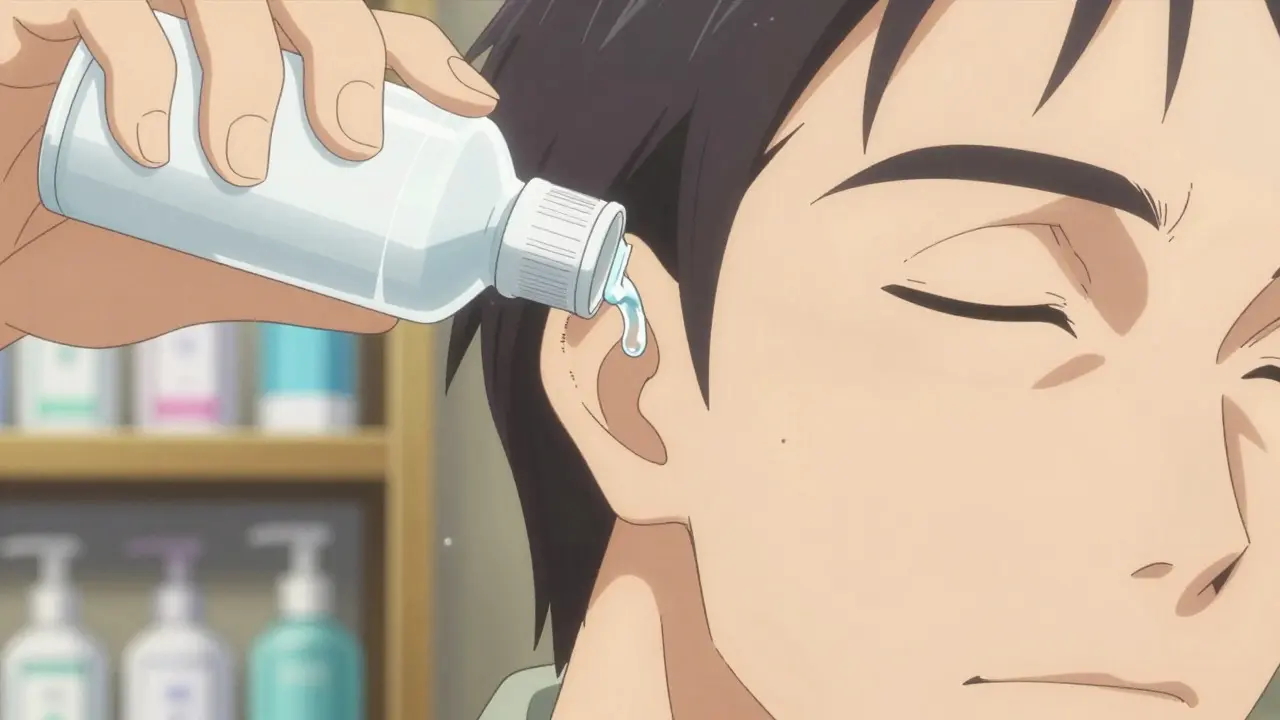
- Administer Drops: Gently pull the outer ear up and back to straighten the canal. Instill the recommended number of drops (typically 5-10 for peroxides, 3-6 for oils).
- Wait It Out: Remain lying down for 5 to 10 minutes. This allows the agent to break down the cerumen structure. You may feel a bubbling sensation with peroxide-based drops, which is normal.
- Drain the Ear: Sit up and tilt your head to let the excess fluid drain onto a tissue. Wipe only the outer ear; do not insert anything into the canal.
Seattle Children’s Hospital data indicates that maintaining the upright-to-side position for the full duration improves success rates by 40% compared to users who rush the process. Consistency is key-most regimens require 3 to 7 days of daily application before attempting irrigation.
Common Mistakes and Pitfalls to Avoid
Even with the right product, user error can lead to irritation or ineffective treatment. GoodRx’s 2023 analysis of patient feedback highlights several frequent mistakes.
- Not Leaving Drops In Long Enough: 34% of negative reviews for commercial drops cited insufficient retention time. The chemical reaction needs time to soften the wax matrix.
- Using Undiluted Hydrogen Peroxide: Using straight-from-the-bottle hydrogen peroxide can cause severe burning. Always dilute to a 3% concentration or use pre-diluted medical-grade solutions.
- Ignoring Contraindications: Using drops with a perforated eardrum or active ear infection can push bacteria deeper into the middle ear. Harvard Health explicitly warns against this scenario.
- Using Non-Sterile Water: If making homemade baking soda solutions, use sterile water. Tap water contains bacteria that can cause serious infections like otitis externa (swimmer’s ear).
Another major pitfall is expecting instant results. Cerumenolytics are not magic erasers. They soften wax over days. Trying to irrigate too soon often fails because the wax hasn’t fully disintegrated yet. Valley ENT’s 2021 protocol specifies treating for four consecutive days before attempting any irrigation.
When to See a Doctor Instead
Home remedies aren't foolproof. Approximately 25% of home treatment cases require professional removal according to Mayo Clinic data. You should skip the home kit and see an otolaryngologist if:
- You have a known perforated eardrum or ear tubes.
- You experience pain, drainage, or foul odor from the ear, indicating an infection.
- You have recently had ear surgery.
- Home treatments fail after 7 days of consistent use.
Dr. Aaron Pearlman, an otolaryngologist at ENT Care Centers, notes that while softening is the first step, complete impactions sometimes need micro-suction or forceps removal by a specialist. Attempting to remove a hard plug yourself can cause canal abrasions or even damage the tympanic membrane.

Safety Profile and Side Effects
Cerumenolytics are generally safe, but they can cause mild side effects. The most common complaint is a stinging or burning sensation, particularly with hydrogen peroxide solutions. This usually subsides within minutes. Oils are less likely to irritate but can leave a greasy residue that might trap debris if not drained properly.
Allergic reactions are rare but possible. If you notice swelling, intense itching, or rash around the ear canal, discontinue use immediately. The American Academy of Otolaryngology-Head and Neck Surgery gives cerumenolytics a "strong recommendation" for initial management precisely because their safety profile is superior to mechanical methods like cotton swabs, which account for 65% of ear canal injuries in emergency departments.
Market Trends and Future Developments
The demand for safe ear care is growing. The cerumenolytic segment is valued at $287 million within the broader $1.2 billion ear care market, with annual growth projected at 4.7% through 2030. This rise is driven by aging populations and increased awareness of safe ear hygiene practices.
Innovation continues in this space. Prestige Consumer Healthcare launched Debrox Max in January 2023, featuring a time-release formula that stays in the ear canal 30% longer than standard versions. Additionally, the FDA approved a new combination of hydrogen peroxide and glycerin in 2022, marking the first new active ingredient approval in 15 years. These developments aim to improve efficacy for stubborn impactions while minimizing irritation.
How long does it take for cerumenolytics to work?
Most cerumenolytics require 3 to 7 days of consistent daily application. Peroxide-based drops may show some loosening within 1-2 days, but oils typically need 3-4 nights to fully soften hardened wax. Patience is essential for complete clearance.
Can I use baby oil to remove earwax?
Yes, baby oil, mineral oil, and olive oil are effective cerumenolytics. They are particularly good for dry, flaky wax. Apply 3-6 drops nightly for 3-4 days. Ensure the oil is at room temperature to avoid dizziness.
Is it safe to use hydrogen peroxide in my ears?
It is safe if diluted correctly. Use a 3% concentration mixed equally with sterile water. Do not use undiluted peroxide, as it can cause severe irritation. Avoid use if you have a perforated eardrum or active infection.
What should I do if the drops sting?
Mild stinging is common with peroxide-based drops due to the bubbling action. If the pain is severe or persists after draining, rinse the ear with warm water and consult a doctor. Switching to an oil-based drop may reduce irritation.
Do cerumenolytics work for everyone?
They are effective for about 75-80% of cases when used correctly. However, they may not work for complete, rock-hard impactions. In these cases, professional removal by an ENT specialist is necessary to avoid injury.
Can I make my own ear drops at home?
Yes, you can make a baking soda solution by dissolving ¼ teaspoon of baking soda in 2 teaspoons of sterile water. This creates a 15% concentration. Always use sterile water to prevent bacterial contamination.