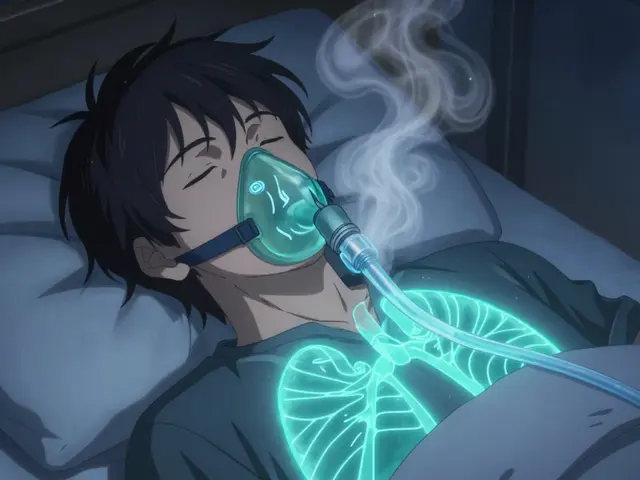
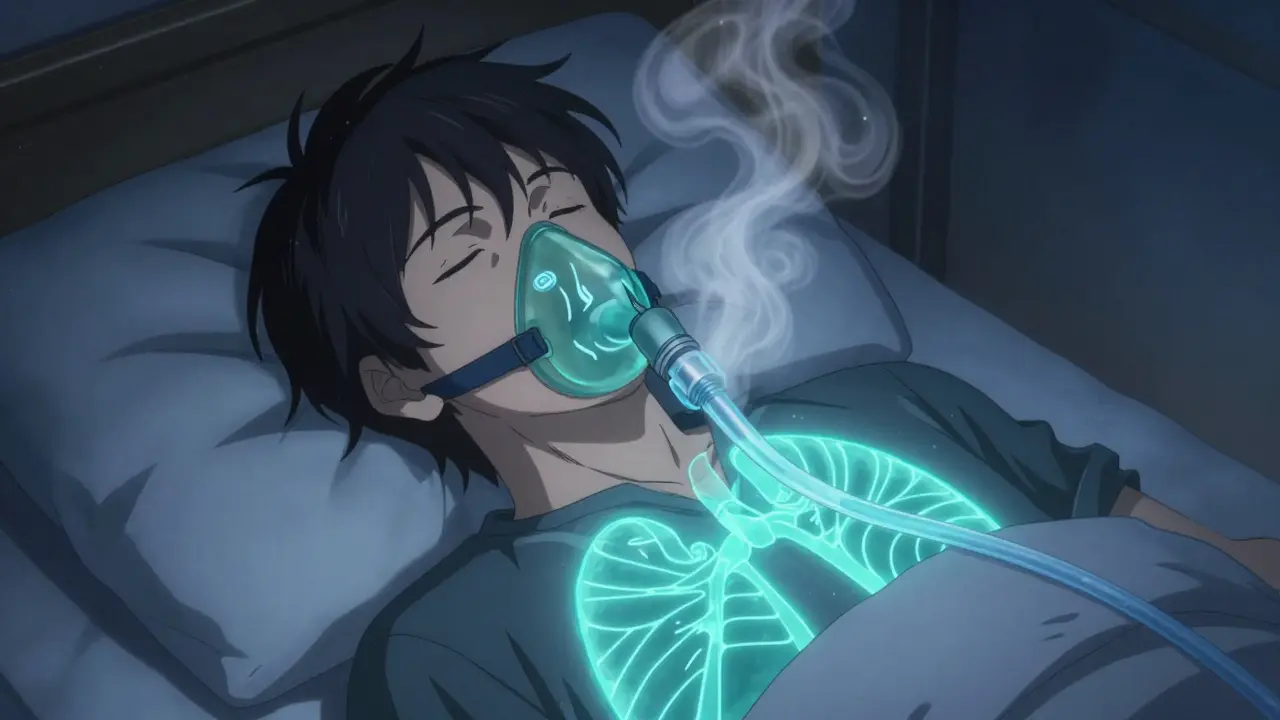
If you're using a CPAP machine and waking up with a dry mouth, hearing air hissing around your mask, or feeling like the pressure is too high or too low, you're not alone. These are the top three complaints from people using CPAP therapy - and they’re fixable. You don’t need to give up on treatment. You just need to know what’s going wrong and how to fix it.
Dry Mouth Isn’t About the Humidifier
Most people assume dry mouth means their humidifier isn’t working hard enough. But here’s the truth: 42% of CPAP users who wake up with a dry mouth are breathing through their mouth during sleep, not because their humidifier is broken. Your CPAP machine pushes air into your nose - if your mouth opens while you sleep, that air escapes, dries out your throat, and leaves you feeling parched. The fix isn’t always turning up the heat on your humidifier. It’s stopping the leak at the source. Try a chin strap. It’s a simple, inexpensive strap that holds your jaw closed. Users on Reddit’s r/CPAP community report that switching to a chin strap eliminated dry mouth within three nights. If you’re already using one and it’s not working, check if it’s too loose. It should be snug enough to keep your mouth shut, not tight enough to hurt. Another solution is switching to a full-face mask. These cover both your nose and mouth, so even if your mouth opens, the air stays in. One user, u/SleepSeeker2020, said: “After switching to a full-face mask, my dry mouth disappeared completely.” Full-face masks aren’t for everyone - they’re bulkier and can feel claustrophobic - but if you’re a mouth breather, they’re often the best answer. If you still want to stick with a nasal mask, make sure your humidifier is set between level 3 and 4 on a 0-6 scale. Too low (level 1-2), and you’ll still get dryness. Too high (level 5-6), and you risk condensation in the tube - that’s when water builds up and gurgles in your hose. Heated tubing also helps. Philips’ 2022 clinical trial showed heated tubing reduces dry mouth by 32% compared to standard tubing.Mask Leaks Are Almost Always About Fit
If you hear a hissing sound every time the machine turns on, or your CPAP app shows high leak rates (over 24 L/min), your mask isn’t sealing properly. This isn’t normal. Leaks reduce therapy effectiveness, cause poor sleep, and can even make your apnea worse. The biggest mistake people make? Tightening the straps too hard. A mask doesn’t need to be glued to your face. Over-tightening creates pressure points, causes red marks, and actually makes leaks worse by distorting the seal. Instead, use the airflow test: turn on your machine, sit up, and slowly adjust the headgear straps until the hissing noise drops off. You’ll usually need 3 to 5 small adjustments. Don’t rush it. Check your cushion. If it’s older than three months, it’s probably worn out. Silicone cushions harden, crack, and lose their seal over time. Replace them every 90 days - most DME providers recommend it, and 92% of users who do report fewer leaks. ResMed and Philips both sell replacement cushions for under $30. Also, make sure your mask size matches your face. A medium mask on a small face will leak. A large mask on a narrow bridge will gap. Most manufacturers offer sizing guides with printable templates. Print one out, hold it up to your face, and see where it lines up. If your nose sits outside the cushion or your cheeks bulge out, you’ve got the wrong size. Headgear straps can stretch out. If your mask used to fit perfectly but now slips every night, it’s time to replace the entire headgear. It’s not expensive - usually $20 to $40 - and it makes a huge difference.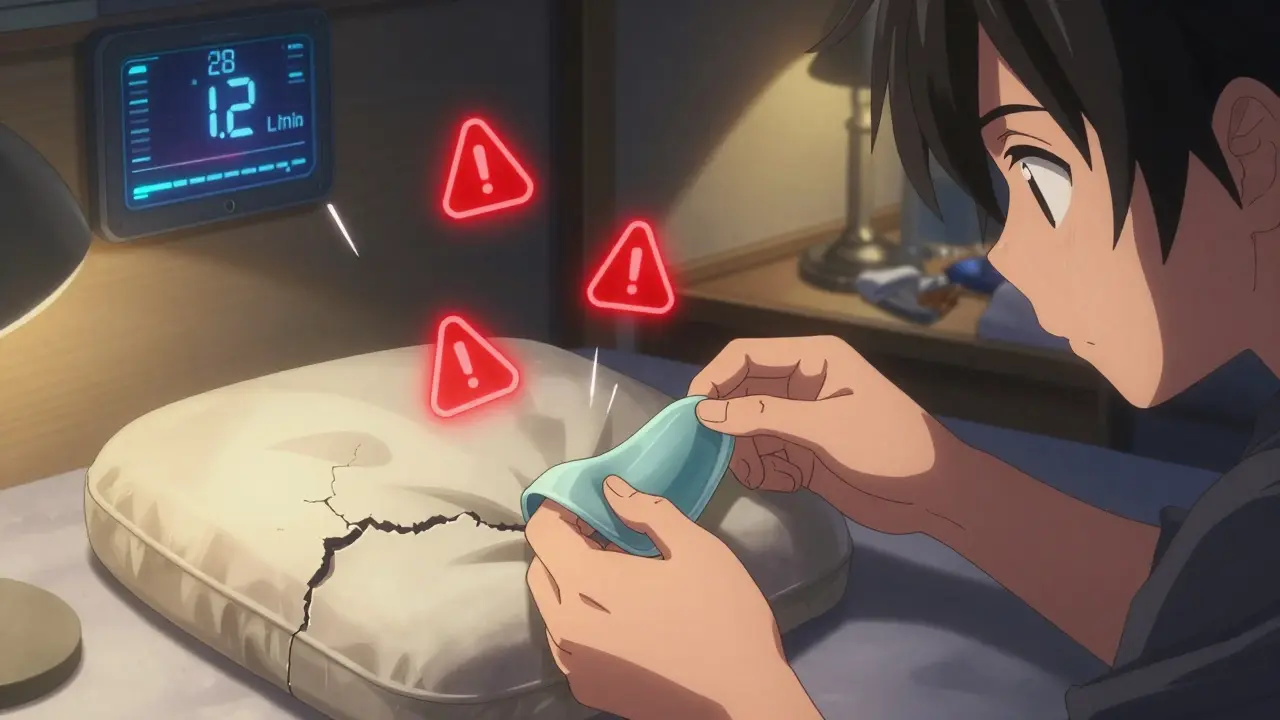
Pressure Settings Shouldn’t Be a Guess
Many users are stuck with a pressure setting that was done once, years ago, during a sleep study. But your body changes. You gain weight. You lose weight. You change sleep positions. Your apnea severity can shift. That old setting might now be too high - or too low. Too much pressure feels like breathing against a strong wind. You might feel chest tightness, bloating, or even pain. One user on Reddit, u/ExhaustedEngineer, said his pressure was set at 14 cm H₂O and caused chest discomfort. After his sleep specialist lowered it to 9 cm H₂O and turned on expiratory pressure relief (EPR), his symptoms vanished. Too little pressure means your airway collapses anyway. Your AHI (Apnea-Hypopnea Index) stays high. You’re not getting the therapy you paid for. Auto-adjusting CPAP machines (called APAP) like the ResMed AirSense 11 or Philips DreamStation 2 can help. They scan your breathing every 5 to 10 seconds and adjust pressure automatically. ResMed’s AutoSet algorithm gets 4.2 out of 5 stars for comfort in user reviews. Philips’ version is rated lower at 3.8 - but both are better than fixed-pressure machines for most people. But here’s the catch: you can’t just crank up or down the pressure yourself. Most manufacturers void warranties if you change settings beyond ±2 cm H₂O. That’s why you need to talk to your sleep specialist. Bring your machine’s data - most devices store nightly usage, leak rates, and pressure logs. Your provider can see if your pressure needs adjustment based on real data, not guesswork. Dr. Nancy Collop from Johns Hopkins says pressure adjustments below 5 cm H₂O can dramatically improve comfort without losing effectiveness. That means if you’re at 12 cm H₂O and it feels harsh, try dropping to 10 or 9. You might be surprised how well you sleep.What You Can Do Right Now
You don’t need to wait for a doctor’s appointment to start improving your CPAP experience. Here’s a simple checklist you can follow today:- Check your mask cushion - if it’s older than 90 days, replace it.
- Do the airflow test: turn on your machine and adjust straps until the hissing stops.
- Set your humidifier to level 3 or 4. If you have heated tubing, turn it on.
- Try a chin strap tonight if you wake up with a dry mouth.
- Review your machine’s data: look at your average leak rate and pressure. If leaks are over 24 L/min or pressure is consistently above 14 cm H₂O, call your provider.
Why This Matters Beyond Comfort
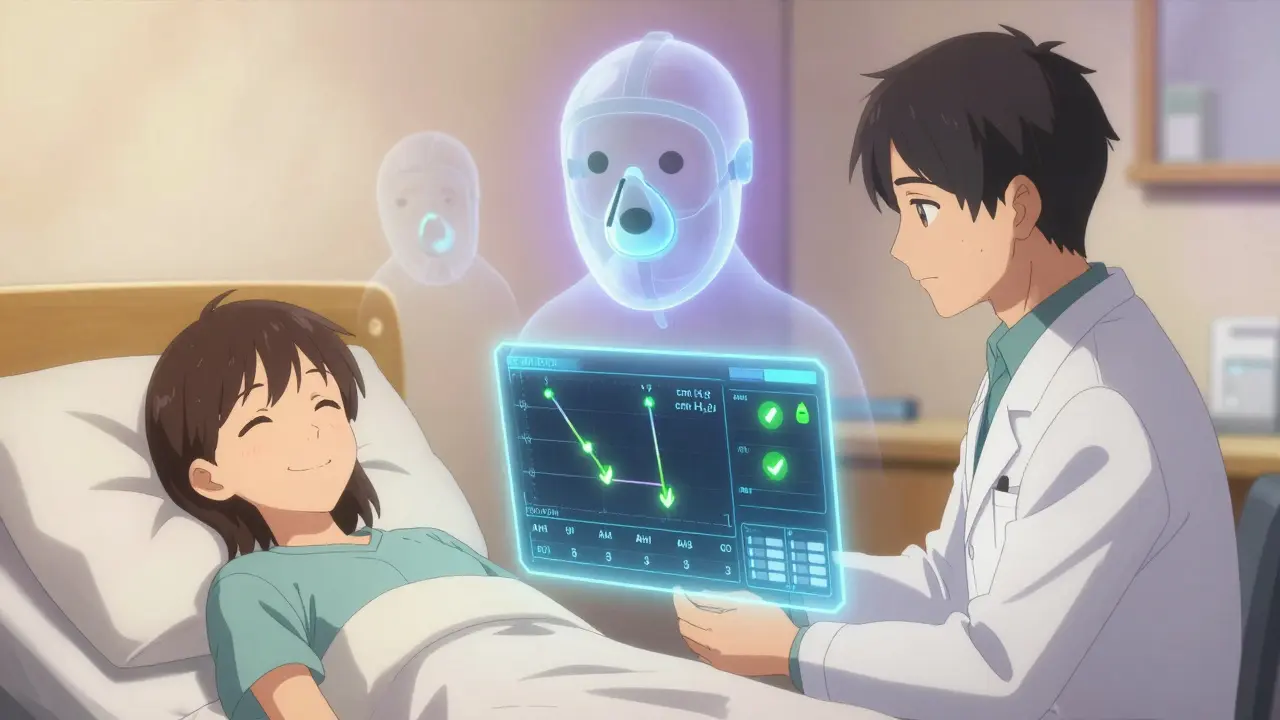
CPAP therapy reduces your risk of heart attack, stroke, and high blood pressure by up to 30% over five years, according to Mayo Clinic’s 2022 study. But only if you’re actually using it right. Mask leaks and dry mouth aren’t just annoyances - they’re reasons people quit CPAP. The American Thoracic Society says 29% to 45% of users stop therapy within a year. Fixing these three issues - dry mouth, leaks, and pressure - can turn a frustrating experience into something you actually look forward to. It’s not about perfection. It’s about finding what works for your face, your breathing, and your sleep habits.When to Call Your Sleep Specialist
You don’t have to live with discomfort. Call your provider if:- Your mask leaks more than 24 L/min for three nights in a row.
- You’re still waking up dry-mouthed after trying a chin strap and humidifier adjustments.
- Your pressure feels too high or too low for more than a week.
- You’ve tried everything and your AHI (from your machine’s data) is still above 5.
Why does my CPAP make my mouth dry even with a humidifier?
Dry mouth from CPAP is usually caused by mouth breathing during sleep, not insufficient humidification. When air escapes through your mouth, it dries out your throat. Solutions include using a chin strap, switching to a full-face mask, or adjusting your humidifier to level 3-4 on the scale. Heated tubing can also reduce dryness by 32%.
How do I know if my CPAP mask is leaking too much?
Your CPAP machine or app will show leak rates. A leak over 24 L/min is considered significant and reduces therapy effectiveness. You can also listen for hissing sounds when the machine is running. If you hear air escaping around your nose, cheeks, or forehead, your mask isn’t sealing properly. Try adjusting the headgear straps gently - don’t over-tighten - and check if the cushion needs replacing.
Can I adjust my CPAP pressure myself?
Most CPAP manufacturers allow minor adjustments within ±2 cm H₂O, but going beyond that voids your warranty. It’s also risky - too high can cause discomfort or bloating; too low won’t treat your apnea. Always consult your sleep specialist before making changes. They can review your machine’s data and recommend safe, effective pressure settings based on your actual sleep patterns.
How often should I replace my CPAP mask parts?
Replace the mask cushion every 90 days. The headgear should be replaced every 6 months or sooner if it stretches out. Filters need changing every 30 days for foam filters and every 90 days for HEPA filters. Clean your mask daily with mild soap and water to extend its life and prevent skin irritation.
Is a full-face mask better than a nasal mask?
A full-face mask is better if you breathe through your mouth during sleep or have nasal congestion. It prevents air from escaping and reduces dry mouth. But it’s bulkier and can feel claustrophobic. If you breathe only through your nose and don’t have congestion, a nasal mask is lighter, quieter, and often more comfortable. Choose based on your breathing habits, not what looks easier.
Why do I still feel tired after using CPAP?
If you’re still tired, your therapy might not be working right. Check your leak rate - high leaks mean you’re not getting enough pressure. Look at your AHI (Apnea-Hypopnea Index) - if it’s above 5, your apnea isn’t fully controlled. Also, make sure your pressure setting is still correct. Weight changes, alcohol use, or sleeping position can affect your needs. Talk to your sleep specialist and review your machine’s data.