Keeping unused or expired medications in your medicine cabinet isn’t just messy-it’s dangerous. Every year, 45,000 emergency room visits happen because kids accidentally swallow pills they find at home. And more than 70,000 people die each year from prescription drug misuse. The good news? You can stop this. Properly disposing of medications in household trash is one of the simplest, most effective ways to protect your family and your community.
Why You Can’t Just Throw Pills in the Trash
It might seem harmless to toss old pills into the garbage. But if you don’t do it right, someone could dig them out. Teens looking for a high. Elderly neighbors confused by labels. Pets chewing through trash. Even if you think the bottle is empty, leftover powder or liquid can still be dangerous. The FDA says the safest way to get rid of most medications is through a drug take-back program. But not everyone lives near one. In rural areas, only 42% of counties have reliable access to drop-off sites. That’s why household trash disposal is a legal, approved backup method-if you follow the rules.The 5-Step Safe Disposal Process
Here’s exactly how to do it right. No guesswork. No shortcuts.- Check if your medication is on the FDA’s Flush List. There are only 15 medications approved for flushing-mostly powerful opioids and sedatives like fentanyl patches, oxycodone, and diazepam. If your drug is on this list, flush it down the toilet. It’s the only safe option for these high-risk drugs. You can find the full list on the FDA’s website or ask your pharmacist.
- Remove pills from original bottles. Don’t throw away the bottle with your name and prescription number still on it. That’s a privacy risk. HIPAA requires you to erase personal info. Use a permanent marker to black out your name, address, and prescription number. Or wrap the label in duct tape before tossing it.
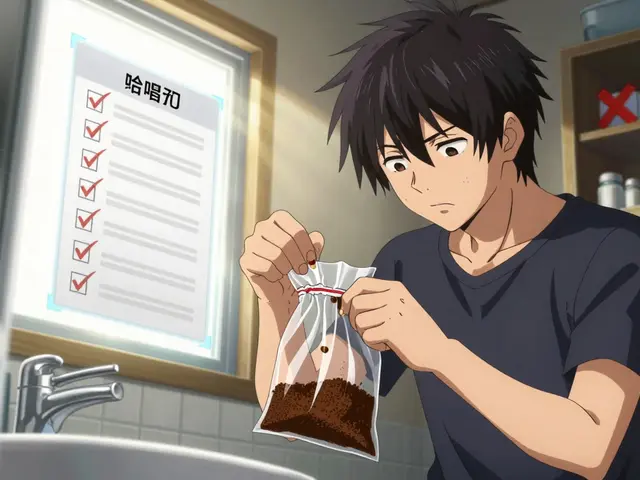
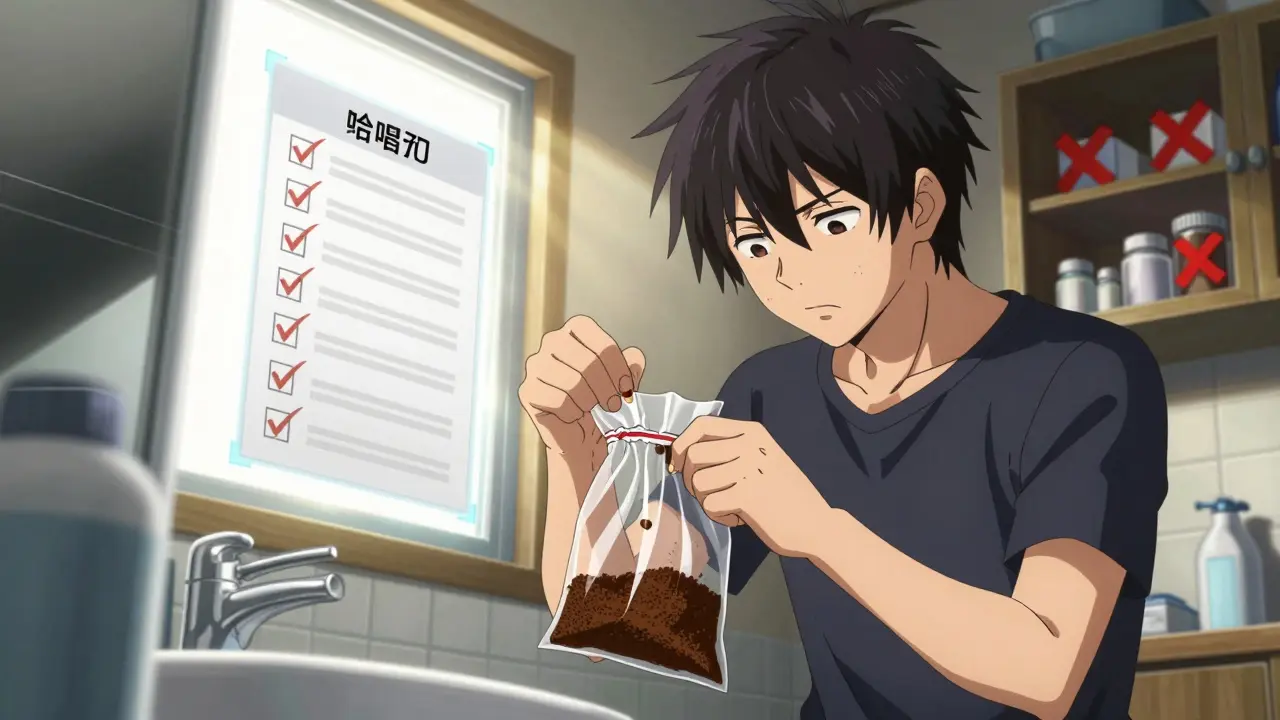
- Mix pills with something unappetizing. This is the most important step. Crushed pills? No. That’s dangerous. Instead, take the pills (or liquid meds) and mix them with an unappealing substance. Used coffee grounds work great. So does cat litter, dirt, or even used paper towels. Use at least a 1:1 ratio-equal parts meds and mix-in. This makes it smell bad and look gross, so no one (or no pet) will want to eat it.
- Seal it in a container. Pour the mixture into a sealable plastic bag, an empty margarine tub, or a jar with a tight lid. Don’t leave it loose in the trash. A sealed container stops leaks and keeps curious hands-or paws-out.
- Put it in the trash. Place the sealed container in your regular household garbage. Don’t recycle the bottle unless your local program accepts #5 plastic (most don’t). Just toss it.
That’s it. Five steps. Takes less than 10 minutes. And it cuts the risk of accidental poisoning by over 90%.
What Not to Do
People make the same mistakes over and over. Here’s what to avoid:- Don’t flush everything. Only flush the 15 drugs on the FDA’s list. Flushing others pollutes waterways. The USGS found pharmaceuticals in 80% of U.S. streams. You don’t want to add to that.
- Don’t crush pills. Crushing can release dangerous dust, especially with strong painkillers. You could inhale it or accidentally touch it. Mixing whole pills is safer.
- Don’t use water to dissolve pills. Pouring pills down the sink is just as bad as flushing them-unless it’s on the Flush List. Even a little bit can end up in rivers and drinking water.
- Don’t leave labels visible. A 2021 FDA survey found 37% of improper disposal cases involved unobscured prescription labels. That’s how people steal pills.
What About Empty Bottles?
Most prescription bottles are made of #5 plastic (polypropylene). But here’s the catch: 87% of U.S. recycling programs don’t accept them. Even if they’re clean, they’re too small for sorting machines. So unless your local facility specifically says yes, toss the bottle in the trash. Remove the cap first-it’s usually made of a different plastic. You can reuse the bottle for small items like screws or craft supplies, but only if you completely remove or cover the label. Otherwise, it’s a privacy hazard.What If You Can’t Find a Take-Back Program?
Take-back programs are ideal. There are over 14,600 drop-off locations across the U.S.-pharmacies, police stations, hospitals. Walgreens alone has more than 1,500 kiosks. But if you’re in a rural area, you might not have one nearby. The DEA’s website has a locator tool. Call 1-800-882-9539. Or ask your pharmacist. If you still can’t find one, the household trash method is your next best option. It’s not perfect, but it’s far better than keeping pills in the cabinet.Special Cases: Liquids, Patches, and Inhalers
Not all meds are pills.- Liquid medications: Pour them into a sealable container with coffee grounds or cat litter. Mix well. Seal. Trash.
- Fentanyl patches: These are on the Flush List. Fold the patch in half with sticky sides together, then flush immediately. If you’re uncomfortable flushing, mix it with coffee grounds and seal it in a bag before trashing.
- Inhalers: Never throw these in the trash or flush them. They’re pressurized and can explode. Check with your pharmacy-they often have special disposal bins for inhalers.
Why This Matters Beyond Your Home
Improper disposal doesn’t just hurt your family. It hurts the environment. A 2021 study in Environmental Science & Technology found that even properly disposed meds can leak small amounts of chemicals into landfill runoff. That eventually makes its way into rivers and groundwater. Over 41 million Americans live near water sources contaminated with pharmaceuticals. But here’s the flip side: When you follow the steps above, you reduce that contamination risk by about 75%. You’re not solving the whole problem-but you’re doing your part.What’s Changing in 2026?
Things are getting better. In January 2024, California passed a law requiring all large pharmacies to offer free disposal kiosks. That means 98% of Californians now have access. Other states are catching up. The FDA is also testing curbside pickup in 12 communities. And mail-back disposal envelopes are growing in popularity-especially since Medicare now covers them for seniors. But awareness is still low. Only 32% of Americans know the right way to dispose of meds. That’s why this guide matters. Share it with your neighbors. Talk to your kids. Help your elderly relatives. One person doing it right can prevent a tragedy.Final Checklist
Before you toss that bottle, run through this:- ✅ Is this on the FDA Flush List? If yes → flush.
- ✅ Did I remove pills from the bottle?
- ✅ Did I cover or scratch out my name and prescription number?
- ✅ Did I mix pills with coffee grounds, dirt, or cat litter?
- ✅ Did I seal it in a ziplock or container?
- ✅ Did I put it in the trash-not the recycling?
If you answered yes to all five, you’ve done it right. You’ve protected your family. You’ve helped your community. You’ve kept dangerous drugs out of the wrong hands.
Can I flush any old pill down the toilet?
No. Only the 15 medications on the FDA’s official Flush List should be flushed. These are mostly powerful opioids and sedatives that pose extreme danger if misused. Flushing other drugs pollutes water supplies. Always check the label or ask your pharmacist first.
What if I don’t have coffee grounds or cat litter?
You don’t need special products. Dirt from your yard, used paper towels, or even peanut butter will work. The goal is to make the mixture unappealing. Just make sure you use enough-aim for at least a 1:1 ratio of meds to mix-in. The smell and texture should be off-putting to anyone or anything that might dig through the trash.
Should I crush my pills before mixing them?
No. Crushing pills can release harmful dust, especially with strong medications like fentanyl or oxycodone. Inhaling that dust or touching it can be dangerous. The FDA specifically advises against crushing. Just drop whole pills into the mix. They’ll break down naturally in the trash.
Can I recycle the prescription bottle?
Almost never. Most recycling programs don’t accept #5 plastic prescription bottles because they’re too small and contaminate sorting equipment. Even if your town says yes, it’s safer to just throw the bottle in the trash after removing or obscuring the label. Reuse it for small items like nails or beads if you want, but never leave personal info visible.
What should I do with expired insulin or other injectables?
Never throw sharps like needles or insulin pens in the trash. Use a sharps container-many pharmacies give them out for free. Once full, seal it and drop it off at a designated collection site. Some mail-back programs also accept sharps. Check with your pharmacy or local health department for options. Never bend or break needles.
Is it safe to keep old meds “just in case”?
No. Medications lose effectiveness over time, and some can become unsafe. Plus, keeping them increases the risk of accidental poisoning, misuse, or theft. The FDA recommends cleaning out your medicine cabinet at least once a year. If you’re unsure whether a drug is still good, ask your pharmacist. Don’t guess.
Are there free disposal services I can use?
Yes. Many pharmacies like Walgreens, CVS, and local police stations offer free drop-off kiosks. The DEA also runs National Prescription Drug Take Back Days twice a year. Since 2022, Medicare Part D now covers mail-back disposal envelopes for seniors. Check your pharmacy’s website or call 1-800-882-9539 to find the closest option.