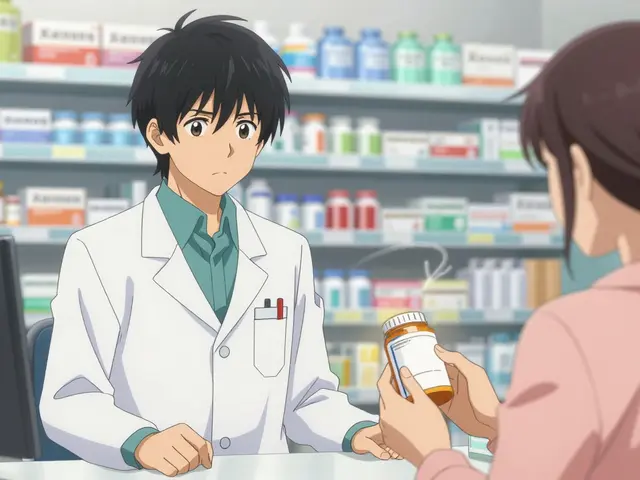
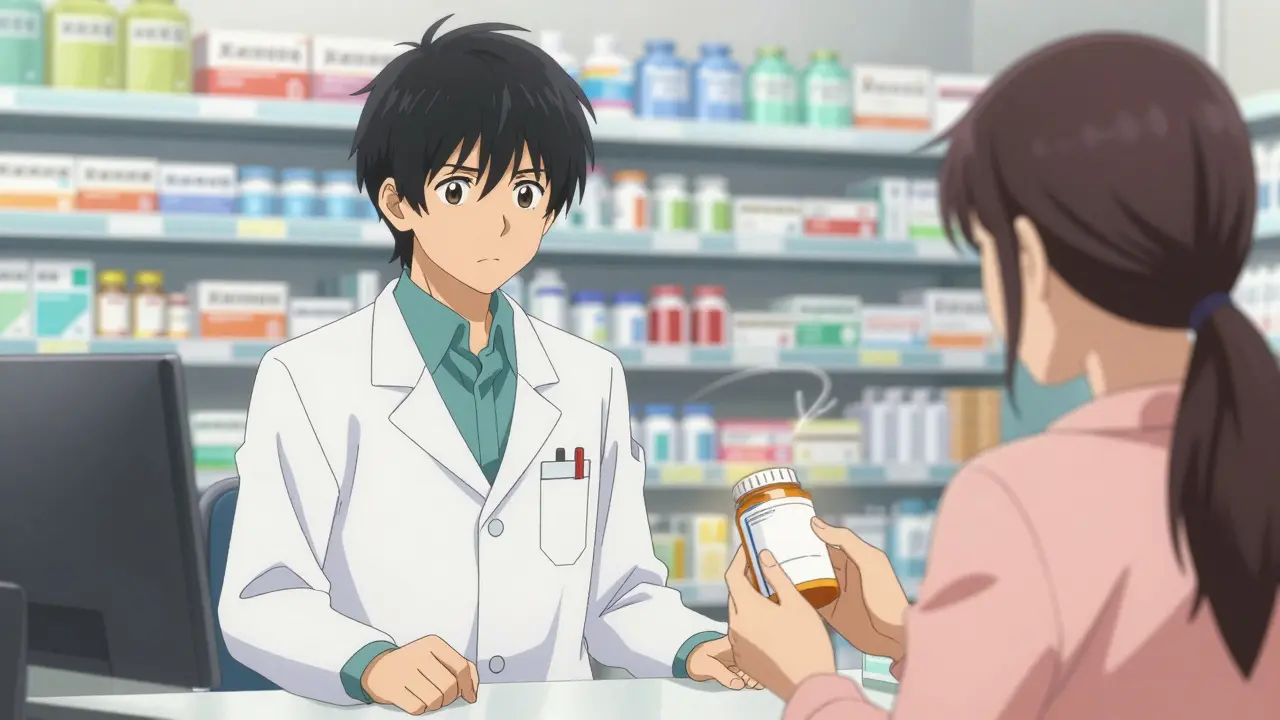
Imagine a patient walks up to your counter, holding a prescription for a brand-name drug they’ve taken for years. You suggest the generic alternative-a standard, cost-saving move that benefits everyone involved. But instead of nodding in agreement, their face falls. They look skeptical, maybe even suspicious. "I’m not sure about that," they say. "Does it really work the same?"
This scenario plays out in pharmacies across the United States every single day. It’s not just a minor inconvenience; it’s a significant barrier to optimal care. According to a 2021 study published in the Journal of the American Pharmacists Association (JAPhA), nearly one in four patients express concerns about switching to generics. When we dig deeper, we find that this hesitation isn’t usually about logic-it’s about trust. Patients often feel disconnected from the rigorous standards behind generic approval, leaving them vulnerable to myths and misconceptions.
As pharmacists, we are positioned as the most accessible healthcare providers. We have the unique opportunity to bridge this gap. But simply stating facts rarely works. To truly manage patient hesitation, we need to shift our approach from being information librarians to becoming trusted advisors. This means understanding the root causes of doubt and using evidence-based communication strategies that resonate on a human level.
Understanding the Roots of Generic Hesitation
Before we can address hesitation, we need to understand where it comes from. It’s rarely because a patient has read complex pharmacokinetic studies. More often, it stems from simple, observable differences and deep-seated distrust.
The first major hurdle is appearance. A 2019 study by the University of Michigan found that 78% of patients cite pill appearance as a primary concern. If a patient has been taking a blue oval pill for five years, and suddenly receives a white rectangle, their brain registers a change. Without context, that change signals risk. One patient on a pharmacy forum put it bluntly: "When my blue oval pill became a white rectangle, I thought it was a different medication entirely." That visual disconnect triggers anxiety, regardless of the chemical composition inside.
Then there’s the myth of potency. Many patients believe generics are diluted or inferior versions of the original drug. Surveys by the FDA reveal that 43% of patients think generics contain only 80% of the active ingredients. This misconception persists despite the fact that the Food and Drug Administration (FDA) mandates strict bioequivalence standards. Under the Hatch-Waxman Act of 1984, generics must demonstrate that they deliver between 80-125% of the bioavailability of the brand-name counterpart. Yet, awareness of these rigorous standards remains low, with only 32% of patients knowing the details, according to 2022 data from the National Community Pharmacists Association.
Finally, there is the issue of trust in manufacturing. Some patients worry that generic manufacturers cut corners to save money. While generics do save billions-accounting for $313 billion in annual savings according to the Generic Pharmaceutical Association-the perception of lower quality lingers. Addressing this requires more than quoting regulations; it requires building a personal connection that reassures the patient their health is the priority, not the bottom line.
The Power of the Ask-Tell-Ask Framework
Once you understand the fears, how do you talk through them? The most effective method identified in recent research is the "Ask-Tell-Ask" framework. A landmark 2020 study in the Journal of General Internal Medicine (JGIM) tracked over 1,200 patients and found that providers using this technique achieved a 68% generic acceptance rate, compared to just 42% with standard communication.
Here’s how it works in practice:
- Ask: Start by asking what the patient already knows or feels about the medication. For example, "What questions do you have about switching to the generic version?" This opens the door and shows you respect their perspective.
- Tell: Provide clear, concise information tailored to their specific concern. If they’re worried about effectiveness, explain bioequivalence in simple terms. Avoid jargon. Say, "This generic contains the exact same active ingredient as the brand name. The FDA tests it to ensure it works the same way in your body."
- Ask: Verify comprehension by asking them to repeat back what they understood. "Just to make sure I explained it clearly, how does that sound to you?" This step, known as the "teach-back" method, was shown by Kaiser Permanente to increase acceptance from 54% to 81% across thousands of encounters.
This framework transforms a transactional exchange into a collaborative conversation. It prevents the common mistake of talking *at* the patient, which often leads to disengagement. By inviting them into the dialogue, you reduce defensiveness and build rapport.
Personal Endorsements vs. Cost Arguments
One of the biggest mistakes pharmacists make is leading with cost. It’s tempting to say, "The generic is much cheaper," but research suggests this can backfire. Dr. Thomas Moore’s analysis in JAMA Internal Medicine showed that emphasizing cost alone can decrease patient trust by 22%. Why? Because it makes the patient feel like a line item rather than a person. They may wonder, "Are you recommending this because it’s best for me, or because it saves the system money?"
Instead, leverage personal endorsement. Data from the American Journal of Managed Care reveals that when providers state, "I prescribe this generic for my own family," acceptance rates jump by 37 percentage points. This works because it transfers trust. Patients know that if you trust the medication enough to give it to someone you love, it must be safe and effective.
If you don’t personally take the medication, you can still use professional endorsement. Phrases like, "This is the standard of care I recommend for all my patients with this condition," carry weight. The key is to frame the recommendation around clinical efficacy and safety, not price. Explain that the generic allows you to focus resources on other aspects of their care, or simply that it provides the same therapeutic benefit without the marketing markup.
Timing and Team-Based Approaches
When you have the conversation matters just as much as what you say. The FDA’s 2022 report indicates that 89% of patients accept generic substitution when educated at the point of prescribing, compared to 63% when education happens only at the pharmacy. Ideally, prescribers should introduce the concept, but since that doesn’t always happen, pharmacists must seize the moment during dispensing.
However, doing it alone isn’t always enough. The American Medical Association highlights that team-based approaches involving both prescribers and pharmacists boost generic acceptance to 85%. In busy community pharmacies, this might mean coordinating with the doctor’s office to send a quick note or making a brief call to reinforce the message. Even a simple statement like, "Your doctor specifically approved this generic because it’s clinically equivalent," can validate the decision.
For pharmacists working independently, proactive communication is key. Drug Patent Watch’s strategic framework shows that pharmacists who explain generic substitution *before* patients express concerns achieve an 82% acceptance rate. Waiting for the patient to complain puts you on the defensive. Instead, normalize the switch early: "I’m filling this with the generic today, which is identical to the brand name. Let me know if you’d like to see how they compare."

Practical Tools and Visual Aids
Sometimes words aren’t enough. Visual aids can bridge the gap between abstract concepts and tangible reality. The FDA offers several resources, including counter mats and brochures that illustrate the bioequivalence testing process. Using these tools can make the science feel less intimidating.
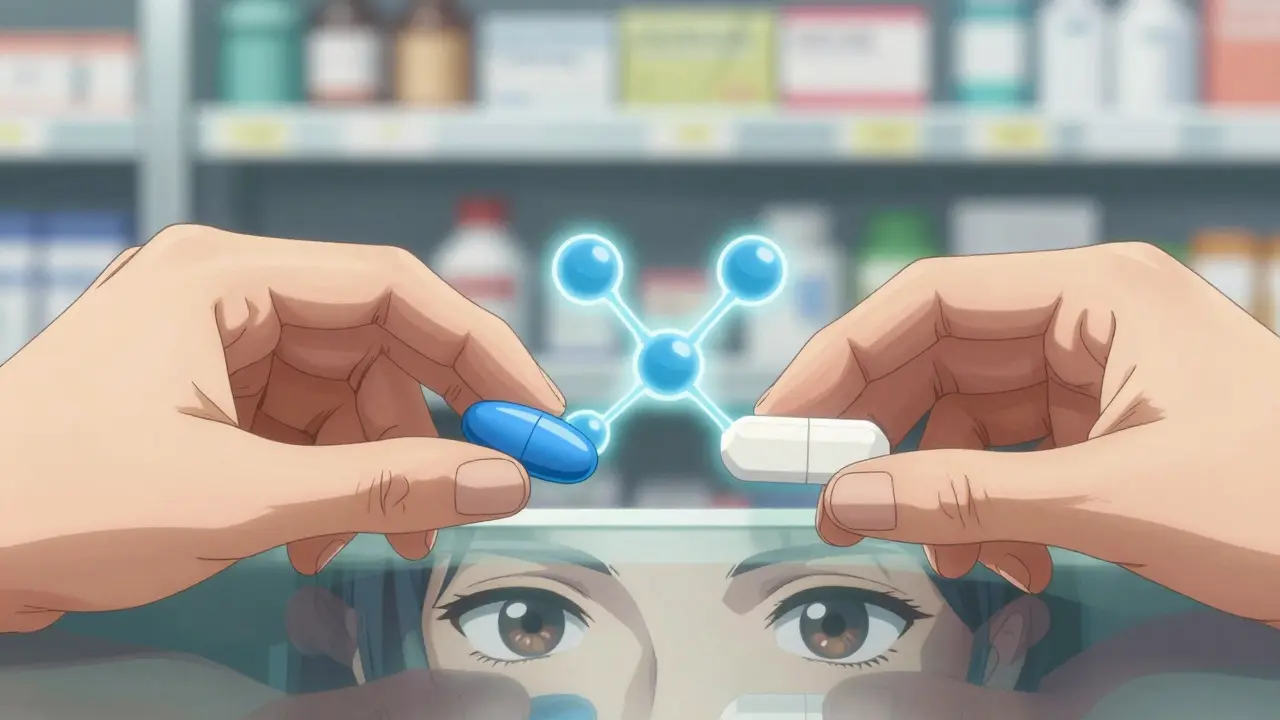
Consider showing patients a side-by-side comparison of the pills. Acknowledge the difference in appearance directly: "You’ll notice the color and shape are different, but that’s just the inactive ingredients-the coating and fillers. The medicine inside is exactly the same." This transparency addresses the elephant in the room and reduces anxiety about receiving the "wrong" pill.
Digital tools are also emerging. The FDA’s "Generics Smart" toolkit includes 3D pill comparison features and virtual reality demonstrations of manufacturing processes. While not every pharmacy has access to VR, even a simple tablet showing a video of the FDA inspection process can reassure skeptical patients. Preliminary data from CVS pharmacies showed a 29% increase in acceptance after implementing such digital educational tools.
Handling Common Objections
Even with the best strategies, some patients will push back. Here’s how to handle three common objections:
- "It didn’t work for me before." Validate their experience first. "I’m sorry to hear that. Sometimes inactive ingredients can affect digestion. Let’s try a different manufacturer, or we can discuss staying on the brand if your insurance covers it." Never dismiss their past experience.
- "I heard generics are made in unsafe factories." Reassure them with regulatory facts. "All generic manufacturers, whether domestic or international, must meet the same strict FDA standards as brand-name companies. They undergo regular inspections to ensure quality and safety."
- "I prefer the brand name." Respect their preference while offering options. "That’s completely understandable. If you prefer the brand, we can certainly fill it. Just keep in mind that your copay might be higher. Would you like me to check if there’s a discount card available?"
The goal isn’t to force a switch, but to provide accurate information so patients can make informed choices. Often, once fears are addressed, patients are happy to try the generic again.
Why do patients hesitate to take generic medications?
Patients often hesitate due to concerns about pill appearance, misconceptions about potency, and distrust in manufacturing standards. Many believe generics are weaker or less safe than brand-name drugs, despite rigorous FDA testing requirements.
What is the Ask-Tell-Ask communication framework?
The Ask-Tell-Ask framework involves asking the patient about their current understanding, providing clear information, and then asking them to repeat back what they understood. This method improves comprehension and builds trust, leading to higher acceptance rates for generic substitutions.
Should I lead with cost when recommending generics?
No, leading with cost can sometimes decrease trust. Patients may feel like a financial consideration rather than a health priority. Instead, focus on clinical equivalence and personal endorsement, mentioning cost only as a secondary benefit.
How can pharmacists address concerns about pill appearance?
Pharmacists should acknowledge the visual difference openly and explain that changes in color or shape are due to inactive ingredients like coatings. Using visual aids or side-by-side comparisons can help reassure patients that the active medicinal component remains identical.
What role does timing play in generic acceptance?
Timing is critical. Education provided at the point of prescribing leads to higher acceptance rates than education given only at the pharmacy. Proactively discussing generics before concerns arise also significantly boosts acceptance compared to reacting defensively.