Why Weight Matters More Than Age for Kids’ Medication
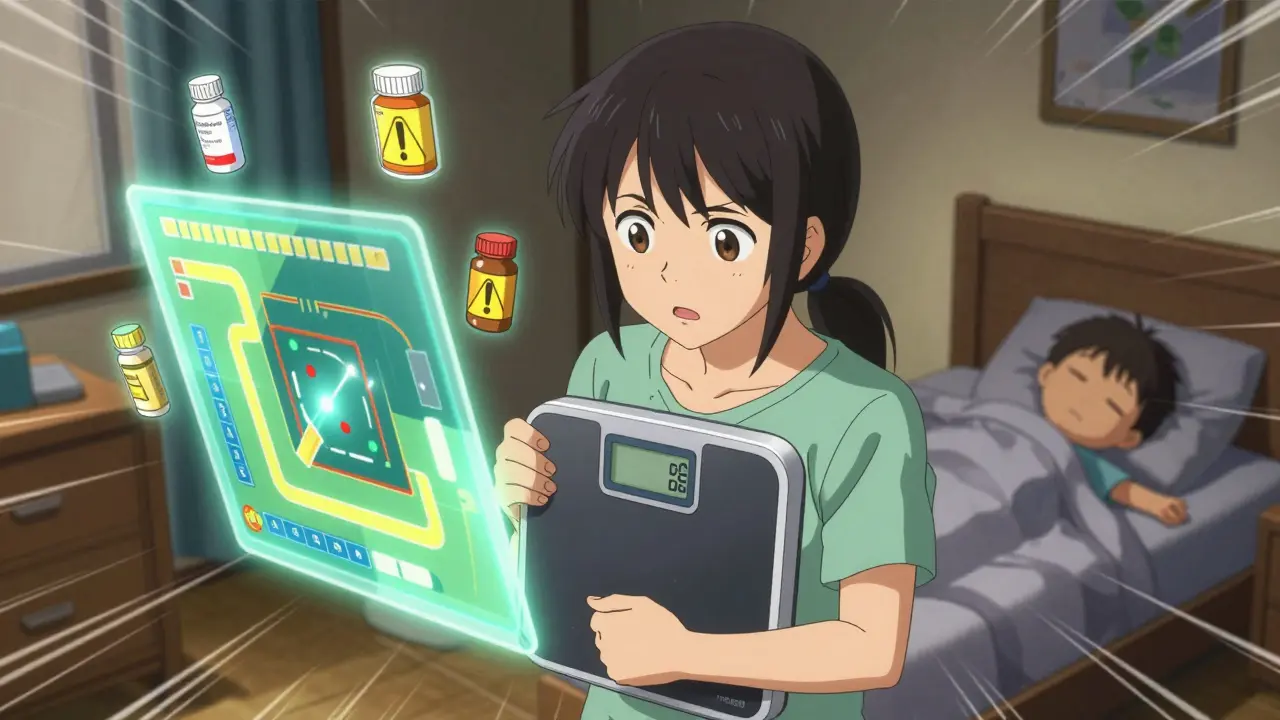
When your child has a fever or aches, you reach for the medicine bottle. But what if the dose on the label doesn’t match your child’s real size? Many parents assume age is enough to pick the right amount. It’s not. Weight is the only reliable way to dose children’s over-the-counter (OTC) medications like acetaminophen and ibuprofen. Age is a rough guess. Weight is the truth.
The FDA, the American Academy of Pediatrics, and hospitals like Johns Hopkins and St. Louis Children’s all agree: using age alone leads to dosing errors in 23% of cases. That means nearly 1 in 4 kids get too much or too little medicine. Too little won’t help. Too much can cause liver damage, kidney problems, or even hospitalization. Acetaminophen overdose is the #1 cause of acute liver failure in children under 12. And most of those cases happen because parents followed the age chart instead of weighing their child.
What to Look for on the Label: The 5 Must-Read Sections
Every OTC children’s medicine label must include five key pieces of information. Missing any one could put your child at risk. Here’s what to scan before you open the bottle.
- Active Ingredient: This tells you what’s in the medicine. Is it acetaminophen? Ibuprofen? Benadryl? Never mix two medicines with the same active ingredient. Many cold and flu products also contain acetaminophen. Giving Tylenol plus a cold syrup could mean double the dose - and that’s dangerous.
- Concentration: This is the most overlooked part. Liquid acetaminophen must be 160 mg per 5 mL. Ibuprofen must be 100 mg per 5 mL. If you see 80 mg per 0.8 mL, that’s concentrated infant drops. They’re not the same. Using the wrong syringe for the wrong concentration can lead to a 5x overdose.
- Weight-Based Dosing Chart: Look for a table that lists pounds or kilograms. The most common weight ranges are: 12-17 lbs, 18-23 lbs, 24-35 lbs, 36-47 lbs, 48-59 lbs, 60-71 lbs, 72-95 lbs, and 96+ lbs. If your child’s weight falls between two ranges, always round down. Never round up.
- Dosing Frequency: Acetaminophen can be given every 4 hours. Ibuprofen every 6-8 hours. Never give more than 5 doses of acetaminophen in 24 hours. Ibuprofen should never be given more than 4 times a day. Set a phone alarm if you need to.
- Warnings: Check for “Do not use for children under [age]” and “Do not combine with other medicines containing [active ingredient].” Ibuprofen is not safe for babies under 6 months. Acetaminophen is okay for infants as young as 2 months - but only if your pediatrician says so.
How to Measure the Right Amount - No Spoons Allowed
Never use a kitchen spoon. Not even if it’s labeled “teaspoon.” A real teaspoon holds 4.93 mL. But your spoon? It could hold 7 mL. Or 10 mL. That’s a 40-100% overdose. The FDA says household spoons are the #1 reason kids get too much medicine.
Only use what comes with the bottle: a plastic syringe, a dosing cup, or a measuring spoon marked in mL. If the bottle didn’t come with one, go to the pharmacy and ask for one. They’ll give it to you free. Syringes are the most accurate - they let you see the exact line.
Here’s what the abbreviations mean:
- mL = milliliter - the only unit you should trust
- tsp = teaspoon - equals 5 mL, but don’t use a kitchen spoon
- TBSP = tablespoon - equals 15 mL, never use this for kids
One parent on Reddit thought “tsp” meant “tablespoon” and gave their 2-year-old 15 mL instead of 5 mL. The child ended up in the ER. That mistake is more common than you think.

Acetaminophen vs. Ibuprofen: Key Differences You Can’t Ignore
Both are safe when used right. But they’re not interchangeable.
| Feature | Acetaminophen (Tylenol) | Ibuprofen (Advil, Motrin) |
|---|---|---|
| Minimum Age | 2 months (with pediatrician approval) | 6 months |
| Dose Frequency | Every 4 hours | Every 6-8 hours |
| Max Doses per Day | 5 | 4 |
| Concentration (liquid) | 160 mg per 5 mL | 100 mg per 5 mL |
| Best For | Fever, mild pain | Fever, inflammation, swelling |
| Warning | Can cause liver damage if overused | Can irritate stomach; avoid if dehydrated |
For a child weighing 24-35 lbs, both medicines use 5 mL. But the acetaminophen dose is 160 mg. The ibuprofen dose is 100 mg. That’s not a mistake - it’s how the concentrations are designed. Always check the concentration before you pour.
What to Do When Your Child’s Weight Isn’t Listed
What if your child weighs 27 lbs? The chart says 24-35 lbs. That’s fine. Use the 24-35 lb dose. But what if your child weighs 36 lbs? The chart says 36-47 lbs. Don’t use the 24-35 lb dose just because your child is “small for their age.” Use the 36-47 lb dose.
And if your child weighs 15 lbs? That’s between 12-17 lbs and 18-23 lbs. Round down. Use the 12-17 lb dose. It’s safer. The AAP says underdosing is less dangerous than overdosing. If you’re unsure, call your pediatrician. Don’t guess.
Also, don’t use a toddler’s weight from 6 months ago. Kids grow fast. Weigh them every 3-6 months if you’re giving medicine regularly. Keep a small digital scale in your medicine cabinet.
Common Mistakes Even Smart Parents Make
Here are the top 5 mistakes - and how to avoid them:
- Mixing medicines: You give Tylenol for fever, then give a cold medicine that also has acetaminophen. Result: double dose. Always check the “Active Ingredients” section on every bottle.
- Using old medicine: The label says “discard after 12 months.” That’s not a suggestion. Expired medicine loses potency. Worse, some break down into harmful chemicals.
- Assuming “children’s” means “safe”: Chewable tablets for kids are 80 mg per tablet. Regular children’s liquid is 160 mg per 5 mL. One tablet equals half a dose of liquid. Don’t assume.
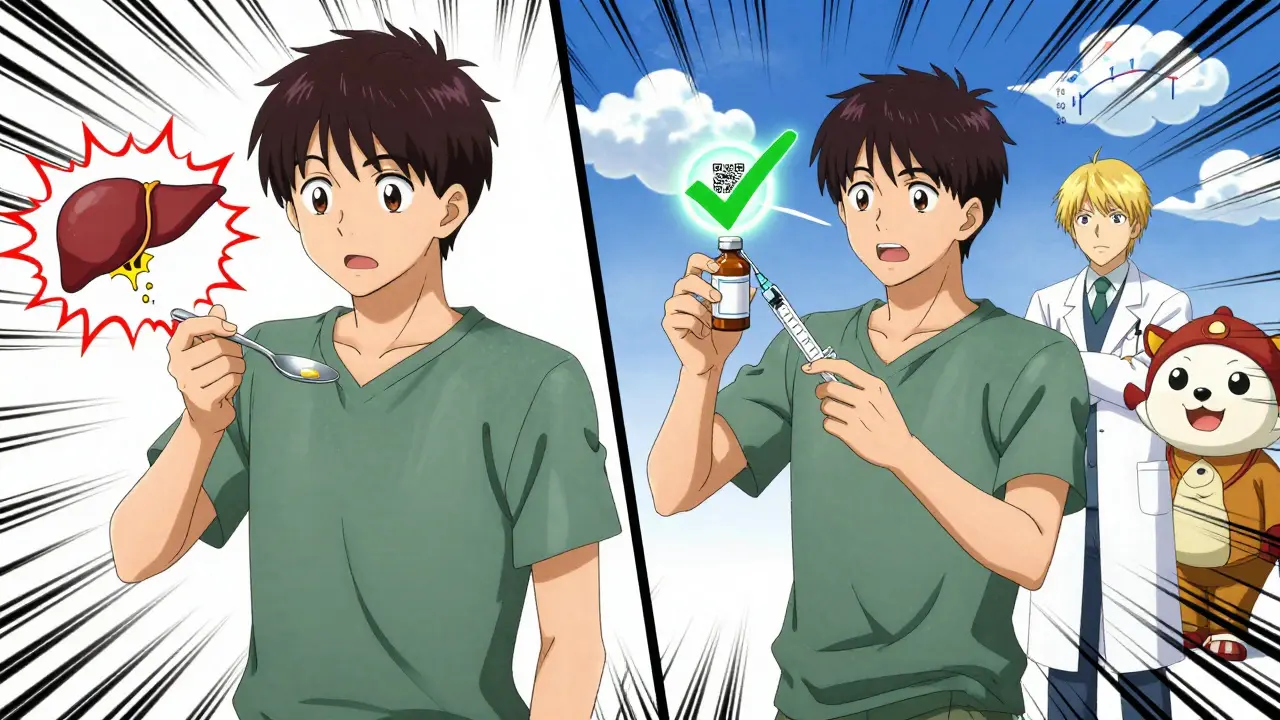
- Ignoring the “Liver Warning”: New labels now say “Liver Warning” in bold for kids under 12. That’s there for a reason. 47 children had liver failure from acetaminophen overdoses in 2023.
- Not knowing your child’s weight: If you don’t know it, weigh them. Use a bathroom scale: weigh yourself holding your child, then weigh yourself alone. Subtract. Round to the nearest pound.
When to Call the Doctor
Some situations need a doctor - not a label.
- Your child is under 3 months old and has a fever. Call right away.
- You’re unsure about the weight range or concentration.
- You gave the wrong dose and your child seems sleepy, nauseous, or unusually quiet.
- Your child is under 2 years old and you’re thinking of giving Benadryl. The AAP says: don’t. Unless your doctor says so.
- You’ve given medicine for more than 48 hours without improvement.
When in doubt, call your pediatrician. Or call Poison Control at 1-800-222-1222. It’s free, 24/7, and they’ve helped over 1 million parents this year.
What’s Changing in 2025 and Beyond
The FDA is pushing for even safer labels. By 2025, all children’s liquid medicines will include syringe unit markings - like “1 mL,” “2 mL,” “3 mL” - alongside the mL numbers. This is because 31% of parents still misread mL-only labels.
By 2026, 75% of OTC children’s medicine bottles will have QR codes. Scan it with your phone and you’ll get a video showing exactly how to measure the dose. Some pharmacies already offer free digital dosing calculators. The Hyde Park Pediatrics app, used over 17,000 times, is 98% accurate in simulations.
These changes won’t fix everything. But they help. The real fix? Parents reading the label like it’s a safety manual - because it is.