Medication Eye Safety & Symptom Checker
You reach for your usual painkiller or start a new prescription, only to find the world suddenly looks like it’s underwater. Streetlights stretch into glowing orbs, and even a dim lamp feels like staring into a welding torch. This isn’t just in your head. Photophobia is painful light sensitivity caused by medications that alter how your eyes process visual stimuli. It is a documented, often underreported side effect of common drugs ranging from ibuprofen to powerful heart medications.
If you are experiencing halos around lights or sudden discomfort in bright environments after starting a new drug, you need to know why this happens and how to protect your vision. Ignoring these symptoms can lead to permanent damage with certain medications. Here is what you need to know about keeping your eyes safe while managing your health conditions.
Why Do Medications Change How You See?
Your eyes are not isolated cameras; they are connected directly to your brain’s sensory processing centers. When you take certain medications, they don’t just treat their target condition-they interact with the chemicals and nerves that control vision. According to research cited by Rexon-Eye (2022), medication-induced photophobia involves thalamic hyperactivity, where the part of your brain that processes sensory input becomes hypersensitive to light.
This creates a divergence between the optic nerve and the trigeminal nerve, effectively turning light signals into pain signals. It’s why a sunny day might feel physically painful rather than just bright. Additionally, some drugs cause direct physical changes to the eye itself. For example, Hydroxychloroquine (Plaquenil) accumulates in the retinal pigment epithelium, potentially causing irreversible damage if not monitored. Other drugs, like beta-blockers, can cause fluid shifts or corneal swelling that scatters light, creating those annoying halos around streetlamps and headlights.
Common Culprits: Which Drugs Cause Visual Disturbances?
Not every pill affects your eyes, but several major classes of medications are known offenders. Knowing which ones to watch for can help you catch problems early.
- NSAIDs: Common painkillers like ibuprofen (Advil) and naproxen (Aleve) affect about 1% of users with painful light sensitivity. The American Optometric Association notes this is often underreported because people assume it’s part of their migraine or headache.
- Heart Medications: Amiodarone (Cordarone) is notorious for causing halos around lights. Studies show 1-10% of patients experience this, making night driving difficult or impossible for some.
- Antimalarials: Hydroxychloroquine carries a 10-15% risk of retinal damage with long-term use. It causes corneal cloudiness that blurs vision and increases light sensitivity.
- Erectile Dysfunction Drugs: Sildenafil (Viagra) can cause color vision changes, dry eyes, and acute light sensitivity due to its effect on blood flow in the retina.
- Antipsychotics: Drugs like Chlorpromazine (Thorazine) can deposit pigments in the cornea and lens, leading to blurry vision and increased glare.
- Antiseizure Medications: Phenytoin (Dilantin) lists photophobia as a certain side effect, though severity varies wildly between patients.
The Silent Threats: Retinal Damage and Glaucoma
Some medication side effects are merely uncomfortable; others are dangerous. The difference lies in whether the drug causes temporary irritation or permanent structural damage.
Hydroxychloroquine toxicity is the most critical concern here. Dr. Stephanie Marioneaux of the American Academy of Ophthalmology warns that retinal damage from this drug is irreversible. The scary part? 95% of cases are asymptomatic in the early stages. You won’t feel pain until the damage is done. That is why annual eye exams after five years of use are non-negotiable.
Another emergency scenario is acute angle-closure glaucoma. Certain medications can dilate the pupil, blocking the drainage angle in your eye. If you experience sudden light sensitivity, eye pain, and nausea, seek emergency care within 24-48 hours. Without treatment, you can lose vision permanently in a matter of days.
| Medication Class | Specific Drug Example | Primary Visual Symptom | Risk Level / Prevalence | Required Monitoring |
|---|---|---|---|---|
| Antimalarial | Hydroxychloroquine (Plaquenil) | Retinal damage, blurred vision | High (10-15% long-term risk) | Annual exam after 5 years |
| Antiarrhythmic | Amiodarone (Cordarone) | Halos around lights | Moderate (1-10%) | Regular ophthalmologic checkups |
| Antibiotic (TB) | Ethambutol | Color vision loss, peripheral blindness | Dose-dependent (1-50%) | Monthly vision testing during treatment |
| NSAID | Ibuprofen / Naproxen | Painful light sensitivity | Low (1-3%) | Monitor symptoms; stop if severe |
| Antipsychotic | Chlorpromazine | Cataracts, pigment deposits | Moderate with long-term use | Annual slit-lamp examination |
Practical Eye Safety Tips for Daily Life
If you cannot stop taking your medication, you must adapt your environment. Living with photophobia requires specific strategies to reduce discomfort without isolating yourself.
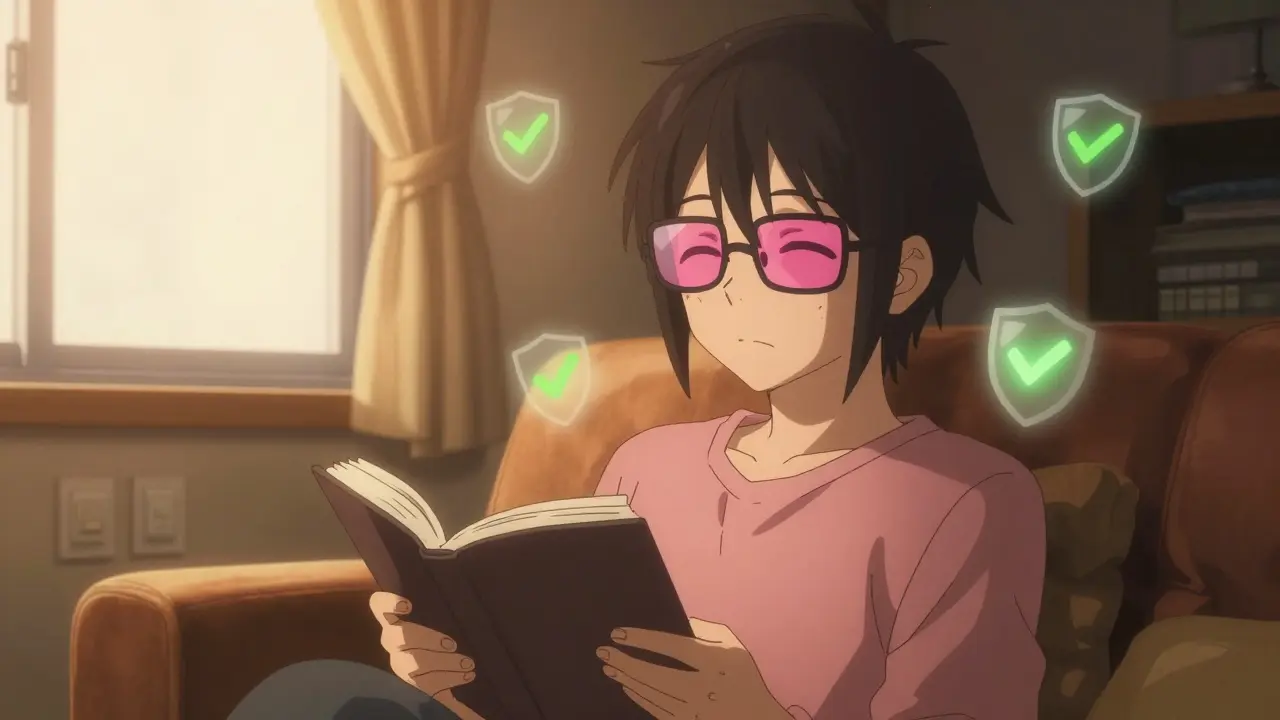
Wear Specialized Tinted Lenses Standard sunglasses often make photophobia worse by forcing your pupils to dilate further when you step indoors. Instead, look for FL-41 tinted glasses which are rose-tinted lenses clinically proven to block specific wavelengths of light that trigger migraines and light sensitivity. Clinical studies show these can reduce symptom intensity by 40-60%. Brands like TheraSpecs have seen massive growth because they actually work for medication-induced sensitivity.
Adjust Your Home Lighting Harsh overhead fluorescent lights are the enemy. Switch to LED bulbs with a warm color temperature between 2700K and 3000K. Keep them at 50-70% brightness using dimmer switches. This reduces the contrast ratio between indoor and outdoor light, easing the strain on your eyes when you transition between spaces.
Follow the Modified 20-20-20 Rule The Cleveland Clinic recommends an adaptation of the standard eye-strain rule. Every 20 minutes, look at something 20 feet away for 20 seconds-but do this in dimmed lighting. This gives your retinal cells a chance to reset without overwhelming them with bright stimuli.
When to Call the Doctor Immediately
Not all light sensitivity is equal. You should contact your ophthalmologist or primary care provider right away if you notice any of the following red flags:
- Sudden onset: Symptoms appear within hours or days of starting a new drug.
- Color vision changes: Reds look brown, or colors seem washed out. This could indicate optic nerve damage from drugs like ethambutol.
- Peripheral vision loss: You feel like you’re looking through a tunnel. This is a sign of advanced retinal toxicity.
- Eye pain and nausea: Combined with halos, this suggests acute glaucoma, a medical emergency.
Dr. Richard Rosen emphasizes that medication-induced photophobia is often temporary but can be distressing. However, ruling out permanent damage is the priority. Don’t wait for your next routine checkup if things change abruptly.
Monitoring Protocols You Must Follow
Prevention is better than cure, especially when the cure doesn’t exist. The National Eye Institute reports that yearly eye exams for high-risk medication users prevent 89% of permanent vision loss cases. Here is your checklist:
- Baseline Exam: Before starting hydroxychloroquine, tamoxifen, or chloroquine, get a full eye exam including visual fields and spectral-domain OCT (Optical Coherence Tomography).
- Annual Screening: After five years of use, or immediately if you are on high doses, schedule an annual exam with a specialist who knows how to screen for drug toxicity.
- Monthly Checks: If you are taking ethambutol for tuberculosis, you need monthly vision tests, specifically checking for red-green color discrimination.
A 2022 JAMA Ophthalmology study found that strict adherence to these guidelines reduced severe retinal toxicity from 7.3% to just 1.2% over five years. Compliance is the key to safety.
Can ibuprofen really cause light sensitivity?
Yes. Approximately 1% of patients taking NSAIDs like ibuprofen or naproxen experience painful light sensitivity. This is often underreported because it mimics migraine symptoms, but it is a recognized side effect linked to inflammatory pathways affecting the ocular surface.
What does it mean if I see halos around lights after starting a new medication?
Halos around lights can indicate corneal swelling or deposits, commonly associated with medications like amiodarone (for heart rhythm) or antimalarials. While sometimes temporary, it can also signal acute angle-closure glaucoma, which is a medical emergency. You should consult an eye doctor promptly to determine the cause.
Are FL-41 glasses worth buying for medication-induced photophobia?
Yes, clinical studies suggest FL-41 tinted lenses can reduce light sensitivity symptoms by 40-60%. They filter specific wavelengths of light that trigger neural hypersensitivity, offering relief where standard sunglasses may fail. Many patients report being able to return to work and daily activities after using them.
How often should I get my eyes checked if I take hydroxychloroquine?
You should receive a baseline eye exam before starting the medication. If you have been taking it for less than five years and have no other risk factors, annual exams are recommended. After five years of use, or if you are on a high dose, you must have annual screenings including visual fields and OCT scans to detect silent retinal damage.
Will stopping the medication fix my light sensitivity?
For many drugs, such as antipsychotics or NSAIDs, symptoms resolve within 7-14 days after cessation. However, for drugs like hydroxychloroquine or ethambutol, the damage may be permanent if detected late. Always consult your physician before stopping any prescribed medication, as they can adjust dosages or switch alternatives safely.