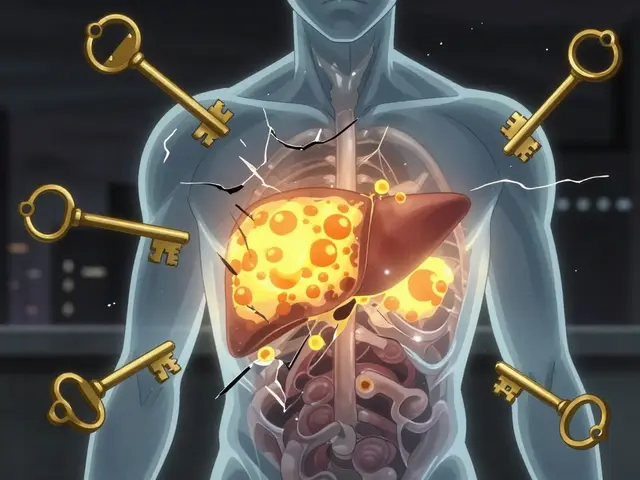
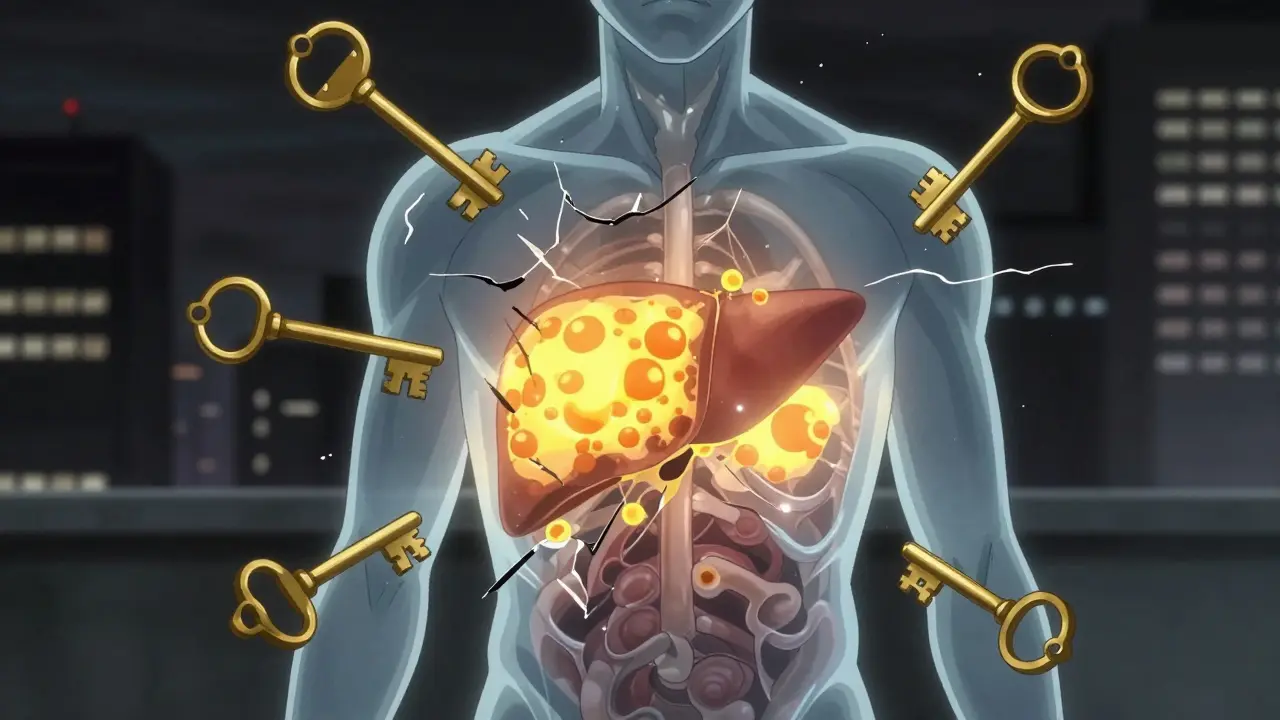
You might feel fine, but your liver could be silently struggling. Right now, around one in four people globally carries too much fat in their liver without drinking alcohol heavily. That condition is Nonalcoholic Fatty Liver Diseasea buildup of excess liver fat in non-drinkers, often called NAFLD. Some experts now call it Metabolic Associated Fatty Liver Disease (MAFLD) because it ties directly to your metabolism. The good news? You can stop it. You can even reverse it. But you need to know exactly how the damage happens and what actually works to fix it.
Understanding the Silent Threat
Liver fat isn't just extra storage space. When more than 5% of your liver cells hold onto fat, you are in the territory of steatosis. For years, doctors looked at this as simple fat storage, similar to having belly fat. We now know it is a complex disorder that can turn serious very quickly. The shift in naming to MAFLD highlights that this is not just about alcohol absence but about metabolic dysfunction driving the problem.
The engine behind this is Insulin Resistancewhen body cells don't respond well to insulin. Think of insulin as a key unlocking cells for energy. If the lock is jammed, sugar stays in your blood, and your body dumps that excess energy into your liver as fat. Studies show that in these patients, free fatty acids flowing from fat tissue to the liver increase by 50% compared to healthy individuals. Your liver starts making its own fat at 26% higher rates than normal, overwhelming the system.
Why does this matter to you personally? Because if you have Type 2 diabetes or high blood pressure, the odds go up significantly. About 25% of adults worldwide have some form of metabolic syndrome, which acts as fuel for this fire. You cannot simply ignore a diagnosis here thinking it will stay benign forever.
How the Disease Spreads Through Your Liver
Fatty liver isn't static. It follows a path known as the "multiple-hit hypothesis." Imagine hitting a car once. It dents, maybe the paint scratches. Hit it enough times, and the frame crumbles. That second hit matters most.
- First Hit: Simple fat accumulation (steatosis). Most people stop here.
- Second Hit: Inflammation sets in. Cells get stressed, mitochondria malfunction, and toxic lipid species like ceramides build up.
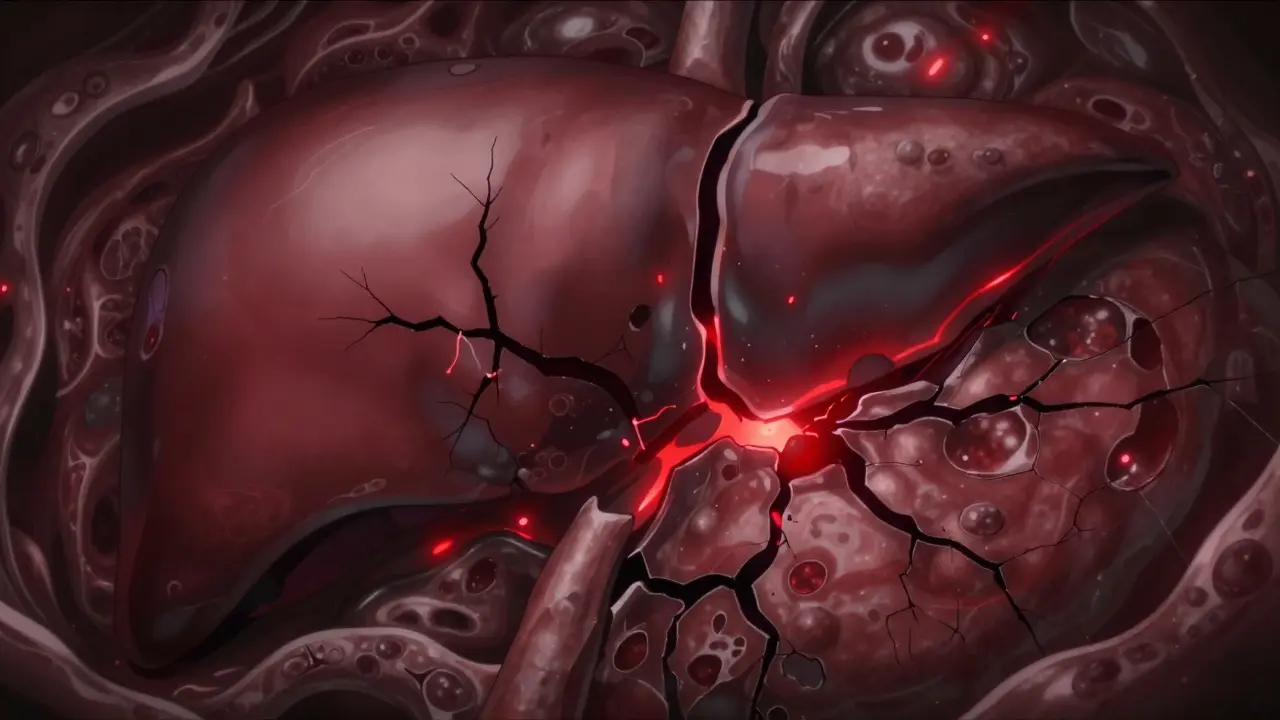
- Third Hit: Scarring begins. This is fibrosis. Liver repair attempts to heal the inflammation but leaves scar tissue behind instead of clean tissue.
Once fibrosis reaches stage 3, we enter the danger zone. Doctors look for Cirrhosisextensive scarring replacing healthy liver tissue as a potential endpoint. About 20% of those with the inflammatory form (NASH) will develop cirrhosis within 15 years. However, experts disagree on speed. Dr. Arun Sanyal notes only 20-30% progress to advanced fibrosis over decades. Others argue the risk is higher depending on genetics and environment. Regardless, waiting to see symptoms is risky because the liver rarely hurts until damage is severe.
The Math of Reversal
Can you clear the fat? Yes. Can you erase scars? That gets harder, but early signs can improve. The numbers tell us exactly how much effort is needed. Losing 3-5% of your total body weight helps reduce the fat in your liver cells. It is a solid start.
To actually fix the inflammation and reverse fibrosis, you typically need to lose between 7% and 10% of your body weight. A major study called LEAN showed that achieving this 7-10% mark resolved NASH in 90% of participants. This isn't magic; it is biology. Fat loss lowers the flood of fatty acids entering your liver, allowing it to reset.
| Weight Loss Goal | Impact on Steatosis (Fat) | Impact on Inflammation (NASH) | Impact on Fibrosis (Scarring) |
|---|---|---|---|
| 3% to 5% | Improvement seen | Moderate improvement | Minimal change |
| 7% to 10% | Significant reduction | High chance of resolution | Potential regression |
| Over 10% | Major clearance | Best outcome | Fibrosis may stabilize |
Most people struggle with the time commitment. Realistically, expect to spend 6 to 12 months to see substantial changes. Liver enzymes might normalize in 3 to 6 months, but structural healing takes longer. Patience is part of the protocol.
Dietary Protocol for Liver Health
Crash diets are bad news for your liver. Rapid starvation causes the liver to mobilize fat all at once, spiking the damage. Slow, steady reduction is the key. The Mediterranean Dietdietary pattern rich in fruits, vegetables, olive oil, and whole grains is currently the gold standard recommendation. Research indicates that eating roughly 40-45% carbohydrates, 35-40% fat, and 15-20% protein yields the best results.
You need fiber specifically. Aim for 25-30 grams of fiber daily. Fiber slows sugar absorption, keeping that insulin spike low. Swap sugary drinks for water immediately. One soda a day can negate your efforts. Also, watch out for hidden sugars in processed sauces and condiments.
Sports play a bigger role than many think. Do you just run? Walking burns calories, but resistance training builds muscle, and muscle burns more glucose even when resting. Mix 150 minutes of moderate aerobic activity each week with two days of lifting weights or bodyweight exercises. Patients doing both burn significantly more visceral fat than those doing cardio alone.
Medications and Medical Support
Will you ever need pills? Sometimes. While no drug has universal approval specifically for everyone with fatty liver, options exist for specific groups. Vitamin E (800 IU daily) helps those who cannot take other drugs but is risky for some populations. Pioglitazone improves liver histology in over 50% of patients with Type 2 diabetes but causes weight gain, which counters our goal.
GLP-1 receptor agonists like liraglutide and semaglutide are changing the landscape. Originally for diabetes and weight loss, they reduce liver fat by improving autophagy-your liver's way of cleaning out old cells. They lower inflammation markers significantly. By 2026, access is easier, but insurance still denies coverage for 45% of patients despite guidelines.
We also see targeted therapies arriving. Resmetirom received FDA approval in March 2024. It targets the thyroid hormone receptor beta. Trials show it resolves NASH in about 26% of patients compared to 16% on placebo. For 2026, if you have fibrosis alongside fatty liver, ask your doctor about THR-beta agonists. Combination therapy using FXR agonists plus GLP-1s is showing 45-50% resolution rates in trials, far better than single drugs.

Monitoring Your Recovery
How do you know if it is working? Blood tests (like ALT and AST) give hints, but they are lagging indicators. The liver releases enzymes long after damage occurs. Better tools include FibroScannon-invasive ultrasound device measuring liver stiffness. This machine gives you a stiffness score indicating fibrosis and a CAP value for fat. Unfortunately, primary care clinics only have this equipment 35% of the time. If your local doctor doesn't have one, seek a specialist referral.
Newer blood panels like the ELF test (Enhanced Liver Fibrosis) are becoming reliable biomarkers validated in massive studies. These help track progress without needing repeated biopsies, which used to be the only way to confirm staging.
Frequently Asked Questions
Is fatty liver reversible?
Yes, especially in early stages. Losing 7-10% of body weight can resolve inflammation (NASH) in 90% of cases. Even earlier scarring can regress with sustained lifestyle changes.
What foods worsen fatty liver?
Fructose is the main culprit, found in high fructose corn syrup and sugary drinks. Excessive refined carbs like white bread also drive fat production. Alcohol adds stress, even in small amounts.
How fast can I fix my liver?
You will see enzyme improvements in 3-6 months. However, significant structural reversal usually takes 6-12 months of consistent diet and exercise.
Do supplements help?
Vitamin E is the only supplement with proven benefit for non-diabetics with NASH. Probiotics may help gut-liver axis function, but evidence is less robust. Always consult a doctor before starting high-dose supplements.
Is NAFLD serious?
It affects 25% of the global population. While many remain stable, it is the leading cause for liver transplants projected by 2030, so proactive management is essential.