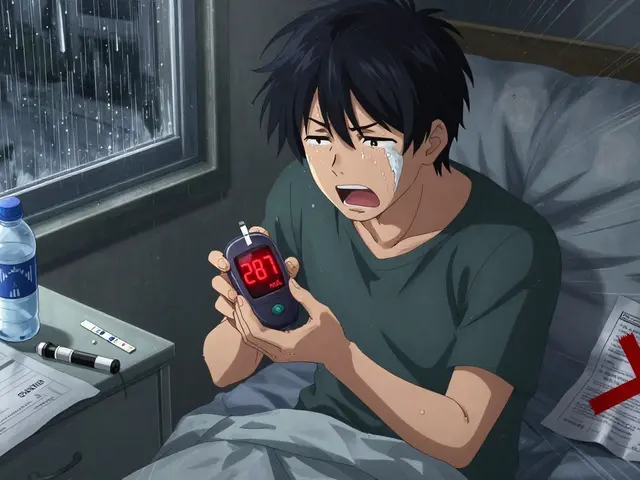
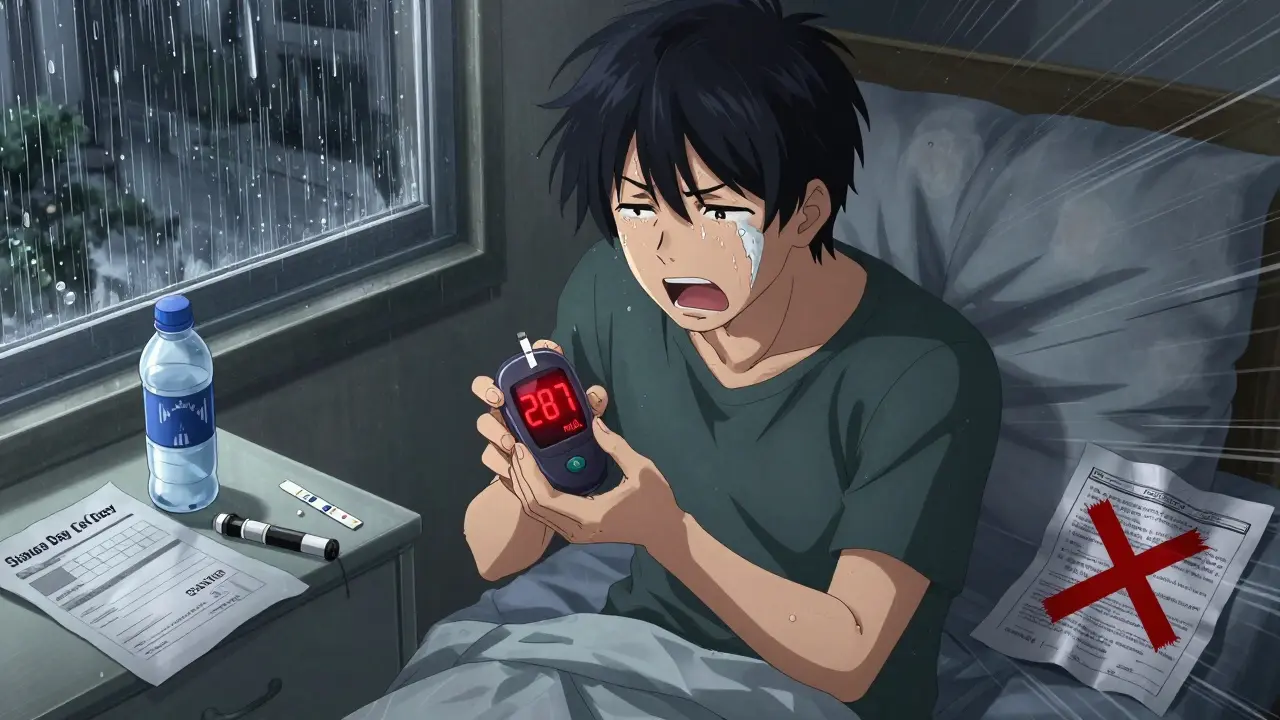
When you’re sick with a cold, flu, or stomach bug, your body goes into stress mode. For people with diabetes, that stress can turn a simple illness into a medical emergency. Too many end up in the hospital not because their diabetes got worse-but because they kept taking the wrong medications at the wrong time. Sick day rules aren’t just advice. They’re life-saving protocols designed to prevent diabetic ketoacidosis (DKA) and acute kidney injury (AKI), two conditions that can strike fast and hard when you’re ill.
Why Illness Changes Everything for Diabetes Medications
When you’re sick, your body releases stress hormones like cortisol and adrenaline. These hormones push your liver to dump more glucose into your bloodstream. At the same time, you might stop eating, drink less, vomit, or have diarrhea. That’s a dangerous mix for people on certain diabetes medications. Your insulin needs change. Your kidneys struggle. Your blood sugar swings wildly. And if you keep taking pills like metformin or SGLT2 inhibitors without adjusting, you could trigger DKA or AKI-both of which can land you in intensive care.A 2022 study in JAMA Internal Medicine looked at nearly 48,000 hospital admissions and found that people with diabetes have a 300% higher risk of DKA during illness. AKI risk jumps by 200%. The CDC reports that 12.7% of all diabetes-related hospitalizations in the U.S. happen because of improper medication use during sickness. That’s over 150,000 preventable hospital stays every year.
Which Medications to Stop-and When
Not all diabetes meds are created equal when you’re sick. Some need to be paused immediately. Others can stay. Here’s what the 2023 ADA guidelines say:- Metformin: Stop at the first sign of vomiting, diarrhea, or fever. Why? Metformin is cleared by the kidneys. When you’re dehydrated, your creatinine rises, and metformin builds up in your blood. This can cause lactic acidosis-a rare but deadly condition. A 2019 NEJM study showed an 8.3-fold increase in risk when serum creatinine climbs above 1.5 mg/dL. Don’t wait until you’re too weak to get up. Stop it now.
- SGLT2 inhibitors (empagliflozin, dapagliflozin, canagliflozin): Discontinue immediately. These drugs make your kidneys dump sugar into your urine. When you’re not drinking enough fluids, your body starts breaking down fat for energy. That leads to ketones. And SGLT2 inhibitors can cause euglycemic DKA-meaning your blood sugar might look normal, but your ketones are sky-high. The FDA issued a safety alert in 2021 after reviewing over 1,200 adverse events. Waiting 24 hours after vomiting starts increases DKA risk by 300%, according to Dr. Anne Peters.
- ACE inhibitors and ARBs (lisinopril, losartan, ramipril, etc.): Pause if you’re drinking less than 1,500 mL (about 50 oz) in 24 hours. These blood pressure meds protect your kidneys when you’re healthy. But when you’re dehydrated, they can cause your kidneys to shut down. A 2022 meta-analysis found a 40% spike in AKI risk when fluid intake drops below that threshold. If you’re on one of these and you’re not keeping fluids down, call your doctor.
- Insulin: Never stop. Ever. Whether you have type 1 or type 2, your body still needs insulin during illness. Type 1 patients should increase their basal insulin by 10-20% every 4 hours if blood sugar is over 270 mg/dL. Type 2 patients on insulin often need higher doses too-68% do, according to a 2023 Diabetes Care trial. Don’t guess. Check your blood sugar every 2-4 hours and adjust accordingly.
- Sulfonylureas (glimepiride, glyburide): These can cause dangerous lows during illness because you’re not eating. Talk to your provider about reducing the dose, but don’t stop cold turkey unless you’re having repeated hypoglycemia.
What to Do Instead: The Sick Day Action Plan
You can’t just stop meds and hope for the best. You need a plan. Here’s what to do:- Check your blood sugar every 2-4 hours. That’s at least six times a day. Set phone alarms. Write it down. The target range during illness is 100-180 mg/dL. Going too high or too low is risky.
- Test for ketones if your blood sugar is above 240 mg/dL. Use urine strips or a blood ketone meter. If your blood ketones are above 0.6 mmol/L or urine ketones are moderate to large, call your doctor. Don’t wait for symptoms like fruity breath or nausea.
- Stay hydrated. Drink water, sugar-free electrolyte drinks (like Nuun or Pedialyte), or broth. Aim for 1.5 liters (50 oz) daily. If you can’t keep fluids down, sip slowly. A spoonful every 10 minutes counts.
- Eat if you can. Even if you’re nauseous, try to take in 15-20 grams of carbs every hour. Think: crackers, toast, soup, applesauce. Skipping meals can make ketones worse.
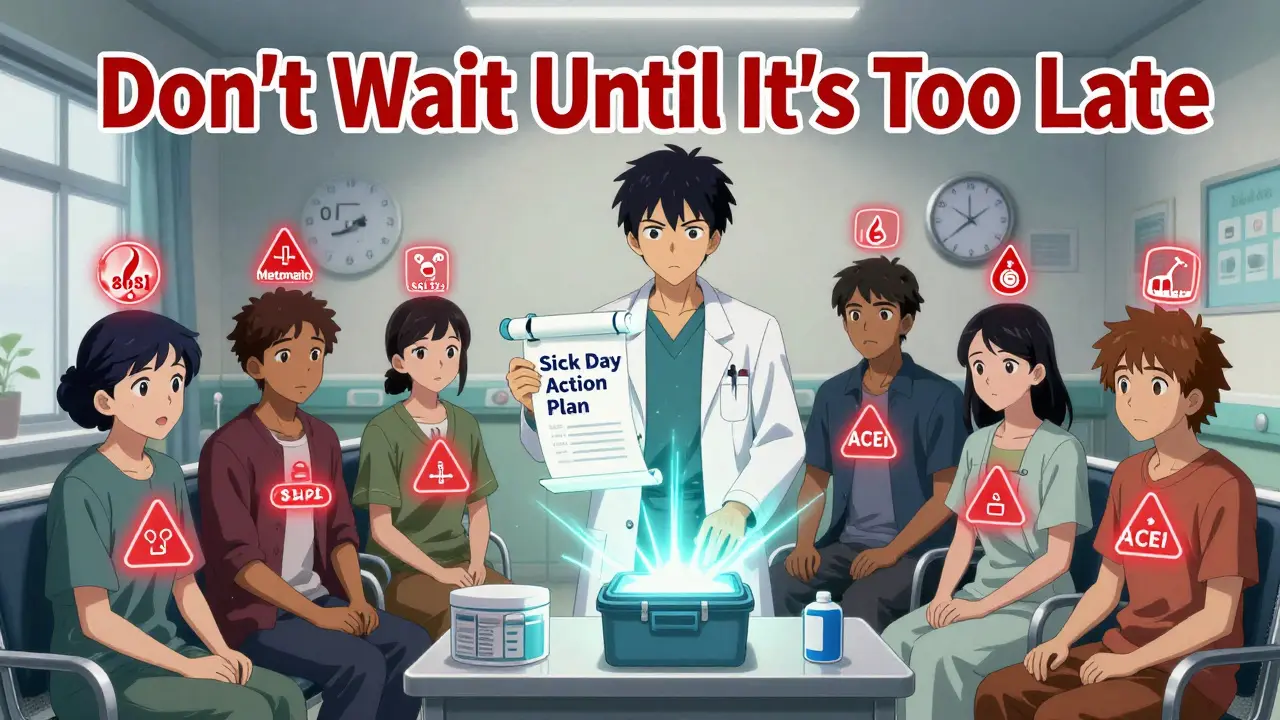
- Have a sick-day kit ready. Keep it stocked by October: glucose meter + 50+ strips, ketone strips (10+), insulin (extra vials or pens), sugar-free fluids, electrolyte packets, and a printed copy of your sick day plan. Joslin Diabetes Center found that 78% of patients who used a kit avoided hospitalization.

Where the Guidelines Clash-and Why It Confuses You
You might get different advice from your endocrinologist, your primary care doctor, and the ADA website. That’s not a mistake-it’s the reality of current guidelines.- The ADA says you can keep metformin during mild illness if you’re eating and drinking normally.
- The International Diabetes Federation says stop metformin at the first sign of illness-no exceptions.
- The UK’s NICE guidelines say pause meds if you drink less than 1,200 mL/day. ADA says 1,500 mL.
- Joslin Diabetes Center says: “Always take your meds unless your provider says otherwise.” That advice is dangerously vague.
A 2024 survey of 1,200 patients found 28% were confused by conflicting instructions. A separate study of 225 clinics showed 43% of type 2 patients got inconsistent advice. If your provider says one thing and the ADA website says another, call your endocrinologist. Don’t guess.
When to Go to the ER
These are red flags. Don’t wait. Don’t call your doctor first. Go to the emergency room:- Blood sugar below 70 mg/dL and doesn’t improve after 30g of fast-acting carbs (like juice or glucose tablets)
- Ketones above 1.5 mmol/L that don’t drop after 2 hours of fluids
- Vomiting for more than 4 hours
- Diarrhea for more than 6 hours
- Confusion, rapid breathing, or fruity-smelling breath
These are signs of DKA or severe AKI. Both can kill within hours if untreated.
What No One Tells You: The Hidden Risks
Most sick day guides focus on metformin and SGLT2 inhibitors. But what about older adults? People with heart failure? Those on multiple medications?A 2023 study in the Journal of the American Geriatrics Society found that 31% of elderly patients still had medication-related complications during illness-even when they followed the guidelines. Why? Because guidelines are built on data from younger, healthier people. An 80-year-old with kidney disease and heart failure doesn’t respond the same way as a 45-year-old with type 2 diabetes who exercises.
Also, new drugs like GLP-1 receptor agonists (semaglutide, tirzepatide) are now used by 22 million Americans. But there are no official sick day rules for them yet. Experts are still studying how these drugs affect ketone production during illness. Until then, treat them like insulin: don’t stop unless told to.
Your Next Steps: Build Your Plan Now
Don’t wait until you’re sick to figure this out. Do this today:- Write down every medication you take and whether to stop, reduce, or continue during illness.
- Print the ADA’s Sick Day Guide (2023 version) and keep it with your meds.
- Set up a sick-day kit with glucose strips, ketone strips, fluids, and electrolytes.
- Call your endocrinologist and ask: “What do I do if I can’t keep fluids down?” Get their answer in writing.
- Teach a family member or caregiver what to do if you can’t answer the phone.
Illness doesn’t care if you’re busy, tired, or scared. But a simple plan can keep you out of the hospital. You’ve managed your diabetes this far. Now, make sure your meds don’t turn a cold into a crisis.
Should I stop metformin if I have a stomach bug?
Yes. Stop metformin immediately if you’re vomiting, having diarrhea, or have a fever. Metformin is cleared by your kidneys, and when you’re dehydrated, it can build up and cause lactic acidosis-a rare but life-threatening condition. Restart it only after you’re eating and drinking normally for 24 hours, and check your kidney function with your doctor first.
Can I still take insulin when I’m sick?
Yes, you must keep taking insulin-even if you’re not eating. Your body still needs insulin to stop ketone production. Type 1 patients should increase basal insulin by 10-20% every 4 hours if blood sugar is over 270 mg/dL. Type 2 patients on insulin often need higher doses too. Never skip insulin during illness. Check blood sugar every 2-4 hours and adjust as needed.
Do I need to test for ketones if my blood sugar is normal?
Yes-if you’re on an SGLT2 inhibitor and you’re sick. These drugs can cause euglycemic DKA, where ketones rise even though your blood sugar stays under 250 mg/dL. If you’re vomiting, have a fever, or feel unwell, test for ketones even if your sugar looks fine. Blood ketones above 0.6 mmol/L or urine ketones above 1.5 mmol/L mean you need medical help.
What if my doctor and the ADA guidelines disagree?
Always follow your provider’s advice-but get it in writing. Guidelines vary between organizations. The ADA says you can keep metformin during mild illness. The IDF says stop it at the first sign. Your endocrinologist knows your health history best. If you’re unsure, call them. Don’t rely on internet advice when you’re sick.
Is it safe to take over-the-counter meds like Tylenol or cold medicine?
Most OTC pain relievers like acetaminophen (Tylenol) are safe. Avoid NSAIDs like ibuprofen or naproxen if you have kidney issues or are dehydrated-they can worsen AKI. Check labels for hidden sugar or alcohol. Many cough syrups and cold tablets contain sugar or high-fructose corn syrup, which can spike your blood sugar. Look for sugar-free versions.