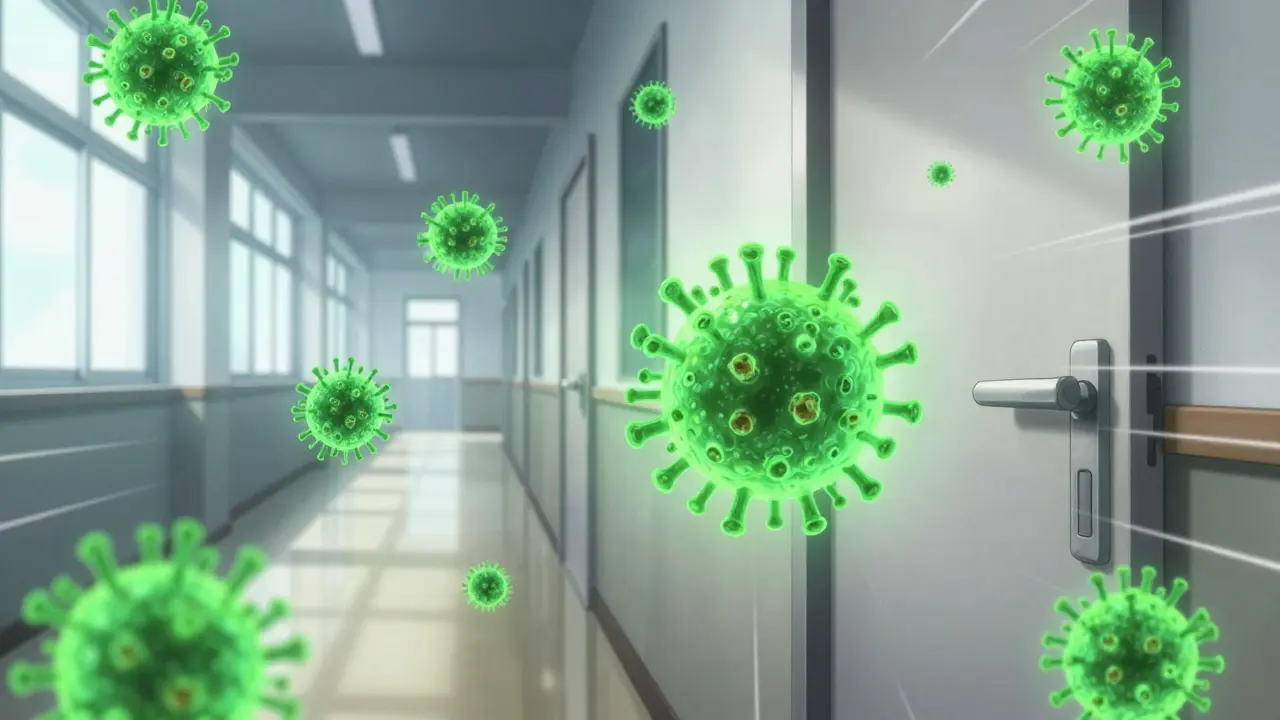
Imagine waking up with a sudden, violent urge to vomit, followed by stomach cramps and diarrhea that just won't stop. You aren't alone; millions of people deal with this every year. Norovirus is a highly contagious group of viruses that cause acute gastroenteritis, which is basically a fancy way of saying inflammation of the stomach and intestines. It's often called the "stomach flu," but it has nothing to do with the actual influenza virus. What makes it truly terrifying for healthcare workers and parents is how small the "infectious dose" is-it takes as few as 18 viral particles to make you sick. Once it hits a cruise ship, a school, or a nursing home, it spreads like wildfire because it can survive on a dry countertop for up to 12 days.
Why Norovirus is So Hard to Stop
If you've ever wondered why your usual hand sanitizer doesn't seem to work against this bug, there's a biological reason for it. Norovirus is incredibly stable. It can handle temperatures from 14°F all the way up to 140°F, meaning it doesn't just disappear when things get a little warm or cold. In fact, it resists freezing and can stay infectious on surfaces for nearly two weeks.
The virus also produces a massive amount of "shedding." An infected person can release up to 10^12 viral particles per gram of stool. To put that in perspective, that is a trillion particles. Even worse, people start shedding the virus before they even feel sick and continue to do so for at least 48 hours after their last symptom vanishes. This is why a few people feeling "better" doesn't mean the outbreak is over.
The Real-World Path of Transmission
How does it actually get from one person to another? While we often think of it as a "stomach bug," the routes are varied. According to data from the CDC, person-to-person contact is the biggest culprit, accounting for about 62% of outbreaks. This usually happens via the fecal-oral route-essentially, microscopic particles of contaminated waste finding their way into someone's mouth via unwashed hands.
Food and water are the next biggest risks. About 23% of outbreaks are foodborne, often linked to ready-to-eat foods like leafy greens or dishes that were handled by an infected person after they were cooked. Contaminated surfaces and waterborne sources make up the remaining percentages. Because the virus is so hardy, a single contaminated door handle or bed rail in a hospital can infect dozens of people in a single shift.
Effective Control Strategies for Outbreaks
You can't stop norovirus with a single trick; you need a multi-pronged attack. In healthcare settings, the gold standard is a combination of isolation, rigorous cleaning, and strict hygiene. One of the most critical rules is the 48-hour window. Patients should stay under Contact Precautions for at least 48 hours after their symptoms stop. For people with weakened immune systems or renal disorders, this period might need to be even longer because they shed the virus for weeks or even months.
When it comes to cleaning, throw away the idea that a quick wipe with a disinfecting wipe is enough. You need hospital-grade disinfectants that are specifically EPA-registered against norovirus. A common and effective solution is chlorine bleach. To make a proper disinfecting solution, use 5 to 25 tablespoons of household bleach per gallon of water (roughly 1,000 to 5,000 ppm). Focus heavily on high-touch areas: door handles, light switches, and bathroom fixtures.
| Method | Effectiveness | Why? |
|---|---|---|
| Soap and Water | High | Physically removes the virus from the skin surface. |
| Alcohol-Based Sanitizer | Low | The virus structure is resistant to alcohol. |
| Chlorine Bleach (1,000-5,000 ppm) | High | Strong chemical action breaks down the viral capsid. |
| Standard Surface Wipes | Variable | Only effective if specifically labeled for Norovirus. |

The Golden Rule of Hand Hygiene
Here is a hard truth: alcohol-based hand sanitizers are not enough. While they are great for the flu or a cold, norovirus laughs at them. The only way to reliably get the virus off your hands is by washing with soap and water for at least 20 seconds. This is especially non-negotiable after using the bathroom, changing a diaper, or before you touch any food.
In nursing homes or hospitals, this becomes a huge challenge. When an outbreak hits, staff are overwhelmed, and hand-washing compliance often drops by up to 30%. To fight this, the best move is to place dedicated hand-washing stations directly outside affected units so staff don't have to travel far to get clean.
Hydration Management: Fighting the Fluid Loss
The biggest danger of Gastroenteritis isn't the virus itself, but the dehydration that follows. When you're vomiting and having diarrhea simultaneously, your body loses water and essential salts faster than you can replace them. This can lead to dizziness, lethargy, and in severe cases, organ failure.
For most people, Oral Rehydration Therapy (ORT) is the first line of defense. Don't just drink plain water; you need a balance of sodium, glucose, and potassium. A standard WHO-approved solution typically contains 50-90 mmol/L of sodium and 75-100 mmol/L of glucose. The glucose actually helps the sodium and water be absorbed more efficiently in the gut.
If someone can't keep any liquids down or is showing signs of severe dehydration (like a very dry mouth or a significant drop in urine output), they need intravenous (IV) fluids. Doctors usually use isotonic crystalloid solutions like 0.9% normal saline. In acute cases, a bolus of 20 mL/kg is often administered quickly to stabilize the patient.
Special Considerations for Different Groups
Not everyone reacts to norovirus the same way. For infants and young children, the goal is small, frequent sips. Aim for 50-100 mL of an ORT solution after every single episode of vomiting or diarrhea. Their smaller bodies can crash much faster than an adult's.
Elderly patients in long-term care facilities are a different story. Many seniors have a reduced sensation of thirst, meaning they might be dangerously dehydrated before they even feel thirsty. Caregivers should check for dizziness and monitor urine output every 4 to 6 hours for anyone showing symptoms. Similarly, immunocompromised patients need much closer monitoring because their illness can drag on for weeks, making long-term hydration support a necessity.

Managing Visitors and Staff During an Outbreak
When a facility declares an outbreak (usually defined as two or more associated cases within 24-48 hours), the goal is to create a "bubble." This means canceling group activities and restricting movement between different units. Visitors should be limited to essential needs only, and every visitor must be educated on how to wash their hands and recognize symptoms.
For staff, the rules are even stricter. Anyone who handles food must be kept away from the kitchen for at least 48 to 72 hours after their symptoms disappear. In a healthcare setting, the 72-hour window is the safer bet to prevent the kitchen from becoming a new epicenter of the outbreak.
What's Next for Norovirus Prevention?
While we've relied on soap and bleach for decades, science is moving forward. There are currently candidate vaccines in development. One candidate from Takeda showed about 46.7% efficacy against specific strains in early trials. If these move through the FDA process, we might finally have a way to prevent the infection entirely rather than just managing the mess after it happens.
Meanwhile, some high-tech facilities are moving away from manual scrubbing for terminal cleaning (the final deep clean after a patient leaves). They are using hydrogen peroxide vapor systems, which have shown a 99.9% reduction in viral contamination. It's a far more consistent method than relying on a human with a spray bottle and a rag.
Can I use hand sanitizer to prevent Norovirus?
No, alcohol-based hand sanitizers are generally ineffective against norovirus. Because the virus is a non-enveloped virus, alcohol does not break it down. You must wash your hands with soap and running water for at least 20 seconds to physically remove the virus from your skin.
How long is someone contagious after they stop vomiting?
People remain contagious for at least 48 hours after their symptoms disappear. In some cases, especially for those with weakened immune systems, the virus can be shed for weeks or even months. This is why strict isolation is recommended for at least two full days post-recovery.
What is the best way to clean surfaces during an outbreak?
Use a chlorine bleach solution. A mix of 5 to 25 tablespoons of household bleach per gallon of water (1,000-5,000 ppm) is recommended by the CDC for disinfecting high-touch surfaces like bed rails, door handles, and toilets.
When should I use IV fluids instead of oral rehydration?
IV fluids are necessary if the patient cannot tolerate oral liquids due to persistent vomiting, shows signs of severe dehydration (such as extreme lethargy, lack of urine output, or fainting), or has a medical condition that makes oral rehydration insufficient.
Does Norovirus happen more often in the winter?
Yes, norovirus is often seasonal. In long-term care facilities, a high percentage of outbreaks occur between November and March, which is often when people are huddled indoors in closer proximity, facilitating spread.
Next Steps for Recovery and Prevention
If you are currently managing a household or facility during an outbreak, your immediate priority is fluid replacement. Start with small sips of an oral rehydration solution every few minutes. If you see signs of confusion or a complete stop in urination, head to the ER for IV support.
For long-term prevention, audit your cleaning supplies. Ensure you have bleach or a certified norovirus-killing disinfectant on hand. If you work in food service, implement a strict 72-hour "stay home" policy for any staff member who has had a stomach bug. The cost of a few missed shifts is nothing compared to the cost of a full-scale facility outbreak.