

Most people think antibiotics are harmless fixes for infections. But for some, they trigger something far worse: C. difficile colitis. It starts with diarrhea, but it doesn’t stop there. In severe cases, it can tear through the colon, cause sepsis, or even kill. And the worst part? It often comes back - again and again - even after treatment.
How Antibiotics Turn Your Gut Against You
Your gut is full of bacteria. Not just any bacteria - trillions of them, living in balance. They help digest food, train your immune system, and keep harmful bugs in check. When you take antibiotics, especially broad-spectrum ones, you don’t just kill the bad bacteria. You wipe out the good ones too.Clostridioides difficile - or C. diff - is always lurking. It’s in the environment, on surfaces, and sometimes even in your gut without causing harm. But when antibiotics destroy the protective layer of good bacteria, C. diff takes over. It multiplies fast, releases toxins, and inflames the colon. That’s when diarrhea, fever, and abdominal pain show up.
Not all antibiotics carry the same risk. Some are like sledgehammers. Others are more like scalpels. A 2023 study analyzing over 33,000 hospital cases found that certain antibiotics nearly double your chance of getting C. diff. Piperacillin-tazobactam, a common IV antibiotic used for serious infections, had the highest risk. Carbapenems and later-generation cephalosporins like ceftriaxone were right behind. Even clindamycin, often prescribed for skin infections, is a major culprit.
On the flip side, tetracyclines like doxycycline showed much lower risk. That doesn’t mean they’re safe - no antibiotic is risk-free - but they’re less likely to trigger a C. diff explosion. The longer you’re on antibiotics, the higher the risk. Each extra day increases your chance by 8%. And the danger doesn’t fade after a week. It spikes again after 14 days, which is why guidelines now urge doctors to review antibiotic use within 48 to 72 hours.
Why C. diff Keeps Coming Back
If you’ve had one C. diff infection, you’re at high risk for another. About 20% of people get it again after treatment. For 1 in 4, it comes back three or more times. Why?Standard treatments like vancomycin or fidaxomicin kill the active C. diff bacteria. But they don’t fix the broken gut environment. The good bacteria are still gone. The colon is still vulnerable. So when the antibiotics stop, C. diff spores - which survive treatment - wake up and grow again.
One patient in Birmingham described it this way: “I got better after vancomycin. Thought I was done. Two weeks later, the diarrhea came back. Then again after the second round. I was scared to leave the house.” That’s not rare. It’s the norm for recurrent cases.
Doctors now know that continuing the antibiotic that caused the infection makes things worse. The Infectious Diseases Society of America says to stop it - if possible. Sometimes, that’s hard. If you have a life-threatening infection like pneumonia or sepsis, stopping antibiotics isn’t an option. But if it’s a sinus infection or a mild UTI? That’s where stewardship matters. Cutting unnecessary antibiotics is the first line of defense.
Fecal Transplant: The Shocking Cure
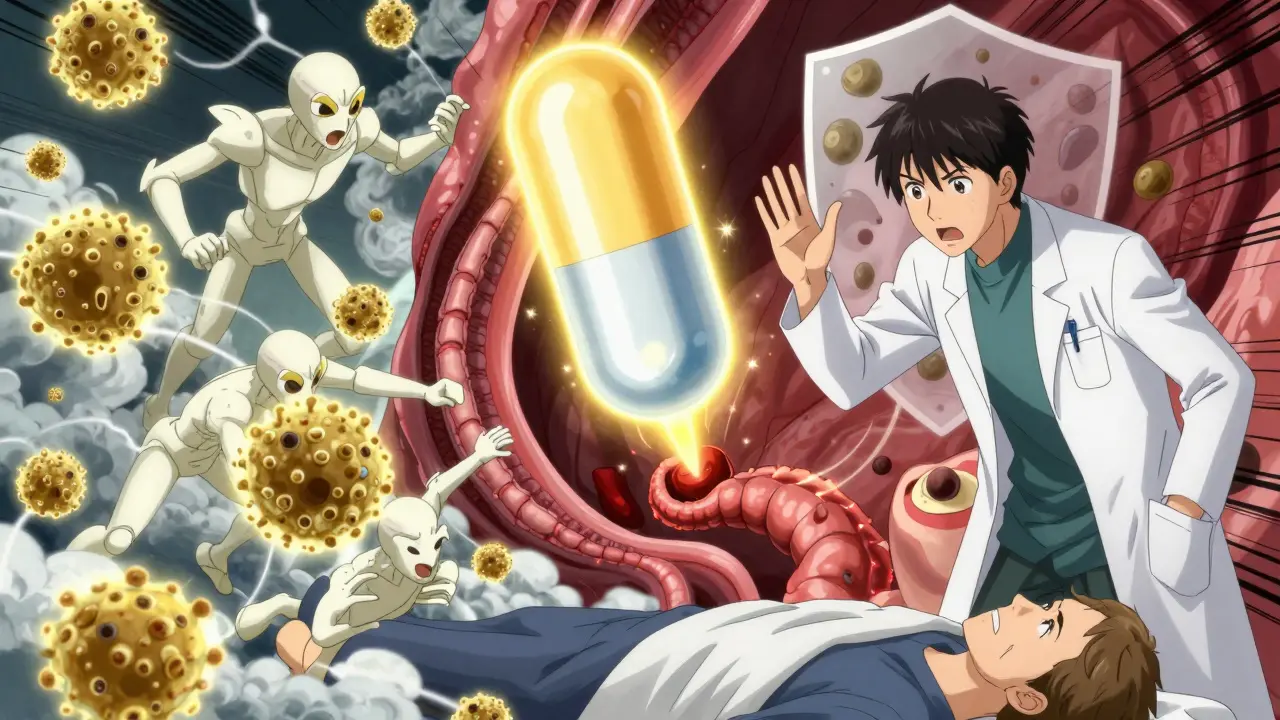
When antibiotics fail, and infections keep returning, there’s a treatment that sounds like science fiction - but works like magic: fecal microbiota transplantation (FMT).It’s not as gross as it sounds. Healthy donor stool is processed, filtered, and delivered into the patient’s colon - usually through a colonoscopy, enema, or capsule. The goal? Rebuild the gut’s bacterial ecosystem with a diverse, healthy community that can outcompete C. diff.
The results? Stunning. A landmark 2013 study in the New England Journal of Medicine compared FMT to standard vancomycin treatment for recurrent C. diff. The vancomycin group had a 31% success rate. The FMT group? 94%. That’s not a slight improvement. That’s a revolution.
Today, the American Gastroenterological Association recommends FMT for anyone with three or more recurrences. Success rates now hover between 85% and 90%. In the UK, hospitals like Birmingham’s Queen Elizabeth Hospital have started formal FMT programs. It’s no longer experimental. It’s standard care.
And it’s getting easier. In 2022 and 2023, the FDA approved two standardized FMT products: Rebyota and Vowst. These are oral capsules you swallow - no colonoscopy needed. They’re made from carefully screened donor material, tested for over 40 pathogens. No more “yuck factor.” Just a pill.
What About Probiotics?
You’ve probably heard that probiotics can help. Yogurt, kefir, supplements - they’re everywhere. But here’s the truth: the evidence is weak, and sometimes dangerous.The American Academy of Family Physicians reviewed the data and found no strong proof that probiotics prevent C. diff. Worse, the IDSA warns they can cause serious infections in people with weak immune systems - like those on chemotherapy or after organ transplants. There have been cases of bloodstream infections from probiotic strains.
One small study suggested combining tapered antibiotics with kefir (a fermented milk drink) helped some patients. But it was tiny. Not enough to change guidelines. Probiotics aren’t a replacement for FMT. They’re not even a reliable backup.
Who’s at Risk - And What You Can Do
C. diff isn’t just a hospital problem anymore. About half of cases now happen in the community - in people who haven’t been hospitalized. The biggest risk? Antibiotics in the past 30 days. If you’ve taken clindamycin, ceftriaxone, or piperacillin-tazobactam recently, your risk jumps.Age matters too. Most cases are in people over 65. But younger people are getting it, especially if they’ve had multiple rounds of antibiotics. And here’s a lesser-known fact: some people carry C. diff without symptoms. They’re silent carriers. Antibiotics don’t increase their risk - but they can spread it to others.
Prevention is simple, but hard to stick to:
- Only take antibiotics when absolutely necessary
- Ask your doctor: “Is this antibiotic needed? Is there a safer option?”
- Never save leftover antibiotics for later
- Wash your hands with soap and water - alcohol gels don’t kill C. diff spores
- If you’ve had C. diff before, avoid broad-spectrum antibiotics unless there’s no choice
The Bigger Picture
C. diff isn’t just a personal health issue. It’s a public health crisis. The CDC calls it an “urgent threat.” In the U.S. alone, it causes 500,000 infections and nearly 30,000 deaths every year. The cost? Over $6 billion.Hospitals have cut hospital-acquired cases by 24% since 2009 by improving hygiene and cutting unnecessary antibiotics. But community cases are rising. That means prevention has to move beyond hospitals. It has to start in primary care, pharmacies, and your own kitchen.
And the future? It’s not just about stopping bad bacteria. It’s about rebuilding good ones. New therapies like SER-109 - a targeted oral microbiome treatment - are showing 88% effectiveness in trials. These aren’t just alternatives to FMT. They’re the next step: precision microbiome therapy.
For now, if you’ve had recurrent C. diff, FMT is your best shot. It’s safe, proven, and life-changing. And if you’re about to start antibiotics? Ask the question no one else does: “Could this lead to something worse?”
Can C. diff go away without treatment?
In mild cases, especially if the triggering antibiotic is stopped right away, some people recover on their own as their gut bacteria naturally rebound. But this is unpredictable. For many, symptoms worsen quickly. Left untreated, C. diff can lead to colon damage, sepsis, or death. Never assume it will clear up on its own.
Is fecal transplant safe?
When done through approved programs using screened donors, FMT is very safe. The FDA requires donors to be tested for over 40 infectious agents, including HIV, hepatitis, and drug-resistant bacteria. The risk of serious side effects is less than 2%. Most people feel mild bloating or cramping for a day or two. Long-term effects on the microbiome are still being studied, but no major safety issues have emerged after millions of procedures.
What antibiotics are safest for someone with a history of C. diff?
If you’ve had C. diff before, avoid clindamycin, cephalosporins, and fluoroquinolones like ciprofloxacin. Tetracyclines (doxycycline) and penicillins (amoxicillin) carry lower risk, but no antibiotic is risk-free. Always ask your doctor: “Is this necessary? Can we use something narrower-spectrum?” Even a short course of a high-risk drug can trigger a relapse.
Can I get C. diff from someone else?
Yes. C. diff spores spread through feces and can live on surfaces for months. You can pick them up on your hands and accidentally swallow them. That’s why handwashing with soap and water is critical - alcohol-based sanitizers don’t kill the spores. If you’re in a hospital or care home, ask staff to wash their hands before touching you. If you’ve had C. diff, clean your bathroom with bleach-based cleaners.
How do I know if I need a fecal transplant?
You’re a candidate if you’ve had three or more recurrences of C. diff after standard antibiotic treatment. Some doctors may consider it after two recurrences, especially if you’re older or have other health problems. If you’re still having diarrhea after finishing a course of vancomycin or fidaxomicin, talk to a gastroenterologist. Don’t wait until you’re hospitalized again.
Are there alternatives to fecal transplant?
Yes. Bezlotoxumab is a monoclonal antibody that neutralizes one of C. diff’s toxins. It’s given as a single IV infusion along with antibiotics and reduces recurrence by about 10%. It’s expensive but effective for high-risk patients. New oral microbiome therapies like SER-109 are now available in trials and may become standard soon. But for now, FMT remains the most effective option for recurrent cases.