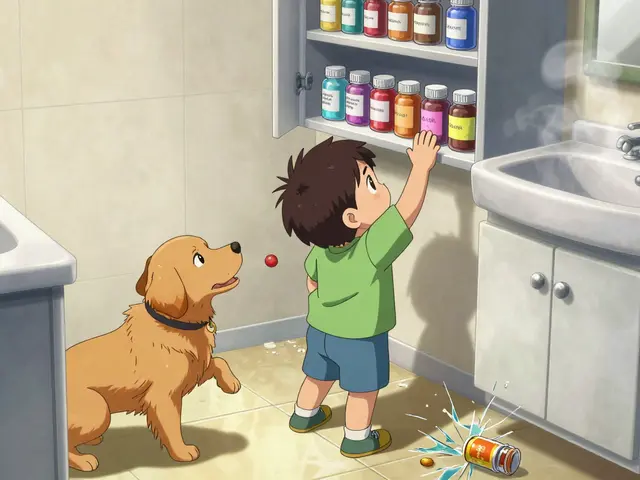
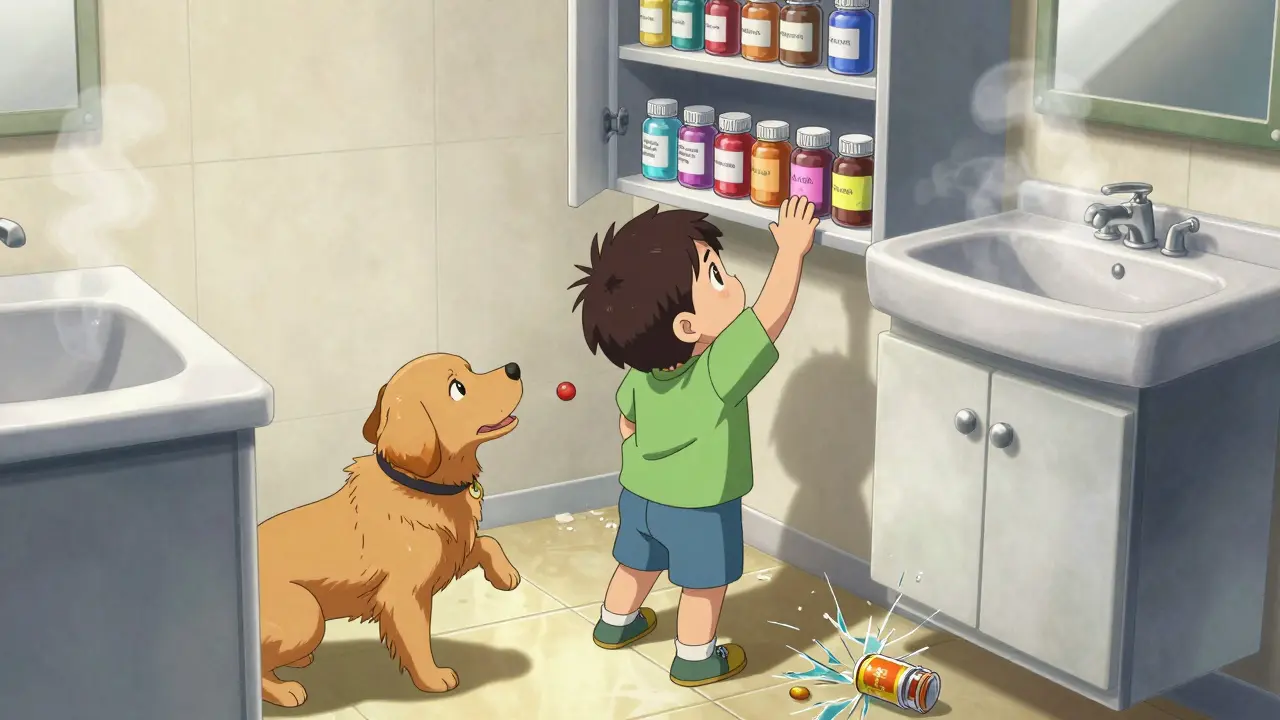
Every year, around 60,000 young children end up in emergency rooms after accidentally swallowing pills they found at home. Dogs and cats aren’t safe either-pets ingest medications more often than most people realize, and many of those cases are fatal. The problem isn’t that parents are careless. It’s that medication storage feels invisible until something goes wrong. You leave a pill on the counter for a minute. You keep the bottle in the bathroom because it’s convenient. You think, "It’s childproof." But childproof doesn’t mean child-resistant. And pets? They don’t care about labels. They sniff. They jump. They eat.
Why Your Bathroom Cabinet Is the Worst Place for Medications
The bathroom is the most common spot for storing medicines. It’s right next to the sink, easy to reach, and most people assume it’s clean and dry. But humidity there can be as high as 80%. That moisture doesn’t just make your toothpaste soggy-it degrades pills, making them less effective or even dangerous. The CDC reports that 40% of parents store medications in the bathroom, even though experts say it’s one of the worst places for them. And it’s not just about the medicine losing potency. Kids can climb. Pets can leap. A child under five can reach up to four feet high. If your medicine cabinet is at eye level, it’s within reach. A curious dog can jump onto the counter. A cat can knock over a bottle from the shelf. The CDC and Scholastic’s "Up and Away" campaign found that medications stored in clear cabinets are 3 times more likely to be accessed because kids can see them-and want them.Where to Store Medications: The Right Height, the Right Lock
The goal isn’t just to put medicine somewhere high. It’s to put it where neither children nor pets can get to it-even if they’re determined. Experts recommend storing medications above five feet, ideally in a locked cabinet or container. The best spots? A high kitchen cabinet with a child lock, a bedroom closet with a combination lock, or a dedicated lockbox mounted on a wall. A simple combination lock bag, like the VADIC Safe Storage Bag (11" x 6"), works well for most households. These cost under $20 and are sold through state health departments. For families with multiple medications, a biometric safe with fingerprint access is worth the investment. One parent on Reddit shared that after their 3-year-old opened a "childproof" cabinet, they switched to a biometric lock. "It adds 10 seconds to my routine," they said, "but I sleep better."Separate Human and Pet Medications-Completely
This is where most households fail. You keep your blood pressure pills next to your dog’s arthritis chew. You store your cat’s thyroid med in the same drawer as your daughter’s vitamins. That’s a recipe for disaster. The FDA warns that human medications can be deadly to pets. A single heart pill can cause a dog’s heart to race dangerously. Conversely, pet medications like NSAIDs for dogs can cause kidney failure in humans if accidentally taken. And gummy-form meds? They’re the worst. Both kids and pets see them as candy. The CDC says gummy vitamins account for 30% of all childhood supplement ingestions, even though they make up only 15% of the market. VCA Animal Hospitals recommends a three-zone system:- Zone 1 (Immediate Use): Only the current dose, placed on a flat surface like a kitchen table during administration. Never on the counter or bedside table.
- Zone 2 (Short-Term Storage): Locked container, at least five feet high, for all medications not in active use.
- Zone 3 (Long-Term Storage): Separate, labeled containers for human meds, dog meds, and cat meds. Never mix them.
What About Child-Resistant Caps?
Yes, most prescription bottles have child-resistant caps. But they’re not foolproof. The ASTM D3475 standard requires testing with children aged 42-51 months. Some kids figure them out in minutes. Others open them by biting, twisting, or using a spoon. HealthyChildren.org says: "Child-resistant does not mean child-proof." Never rely on the cap alone. It’s a backup, not a solution.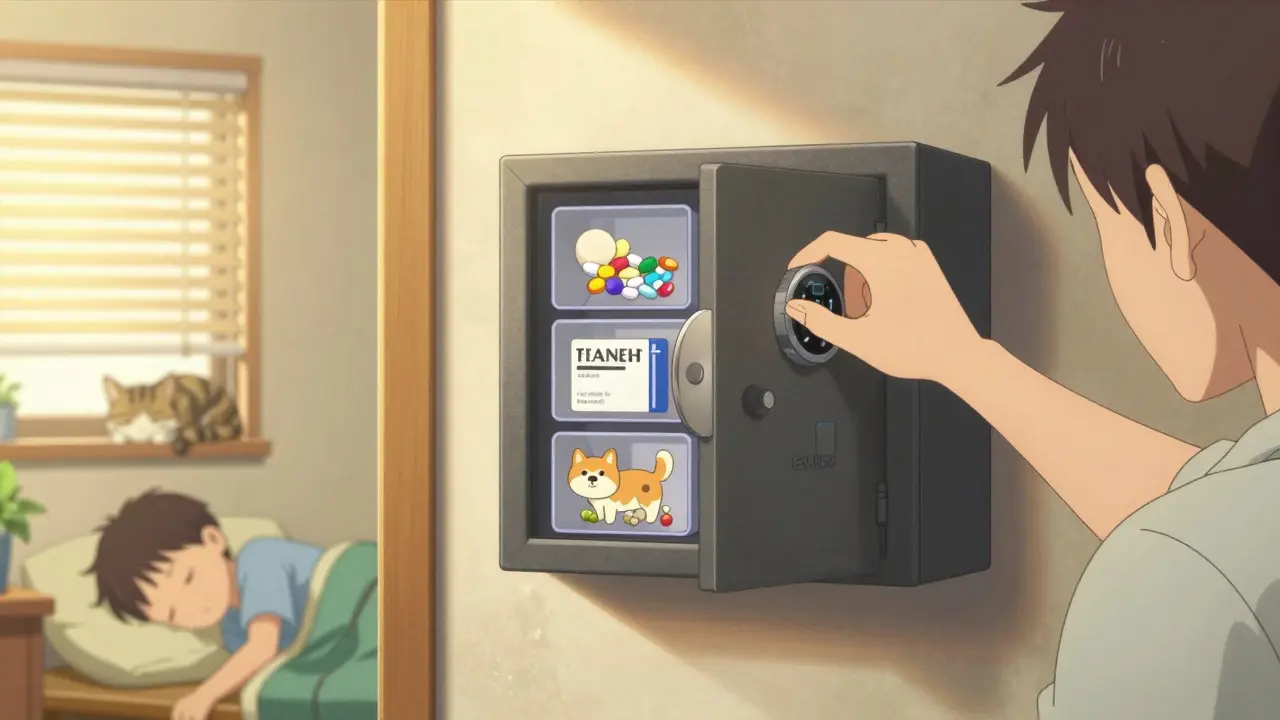
The Two-Minute Rule: Stop Leaving Pills Out
The most common mistake? Leaving pills out during administration. You’re giving your child their medicine, you put the bottle down to grab water. You’re giving your dog their pill, you set the bottle on the counter while you clean up. That’s when accidents happen. Children’s Mercy Hospital found that 52% of childhood medication ingestions occur during temporary placement. That’s why they enforce the "two-minute rule": After every dose, put the medicine away-immediately. Even if you’re just waiting five minutes for the next pill. Even if you’re tired. Even if you think you’ll remember. You won’t.How to Dispose of Old or Expired Medications Safely
Don’t flush pills. Don’t throw them in the trash unprepared. Don’t dump them in the recycling. The EPA recommends mixing expired or unused medications with something unappetizing-like coffee grounds, cat litter, or dirt-using a 1:1 ratio by volume. Seal it in a plastic bag, then toss it in the trash. This method is 92% effective at preventing reuse according to EPA testing. Why? Because it makes the pills smell bad, look gross, and feel gritty. Pets won’t eat it. Kids won’t dig through wet coffee grounds. For larger quantities, check if your pharmacy or local police station has a medication drop box. Many cities, including Portland, offer free disposal events. You can also find year-round drop-off locations through the DEA’s website.What About Gummies, Liquids, and Transdermal Patches?
Gummy vitamins and medications are the silent killers. They look like candy. They taste like candy. Kids and pets go for them first. Store them in the same locked container as your pills-no exceptions. Liquid medications? Keep them in their original bottles with the cap tightly closed. Use a measuring syringe, not a spoon. Store them upright, away from heat and light. Transdermal patches (like nicotine or pain patches)? These are especially dangerous. A single patch can contain enough medicine to kill a child. Always fold the sticky side in on itself, tape it shut, and put it in the locked container. Never leave a used patch on the sink or in the trash.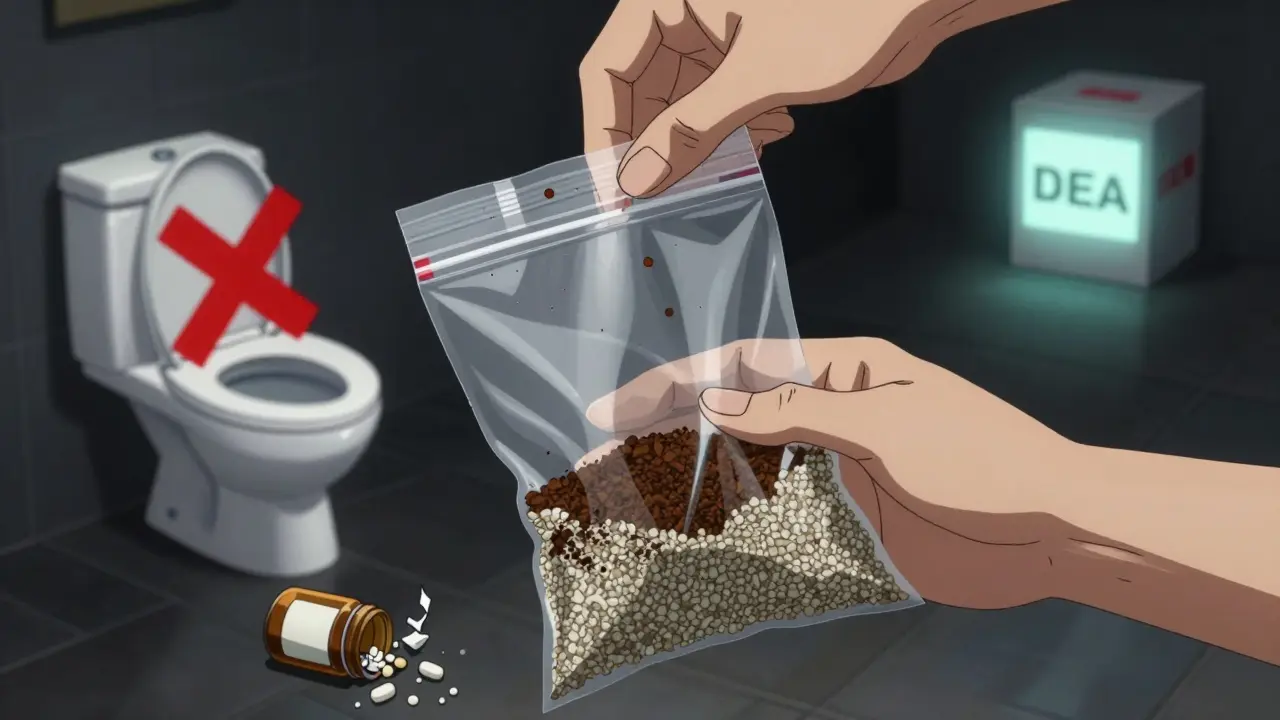
Real Stories, Real Risks
One user on the American Kennel Club forum described how their Labrador retrieved a dropped pill from between the couch cushions. The dog didn’t show symptoms for hours. By then, it was too late. The vet said the pill was a human anti-inflammatory-highly toxic to dogs. The owner hadn’t realized how quickly a pill could fall unnoticed. Another parent shared that their 4-year-old opened a "childproof" bottle during a visit to Grandma’s house. The bottle was left on the windowsill. The child had been watching. They remembered where it was. These aren’t rare. They’re predictable.What’s Changing in 2026?
New rules are coming. By the end of 2024, the FDA required all pet medication labels to include clear storage instructions: "Keep separate from human medications." That’s a big step. In 2025, Bluetooth-enabled smart safes started appearing-devices that send alerts to your phone if someone opens them. Adoption is still low (around 18% in high-risk homes), but they’re growing fast. The American Academy of Pediatrics is pushing for mandatory secure storage in new homes. Imagine building a house where medicine cabinets come locked by default. That’s the future.Final Checklist: Are You Safe?
Use this quick list to audit your home:- Are all medications stored above five feet?
- Are they in a locked container-not just a closed cabinet?
- Are human and pet medications stored in separate containers?
- Do you use the two-minute rule after every dose?
- Are gummies, liquids, and patches locked up too?
- Do you dispose of old meds by mixing them with coffee grounds or cat litter?
- Have you removed all meds from bathrooms, nightstands, purses, and cars?
Can I store my child’s and pet’s medications in the same locked box?
No. Even in a locked container, mixing human and pet medications is risky. Dogs and cats react differently to the same drugs. A dose safe for a dog can kill a cat. A pill meant for a child could cause organ failure in a pet. Always use separate, clearly labeled containers-even if they’re both in the same locked box.
What if I forget and leave a pill on the counter for a few minutes?
If you forget, act fast. Pick it up immediately. But don’t just put it back in the bottle-throw it away. Pills that have been exposed to air, dust, or pet saliva can become contaminated or lose potency. It’s not worth the risk. Always use a fresh pill from the locked container next time.
Are pill organizers safe for kids and pets?
Only if they’re locked. Weekly pill organizers are convenient, but most are easy to open. If you use one, choose a model with a childproof latch or store the entire organizer in a locked box. Never leave an unlocked organizer on the counter, even if it’s "only for today."
Can pets really tell the difference between human and pet meds?
They don’t need to. Pets don’t read labels. They follow smell and taste. Many pet meds are flavored with chicken, beef, or fish-ingredients that also attract dogs and cats. Human meds can smell sweet or salty. A dog won’t know if a pill is for you or them. They just know it’s something they can eat.
What should I do if my child or pet swallows a pill?
Call Poison Control immediately at 1-800-222-1222. Don’t wait for symptoms. Don’t try to make them vomit. Have the pill bottle ready-note the name, dose, and time ingested. If it’s a pet, also note their weight and breed. Poison Control will guide you through next steps. In most cases, early action prevents serious harm.