
Sugar Impact Calculator
When you're taking diabetes medication, what you eat isn't just about weight or energy-it directly shapes how well your medicine works. Many people think popping a pill is enough to keep blood sugar in check. But if your plate is full of sugar, even the most effective drug can fall short. The truth is simple: sugar intake doesn't just raise blood glucose-it can undo the benefits of your medication.
How Sugar Undermines Diabetes Medications
Diabetes medications don’t work in a vacuum. They’re designed to help your body manage glucose, but they can’t outwork a constant flood of sugar. Take metformin, the most common first-line treatment for Type 2 diabetes. It helps your liver produce less glucose and makes your muscles more responsive to insulin. But if you drink a soda with 40 grams of sugar at breakfast, your body suddenly has to handle way more glucose than the drug was ever meant to manage alone.
Studies show patients consuming over 100 grams of added sugar daily need nearly 30% more metformin to get the same results as those limiting sugar to under 25 grams. That’s not just inconvenient-it’s dangerous. Higher doses increase side effects like nausea and diarrhea without fixing the root problem: too much sugar.
Other drugs like sulfonylureas (glyburide, glipizide) and meglitinides (repaglinide) are even more sensitive. These medications force your pancreas to release insulin. If you skip meals or eat a huge sugary snack, your blood sugar can crash-sometimes dangerously low. One clinical report found patients with inconsistent sugar intake had up to 20 hypoglycemic episodes per year. Those who ate consistent carbs had fewer than five.
The Real Culprits: What to Avoid
Not all sugar is obvious. You might think you’re eating healthy if you skip candy, but hidden sugars are everywhere. Here are the top seven troublemakers:
- Sugary drinks-soda, sweetened tea, fruit juice with more than 20g sugar per serving. These spike blood sugar faster than solid food.
- High-sugar fruits-mangoes, grapes, cherries. While nutritious, they pack a punch. A cup of grapes has nearly 25g of sugar.
- Processed foods-granola bars, flavored yogurts, sauces, and even “healthy” snacks often contain 15g or more of added sugar per serving.
- High-fat meals-fried chicken, creamy pasta, butter-heavy dishes. Fat slows digestion, causing delayed sugar spikes that mess with medication timing.
- Refined carbs-white bread, pastries, bagels. These break down into sugar almost as fast as candy.
- Sweetened alcohol-cocktails with syrup, liqueurs, sweet wine. Alcohol already affects liver function; adding sugar makes it worse.
- Low-fat products-many fat-free yogurts and salad dressings replace fat with sugar. Check labels.
The NHS and Cleveland Clinic both warn: consuming sugary beverages while on metformin requires checking blood sugar every two hours for six hours after eating. That’s not a suggestion-it’s a safety protocol.
Why Low-Glycemic Foods Work Better
Not all carbs are equal. Foods with a low glycemic index (GI under 55) release sugar slowly. Think whole grains, legumes, non-starchy vegetables, nuts, and most berries. These foods help your medication work better because they don’t overwhelm your system.
Research from early 2025 found that switching from high-GI foods (like white rice or white bread) to low-GI options improved insulin sensitivity by 25-40%. That means your body needs less insulin-and your medication works more efficiently. Patients on metformin who ate low-GI meals saw post-meal blood sugar spikes drop by 35-50 mg/dL on average.
Continuous glucose monitors (CGMs) show this clearly. People eating high-sugar meals while on metformin spent nearly half their day in high blood sugar range (>180 mg/dL). Those eating balanced, low-GI meals stayed in target range 70% longer.
Newer Medications Don’t Make Sugar Irrelevant
You might hear that newer drugs like SGLT2 inhibitors (canagliflozin, dapagliflozin) or GLP-1 agonists (semaglutide, dulaglutide) are “diet-proof.” They’re not. These drugs work differently-SGLT2 inhibitors flush sugar out through urine, and GLP-1 agonists slow digestion and reduce appetite. They’re more forgiving than older pills, but they still lose effectiveness with too much sugar.
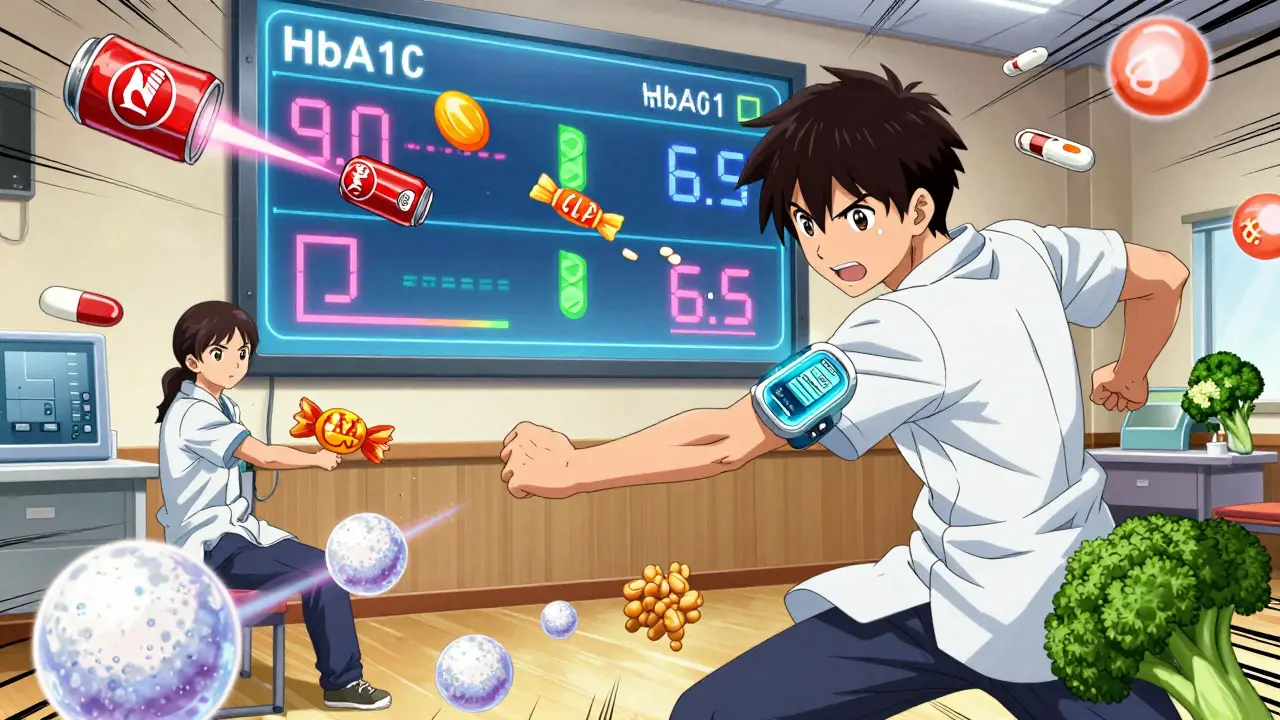
Even these advanced medications drop in performance by 15-20% when patients consume over 100g of added sugar daily. That’s not a small difference-it’s the gap between reaching your HbA1c goal and staying stuck.
And here’s something most people don’t realize: if you’re on insulin, especially with a pump, logging your carb intake every time you eat makes a huge difference. Data from the T1D Exchange shows people who tracked carbs had HbA1c levels 0.8% lower than those who didn’t. That’s the difference between moderate control and near-normal blood sugar.
Medications That Make Sugar Worse
Some drugs you’re taking for other conditions can make sugar control harder. Prednisolone, a common steroid, can spike blood sugar by 50-100 mg/dL within a day. If you’re on metformin and start a steroid course, your doctor needs to adjust your plan immediately.
Diuretics like furosemide (used for fluid retention) can interfere with metformin’s clearance in the kidneys. In over a third of patients, this means metformin builds up to unsafe levels-especially if they’re also eating a lot of sugar.
Hormonal birth control? It changes how your body uses glucose in nearly 1 in 4 women. If you’re on diabetes meds and start or switch contraceptives, your blood sugar may rise unexpectedly. Talk to your provider before making the switch.
Why Diet Counseling Is Non-Negotiable
Here’s the hard truth: most people start diabetes meds without proper nutrition guidance. A 2023 survey found only 39% of doctors refer newly diagnosed patients to a registered dietitian. That’s a massive gap.
The American Diabetes Association says every patient should see a dietitian within 30 days of diagnosis. But only 42% of clinics actually do it.
And the results? Patients who got structured nutrition counseling reached their HbA1c target in 6.2 months-nearly five months faster than those who didn’t. They needed fewer medication changes and had 63% fewer emergency visits for blood sugar emergencies.
One clinic in Birmingham reported that 78% of patients who completed their 12-week nutrition program didn’t need a single dose increase in their first year. That’s not luck. That’s science.
What You Can Do Today
You don’t need to be perfect. You just need to be consistent.
- Check labels-look for added sugars. If it’s not fruit, honey, or maple syrup, and it’s listed in the first five ingredients, it’s probably too much.
- Swap sugary drinks-try sparkling water with lemon, unsweetened tea, or black coffee.
- Plan meals-aim for 45-60g of carbs per meal. Keep it consistent. Don’t eat 20g one day and 120g the next.
- Choose low-GI foods-oats, lentils, quinoa, broccoli, apples, and almonds are your friends.
- Ask for a dietitian-if your doctor hasn’t referred you, ask. It’s part of standard care.
Medication is a tool. Food is the fuel. You can’t fix a broken engine by adding better oil if you’re pouring gasoline into the radiator. Sugar isn’t just a flavor-it’s a force that can override your treatment. Managing it isn’t optional. It’s the foundation of everything else.
Can I still eat fruit if I have diabetes and take metformin?
Yes, but choose wisely. Berries, apples, pears, and citrus fruits have lower sugar and fiber to slow absorption. Avoid mangoes, grapes, and dried fruits, which can spike blood sugar quickly. Stick to one small serving per meal, and pair it with protein or fat (like nuts or yogurt) to blunt the rise.
Does alcohol affect diabetes medications?
It depends. Plain spirits like vodka or gin with zero-sugar mixers are usually fine in moderation. But sweet cocktails, wine coolers, and beer can spike blood sugar and then cause a dangerous drop hours later, especially with sulfonylureas. Always eat food when drinking, and check your blood sugar before bed.
How much sugar is too much when on diabetes meds?
The American Diabetes Association recommends limiting added sugar to under 10% of daily calories-that’s about 50g for a 2,000-calorie diet. But for better control, aim for under 25g. Many patients see big improvements when they cut sugar to this level, especially if they’re on metformin or insulin.
Can I stop my medication if I eat clean?
Never stop medication without talking to your doctor. Some people reduce or even reverse Type 2 diabetes with diet and weight loss-but that requires medical supervision. Stopping meds on your own can lead to dangerous high blood sugar, nerve damage, or ketoacidosis.
Why does my blood sugar spike hours after eating sugar?
Fat and fiber slow digestion. A meal with fries and soda might not spike your sugar right away, but 3-5 hours later, the sugar hits your bloodstream all at once. That’s when sulfonylureas or insulin can cause a crash. Consistent, balanced meals prevent these delayed spikes.
Is there a test to know how my body reacts to sugar?
Yes. Continuous glucose monitors (CGMs) show real-time responses to food. Some clinics now offer short-term CGM trials to see how specific foods affect you. Research in 2025 found people respond very differently to fructose vs. glucose-what spikes one person might not affect another. Personalized data beats general advice.