

Waking up to a tingling sensation on your lip or noticing a cluster of blisters appearing where they shouldn't is never a pleasant experience. For the millions of people living with Herpes Simplex Virus (HSV), these outbreaks are more than just uncomfortable; they can be socially isolating and physically painful. The virus establishes lifelong latency in your sensory ganglia after the initial infection, lying dormant until specific triggers cause it to reactivate. While you cannot cure HSV, you have significantly more control over its behavior than most people realize. Effective recurrence prevention and care strategies rely on a combination of daily habits, strategic medication use, and trigger identification.
The goal isn't just to heal a sore once it appears-it's to stop it from starting in the first place. By understanding how the virus behaves and leveraging modern medical protocols, you can reduce outbreak frequency by up to 80% and minimize the risk of transmission to others. This guide breaks down exactly what works, based on current clinical guidelines and real-world patient data, so you can take charge of your skin health.
Understanding the Cycle: Why Outcomes Happen
To prevent recurrences, you first need to understand why they happen. HSV exists in two main types: HSV-1 (typically oral) and HSV-2 (typically genital). According to the World Health Organization, approximately 3.7 billion people under age 50 are infected with HSV-1 globally. Once inside your body, the virus travels along nerve pathways to rest in your sensory ganglia. It stays there silently until something disrupts the balance.
Reactivation occurs when the immune system’s hold on the virus weakens temporarily. Common triggers include:
- Stress: A 2022 survey found that 68% of patients report stress as their primary trigger, with 42% experiencing outbreaks within 48 hours of significant emotional strain.
- UV Exposure: Sunlight damages skin cells and compromises local immunity, making UV light a major culprit for cold sores.
- Physical Trauma: Dental procedures, laser resurfacing, or even aggressive facial cleansing can irritate the area and wake the virus.
- Illness or Fatigue: Any condition that lowers your overall immune function, such as the flu or lack of sleep, increases susceptibility.
Recognizing your personal pattern is the first step. If you notice outbreaks always follow a stressful week or a day at the beach, you have a predictable window to intervene.
Medication Strategies: Suppressive vs. Episodic Therapy
When it comes to preventing recurrences, timing is everything. There are two main pharmaceutical approaches: episodic therapy and suppressive therapy. Each serves a different purpose depending on how often you get outbreaks.
| Therapy Type | Best For | Common Medications | Key Benefit |
|---|---|---|---|
| Episodic | Infrequent outbreaks (<6/year) | Valacyclovir 2g twice daily for 1 day | Reduces healing time from 5.2 to 4.3 days if started at prodrome |
| Suppressive | Frequent outbreaks (≥6/year) | Valacyclovir 500mg-1g daily | Reduces recurrence frequency by 70-80% |
| Pre-Procedural | Laser/Dental work | Valacyclovir 500mg-1g BID for 10-14 days | Near 100% prevention of procedure-induced outbreaks |
Episodic therapy is reactive. You start taking medication as soon as you feel the "prodrome"-that early tingling, itching, or burning sensation before any visible lesion appears. The CDC’s 2021 guidelines emphasize that starting treatment within one hour of these symptoms is critical. If you wait until the blister forms, the effectiveness drops by about 50%. Valacyclovir is often preferred here because of its high bioavailability (55%) compared to acyclovir (10-20%), meaning your body absorbs more of the drug with fewer pills.
Suppressive therapy is proactive. If you suffer from six or more outbreaks a year, daily low-dose antivirals can drastically reduce the frequency and severity of recurrences. A comprehensive Cochrane review from March 2021 confirmed that daily suppressive therapy reduces genital herpes recurrences by 70-80%. For HSV-1 labial herpes, studies show a 50-78% reduction in recurrence following UV exposure when using daily acyclovir or valacyclovir. This approach also lowers viral shedding, which helps protect partners who do not have the virus.
Trigger Management: Lifestyle Changes That Work
Medication is powerful, but lifestyle adjustments amplify its effects. Since HSV reactivates when your immune system is distracted or weakened, supporting your overall health is a form of prevention.
Sun Protection is Non-Negotiable
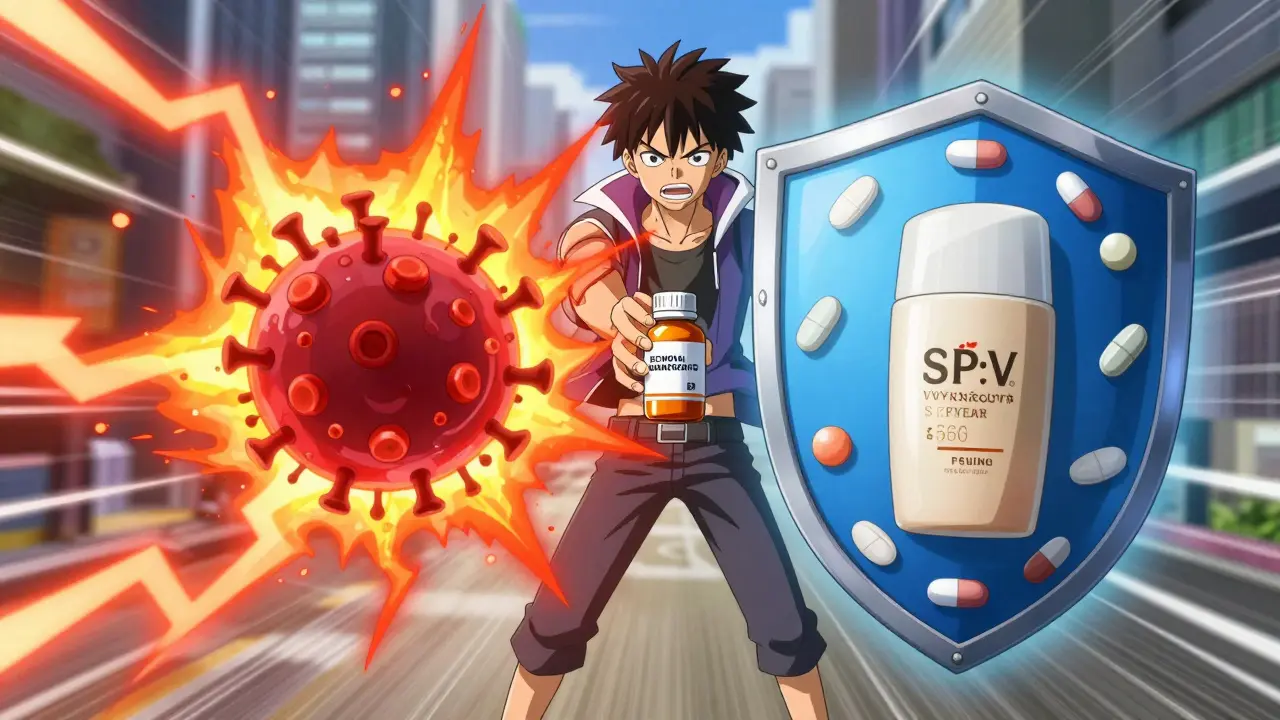
For those prone to cold sores, sunlight is a direct enemy. Healthline’s 2022 survey of 1,200 HSV-positive individuals found that 76% experienced reduced outbreak frequency with consistent sun protection using SPF 30+ lip balm. Make it a habit to apply lip sunscreen every morning, regardless of the weather. UV rays penetrate clouds and reflect off water and snow, so protection is needed year-round.
Stress Reduction Techniques
Cortisol, the stress hormone, suppresses immune function. Given that nearly 70% of patients cite stress as a top trigger, managing mental health is medically relevant. Practices like mindfulness meditation, regular exercise, and adequate sleep help keep cortisol levels in check. If you know a high-stress period is coming-like a big project deadline or exam season-consider preemptively increasing your self-care routines or discussing temporary suppressive therapy with your doctor.
Nutritional Support
While no food cures HSV, certain nutrients support immune resilience. The same Healthline survey noted that 63% of respondents reported decreased severity with zinc supplementation (15-30mg daily). Additionally, some evidence suggests that lysine, an amino acid found in fish, poultry, and dairy, may inhibit arginine, which the virus needs to replicate. Avoiding excessive arginine-rich foods like nuts and chocolate during flare-ups might help, though this varies by individual sensitivity.
Care During an Outbreak: Do’s and Don’ts
Even with perfect prevention, breakthrough outbreaks can happen. How you care for the lesion matters for both healing speed and preventing spread.
Do:
- Keep it clean and dry: Gently wash the area with mild soap and water. Pat dry with a clean towel.
- Apply topical treatments: While oral antivirals are superior, topical docosanol (Abreva) can shorten healing time slightly if applied at the very first sign of tingling. Note that topical acyclovir cream has shown little preventive benefit in studies.
- Use cold compresses: Applying a cold, wet cloth can reduce pain and swelling.
- Avoid touching: If you must touch the area, wash your hands immediately afterward to prevent autoinoculation (spreading the virus to other parts of your body, like your eyes).
Don’t:
- Pick or pop blisters: This introduces bacteria, leading to secondary infections, and spreads the virus to surrounding skin.
- Share personal items: Towels, razors, lip balm, and utensils should not be shared during an active outbreak.
- Engage in close contact: Avoid kissing, oral sex, or skin-to-skin contact with the affected area until the lesion is completely healed and crusted over.
Special Considerations: Procedures and Pregnancy
If you are planning cosmetic procedures, dental work, or are pregnant, standard prevention isn't enough. You need a specialized protocol.
Cosmetic and Dental Procedures
The American Society for Dermatologic Surgery recommends pre-procedural screening for HSV history before any minimally invasive aesthetic treatment. Laser resurfacing, chemical peels, and fillers can trigger severe, widespread outbreaks if the virus is activated. A landmark 2002 study by Beeson et al. showed that prophylaxis with valacyclovir 500mg twice daily for 10-14 days, starting the day prior to the procedure, achieved 100% efficacy in preventing reactivation. Without this, historical recurrence rates hover around 10-20%, which can ruin results and cause significant pain. Always inform your provider of your HSV status before booking appointments.
Pregnancy
Primary HSV infection during pregnancy poses risks to the fetus, particularly near delivery. However, recurrent outbreaks are less risky. Pregnant individuals with a history of HSV should discuss suppressive therapy starting at 36 weeks gestation with their obstetrician to reduce the likelihood of active lesions at delivery, which could necessitate a C-section to prevent neonatal herpes.
Cost, Access, and Real-World Challenges
One barrier to effective care is cost. In the US, valacyclovir averages $370 per month without insurance. A 2022 survey by the Herpes Challenge Foundation found that 72% of respondents skipped doses due to cost. This is dangerous, as inconsistent dosing can lead to resistance or ineffective suppression.
To mitigate this:
- Use Generic Versions: Generic valacyclovir and acyclovir are significantly cheaper than brand-name Valtrex or Zovirax.
- Prescription Discount Cards: Services like GoodRx can lower out-of-pocket costs to under $15 for a month’s supply of generic acyclovir.
- Evaluate Necessity: If you have fewer than six outbreaks a year, episodic therapy is more cost-effective than daily suppressive therapy. Save the expensive daily regimen for high-frequency cases or high-risk periods (like pre-procedure).
Side effects are generally mild but worth monitoring. About 35% of users report headache or nausea with valacyclovir. Long-term use requires occasional renal function monitoring, especially for older adults or those with existing kidney issues, as antivirals are cleared through the kidneys.
Future Outlook and Research
The landscape of HSV care is evolving. While no vaccine currently exists, several candidates are in phase III trials. Recent results from 2023 showed modest efficacy in reducing viral shedding (30-40%) but did not meet primary endpoints for preventing outbreaks entirely. Meanwhile, new drugs like pritelivir were approved in 2023 for acyclovir-resistant HSV, primarily helping immunocompromised patients.
For now, the best defense remains a combination of proven antivirals, vigilant trigger management, and open communication with healthcare providers. The WHO projects that improved regimens could reduce global transmission rates by 25-35% by 2040, but until then, individual management is key.
Can I stop taking suppressive antiviral medication once my outbreaks decrease?
Yes, but consult your doctor first. Many patients try a "drug holiday" after 6-12 months of stable suppression. If outbreaks return frequently, you may need to resume therapy. Some individuals find their bodies adapt and require long-term daily medication to maintain low recurrence rates.
Is it safe to use lip balm with SPF every day?
Absolutely. Daily use of SPF 30+ lip balm is one of the most effective non-pharmaceutical ways to prevent cold sore outbreaks triggered by UV light. Look for broad-spectrum protection and reapply every two hours if you are outdoors.
How long before a dental procedure should I start antiviral prophylaxis?
Guidelines vary, but a common protocol is to start valacyclovir 500mg twice daily 2-3 days before the procedure and continue for 5-7 days after. For laser resurfacing, some dermatologists recommend starting the day prior and continuing for 10-14 days post-procedure. Always follow your specific provider's instructions.
Does stress really cause herpes outbreaks?
Yes. Stress elevates cortisol, which suppresses the immune system's ability to keep the virus latent. Studies show that nearly 70% of patients identify stress as a primary trigger, with outbreaks often occurring within 48 hours of a stressful event.
What is the difference between episodic and suppressive therapy?
Episodic therapy involves taking medication only when you feel an outbreak coming on (prodrome stage). It is best for infrequent outbreaks. Suppressive therapy involves taking a low dose of antivirals daily to prevent outbreaks from starting. It is recommended for those with six or more outbreaks per year or those wanting to reduce transmission risk.
Can I transmit HSV if I have no visible sores?
Yes, through asymptomatic viral shedding. Even without symptoms, the virus can be present on the skin surface. Suppressive therapy reduces this risk by up to 48%, but it does not eliminate it entirely. Condoms and abstinence during known high-risk periods further reduce transmission chances.