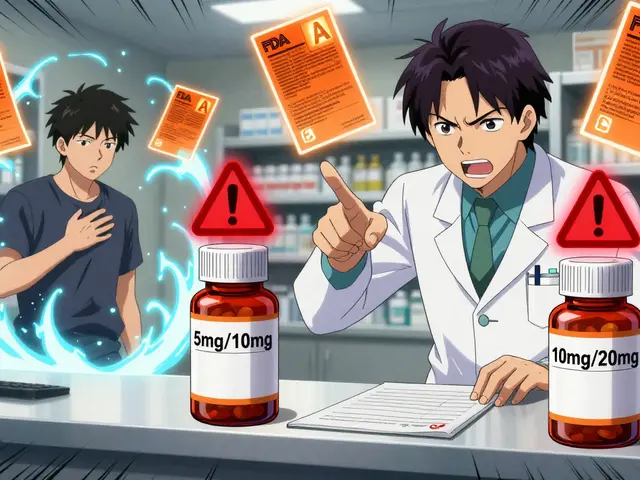
You've probably had this happen: you drop off a prescription for a brand-name drug, and when you pick it up, the bottle has a different name on it. You didn't ask for a change, and the pharmacist didn't call you to check. In most of the U.S., this isn't a mistake-it's a legal framework called presumed consent is a regulatory system that allows pharmacists to assume a patient agrees to a generic substitute without asking for explicit permission first. While it saves billions of dollars and speeds up the checkout line, it raises a big question: at what point does efficiency override a patient's right to choose?
The Basics of Automatic Substitution
To understand how this works, we have to look at the Hatch-Waxman Act of 1984. This law created the modern pathway for generics, allowing companies to use an Abbreviated New Drug Application (ANDA) to prove a drug is the same as the brand name without repeating every single clinical trial. Today, 43 out of 50 states operate under presumed consent. This means if a doctor writes a script and doesn't explicitly check a "Dispense as Written" (DAW) box, the pharmacist can swap the brand for a generic automatically.
But not all swaps are equal. Pharmacists rely on the FDA Orange Book, which is the official gold standard for therapeutic equivalence. If a generic is rated "A," it means it's therapeutically equivalent-meaning it has the same active ingredient, strength, and dosage form, and performs the same way in the body. In these cases, the law assumes you'd prefer the cheaper version unless you've said otherwise.
Presumed vs. Explicit Consent: What's the Difference?
Depending on which state you live in, your experience at the pharmacy counter changes. In "explicit consent" states-like Alaska or Maryland-the pharmacist must ask you if you want the generic before they fill the script. In "presumed consent" states, the assumption is "yes" unless you say "no."\n This isn't just a minor detail; it affects how pharmacies operate and how much you pay. According to IMS Health data, states with presumed consent have higher generic dispensing rates (about 92.3%) compared to explicit consent states (87.1%). It's simply faster. An ASHP study found that presumed consent reduces prescription processing time by about 1.7 minutes per order. That might not sound like much, but across millions of prescriptions, it saves the industry billions in labor costs.
| Feature | Presumed Consent | Explicit Consent |
|---|---|---|
| Pharmacist Action | Substitutes automatically unless told otherwise | Must ask patient for permission first |
| Processing Speed | Faster (approx. 1.7 mins saved/script) | Slower due to consultation step |
| Typical Substitution Rate | Higher (~92.3%) | Lower (~87.1%) |
| Patient Autonomy | Passive (Opt-out) | Active (Opt-in) |

The Danger Zone: Narrow Therapeutic Index Drugs
For most drugs, like a standard cholesterol medication, a generic swap is seamless. However, things get risky with Narrow Therapeutic Index (NTI) drugs. These are medications where a tiny difference in the amount of drug in your blood can be the difference between the medicine working and a dangerous overdose, or the difference between health and a medical emergency.
Take antiepileptic drugs as an example. The American Epilepsy Society has documented nearly 200 cases of breakthrough seizures linked to generic substitutions. Because of this, 15 states-including Tennessee and Hawaii-have put special restrictions on these drug classes. In these cases, presumed consent is often tossed out the window because the risk of a "bioequivalence variation" is too high. If you are on a high-stakes medication, the "automatic" nature of presumed consent can be a liability rather than a convenience.
Biologics and the New Frontier of Biosimilars
While small-molecule drugs (pills) are easy to swap, Biosimilars are a different beast. These are huge, complex proteins made in living cells, not simple chemicals mixed in a lab. Because they are so complex, they aren't exactly "identical" to the original biologic drug.
The rules for these are much stricter. Instead of the Orange Book, pharmacists use the FDA Purple Book. Currently, only a handful of states (like Arizona and Pennsylvania) allow automatic substitution for interchangeable biologics. Most states still require a more stringent process because the risk of an immune response or therapeutic failure is higher with biologics than with a generic aspirin.
The Economic Impact: Trillions in Savings
Why do we put up with this confusing system? Money. The Association for Accessible Medicines notes that generic drugs make up 90% of all prescriptions but only 15% of total spending. The Congressional Budget Office estimates that these substitution laws have saved the U.S. healthcare system roughly $1.68 trillion over the last decade. For the average Medicare Part D beneficiary, this translates to roughly $627 in annual savings. It's a massive win for the public purse, even if it occasionally causes friction at the pharmacy counter.
Navigating the System as a Patient
If you're worried about what's going into your pill bottle, you have more power than you think. You don't have to rely on the pharmacist's assumptions. Here are a few ways to take control:
- The "DAW" Request: If you only want the brand name, tell your doctor to write "Dispense as Written" on the prescription. This overrides presumed consent laws in every state.
- Ask for the "A" Rating: If you're unsure about a generic, ask the pharmacist if the substitute is "A-rated" in the FDA Orange Book.
- Track Your Meds: If you notice a change in how your medication feels-especially with NTI drugs-note the manufacturer and the NDC (National Drug Code) on the bottle immediately.
- Check State Laws: If you move, remember that your rights change. A state like New York now requires electronic documentation of substitutions, giving you a clearer paper trail.
Can I stop my pharmacist from substituting a generic?
Yes. The most effective way is to have your doctor mark the prescription as "Dispense as Written" (DAW). You can also tell the pharmacist explicitly that you do not consent to a substitution, though you may have to pay a higher copay depending on your insurance plan.
Is a generic drug exactly the same as a brand-name drug?
In terms of the active ingredient, yes. However, the "inactive' ingredients (fillers, binders, dyes) can differ. For most people, this doesn't matter, but for some, these fillers can cause allergic reactions or affect how the drug is absorbed.
What is the FDA Orange Book?
The Orange Book is the FDA's official guide to drug equivalence. It lists which generic drugs are "therapeutically equivalent" to brand-name drugs. An "A" rating means the generic is considered the same in effect, safety, and probability of producing the desired therapeutic result.
Why are biosimilars treated differently than generics?
Biologics are much larger and more complex molecules than the chemicals in standard pills. Because they are grown in living cells, they can't be perfectly replicated. Biosimilars are "highly similar" but not identical, which is why substitution laws for them are much stricter.
What should I do if a generic substitute isn't working?
Contact your doctor immediately. Document the exact name and manufacturer of the generic you are using. If you are taking a narrow therapeutic index drug (like some seizure or heart medications), a small change in the generic manufacturer can sometimes impact efficacy.