Imagine picking up your new blood pressure medication, heading home, and realizing you have a pill that looks nothing like what your doctor described. Or worse, taking it for a week before noticing the dosage is double what was prescribed. These aren't just hypothetical nightmares; they are real risks that affect millions of Americans every year. According to the American Society of Health-System Pharmacists, medication errors harm approximately 1.5 million people annually in the United States. While pharmacists work hard to prevent these mistakes, the final safety net often rests with you-the patient.
You might feel awkward asking questions or double-checking details at the counter. You might worry about looking difficult or slowing down the line. But here is the truth: pharmacists expect and welcome your involvement. Research shows that when patients actively verify their prescriptions, medication errors drop by up to 37.2%. This article gives you a clear, no-nonsense checklist to protect your health. It’s not about distrust; it’s about safety.
The 7-Point Prescription Verification Checklist
Verifying your prescription doesn’t require a medical degree. It requires attention to detail and a willingness to ask questions. Use this seven-step process every time you pick up medication. Take your time-safety is worth the extra minutes.
- Confirm Personal Information: Check that your full legal name and date of birth match exactly what is on the label. Pharmacies use two identifiers to ensure the right person gets the right drug. If there is even a small typo, speak up immediately.
- Verify the Medication Name: Look at the generic and brand names. Do they match what your doctor discussed? Be careful with similar-sounding drugs. For example, Lisinopril (for blood pressure) sounds very different from Losartan, but look-alike packaging can cause confusion. If you’re unsure, ask the pharmacist to show you the bottle before labeling.
- Check Dosage Strength: This is critical. Is it 10mg or 20mg? Dosage errors account for over one-third of all prescription mistakes. Compare the strength on the label with your prescription slip or your memory of the doctor’s instructions.
- Count the Pills: Don’t assume the count is correct. CMS data shows nearly 10% of errors involve incorrect quantities. Count the tablets or capsules right there at the counter if you can. If the bottle is sealed, check the "quantity dispensed" number on the label against what you were told.
- Review Administration Instructions: Read the directions carefully. How many times a day? With food or on an empty stomach? Illegible or vague instructions lead to nearly 19% of errors. If the label says "take as directed" without specifics, ask for clarification.
- Inspect Packaging and Expiration: Check the expiration date. Never accept a medication close to expiring. Also, look for damaged seals or cracked bottles. The Drug Supply Chain Security Act requires strict tracking, but human error still happens.
- Confirm Controlled Substance Details: If you are picking up a controlled substance (like ADHD meds or painkillers), the pharmacist must verify your address and prescription legitimacy per DEA rules. Ensure your information is current and accurate.
Why Visual Confirmation Matters More Than You Think
Dr. Jennifer Le, a clinical pharmacy professor at UCSF, notes that visually confirming the medication name and strength catches about 65% of potential dispensing errors. Why visual? Because labels can be misprinted, or the wrong bottle can be grabbed off the shelf.
Ask to see the actual medication before it is fully labeled and handed to you. Many pharmacies now have "patient verification stations" where you can scan barcodes or view images of the drug on a tablet. As of mid-2023, major chains like CVS and Walgreens are rolling out these tools in hundreds of locations. Using them puts you in control.
If you have trouble reading small print-a common issue for 64% of patients over 65-ask for a magnifying glass. Most pharmacies keep them handy. Alternatively, use your smartphone camera to zoom in on the label. There is no shame in needing help to read tiny text.

Common Pitfalls and How to Avoid Them
Even careful patients make mistakes. Here are the most common traps and how to sidestep them:
- Generic vs. Brand Confusion: About 39% of first-time prescriptions confuse patients because the generic version looks different from the brand-name drug they were used to. Ask your pharmacist: "Is this the same active ingredient as [Brand Name]?"
- Time Pressure: Over half of negative patient experiences cite rushing by staff. If you feel hurried, politely say, "I want to make sure I understand this correctly. Can we take a moment?" Good pharmacists will slow down.
- Abbreviation Ambiguity: Labels sometimes use shorthand like "q.d." (once daily) or "b.i.d." (twice daily). If you don’t know Latin abbreviations, ask the pharmacist to write out "once a day" in plain English.
- Therapeutic Duplication: Patient checks won’t catch if you’re already taking a similar drug elsewhere. That’s why you must tell your pharmacist about all medications, supplements, and herbs you take. This is where pharmacist expertise shines.
| Error Type | Frequency | How Patients Can Catch It |
|---|---|---|
| Wrong Strength | 32.7% | Compare label strength with doctor's note |
| Wrong Quantity | 24.1% | Count pills or check dispensed quantity on label |
| Wrong Patient | 18.3% | Verify name and DOB match exactly |
| Unclear Directions | 18.7% | Ask for plain-language explanations |
| Expired Product | 4.1% | Check expiration date on box/bottle |
Expert Advice: What Pharmacists Want You to Know
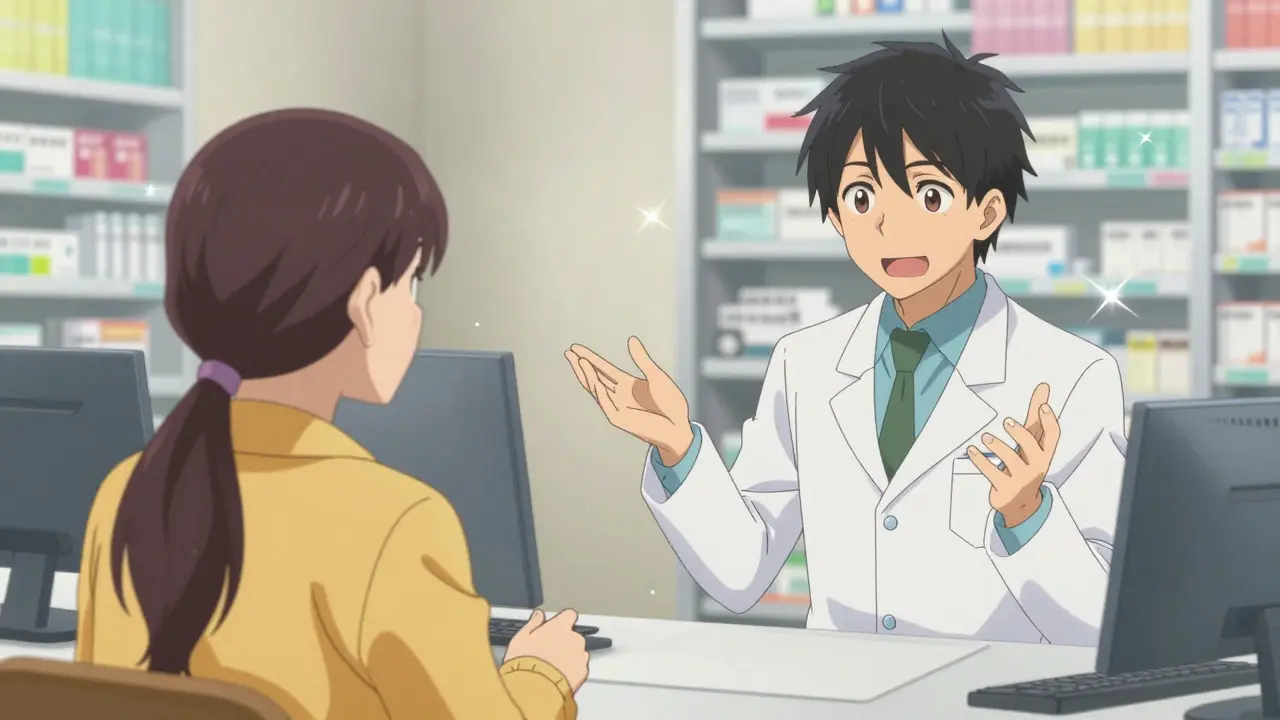
Pharmacists are your partners in health. The American Pharmacists Association reports that 92% of pharmacists encourage patients to examine their medications before leaving. They want you to ask questions. In fact, Dr. Michael Cohen of the Institute for Safe Medication Practices advises patients to ask three specific questions:
- "What is this medication for?"
- "How and when should I take it?"
- "What side effects should I watch for?"
Don’t be afraid to say, "I’m not sure I understand." If a pharmacist dismisses your concern, consider switching pharmacies. Trustpilot data shows that highly-rated pharmacies are significantly more likely to engage in patient verification. Your comfort and confidence matter.
Special Considerations for Mail-Order and Telehealth
If you use mail-order pharmacies or telehealth services, verification changes slightly. You won’t see the pharmacist face-to-face. When your package arrives:
- Open it immediately and check the outer packaging for damage.
- Verify the inner label matches your online order confirmation.
- Count the pills before discarding any packaging.
- Call the pharmacy directly if anything seems off. Don’t wait until you run out.
Telehealth prescriptions have a slightly higher error rate (1.7 per 100 prescriptions) compared to in-person visits. This makes your diligence even more important. Keep digital copies of your prescription slips and chat logs with providers.
Making Verification a Habit
The ASHP recommends a simple 3-minute routine: spend 90 seconds on the label, 60 seconds inspecting the physical medication, and 30 seconds reviewing usage instructions. Make this part of your pickup ritual. Carry a small notebook or use your phone to jot down questions before you go to the pharmacy. Preparedness reduces anxiety and ensures you don’t forget key points in the moment.
Remember, every dollar invested in patient verification saves nearly $9 in avoided medical costs. You are not just protecting yourself; you are contributing to a safer healthcare system. Start using this checklist today. Your health depends on it.
Should I count my pills at the pharmacy?
Yes, absolutely. Counting pills is one of the most effective ways to catch quantity errors, which account for nearly 10% of all dispensing mistakes. If the bottle is sealed, check the "quantity dispensed" number on the label against what your doctor prescribed. If it’s an open container, count them right at the counter. It takes less than a minute and provides peace of mind.
What if the pharmacist thinks I’m being difficult?
Most pharmacists appreciate cautious patients. However, if you feel dismissed, politely insist: "I just want to make sure I’m safe." If the behavior continues, consider finding a different pharmacy. Studies show that highly-rated pharmacies are much more likely to encourage patient verification. Your safety is their priority too.
How do I handle generic vs. brand name confusion?
Generic drugs contain the same active ingredients as brand-name drugs but may look different. If you’re used to a specific color or shape, ask your pharmacist: "Does this generic look different from my usual?" You can also request a specific manufacturer if appearance matters for your adherence, though insurance may cover only certain brands.
Is it okay to ask for a magnifying glass?
Yes! Over 60% of older adults struggle with small print on labels. Most pharmacies keep magnifying glasses available. Don’t hesitate to ask. Alternatively, use your smartphone camera to zoom in on the text. Clear vision is essential for accurate verification.
What should I do if I find an error?
Stay calm and inform the pharmacist immediately. Show them the discrepancy. Most errors are corrected quickly and free of charge. If the issue involves a serious mistake, ask to speak with the pharmacy manager. Document the incident if necessary, but focus first on getting the correct medication.