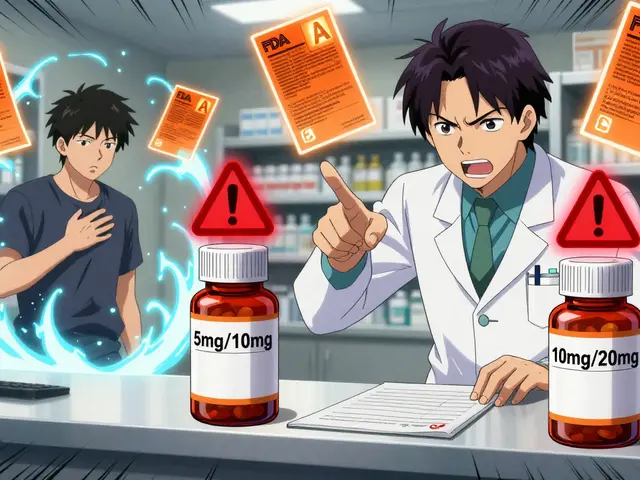

Imagine you are taking a medication where the difference between a helpful dose and a dangerous one is razor-thin. This is the reality for patients on Narrow Therapeutic Index (NTI) drugs, which are medications where small changes in blood concentration can lead to serious therapeutic failures or adverse reactions. For prescribers, deciding whether to allow pharmacists to swap these brand-name drugs for generic versions is not just a billing issue-it is a high-stakes clinical decision. While regulators often argue that generics are safe, many doctors remain deeply skeptical. This tension shapes how millions of patients receive care today.
What Makes NTI Drugs Different?
To understand why prescribers hesitate, we first need to define what makes an NTI drug unique. Unlike standard medications, such as antibiotics or pain relievers, NTI drugs have a very tight window of effectiveness. The Food and Drug Administration (FDA) defines them as drugs where the ratio between the minimum toxic concentration and the minimum effective concentration is less than or equal to two. In simpler terms, if you take slightly too much, you risk toxicity; if you take slightly too little, the drug might stop working entirely.
Common examples include warfarin (a blood thinner), levothyroxine (for thyroid conditions), phenytoin (for seizures), lithium (for bipolar disorder), and tacrolimus (used in transplant patients). Because these drugs affect critical bodily functions, even minor variations in how the body absorbs them-known as bioequivalence-can have significant consequences. This sensitivity is the root cause of the ongoing debate about substitution practices.
The Regulatory Stance vs. Clinical Reality
Regulators and clinicians often speak different languages when it comes to NTI drugs. The FDA has tightened its standards over time. Since 2019, the agency requires a narrower bioequivalence range for NTI generics (90-111%) compared to the standard range for most other drugs (80-125%). Dr. Janet Woodcock, former director of the FDA’s Center for Drug Evaluation and Research, stated in 2019 that the agency had strengthened monitoring to address provider concerns. She noted that post-market surveillance data showed 98% of generic NTI drugs perform within 3-4% of their brand-name counterparts.
However, clinical reality often feels messier than statistical averages. Transplant specialists, for instance, remain particularly wary. A survey from 1997 involving 59 transplant pharmacists revealed that 92% believed bioequivalence testing should be conducted in actual patients rather than healthy volunteers. Only 12% felt current FDA guidelines were appropriate for transplant medications. This skepticism persists because transplant patients rely on precise immunosuppression levels to prevent organ rejection. For them, a "statistically insignificant" variation can mean losing a kidney or liver.
How Doctors Feel About Substitution
Prescriber attitudes vary significantly by specialty, reflecting the specific risks they manage daily. A 2018 national survey published in Clinical Pharmacology & Therapeutics highlighted a disconnect between perception and practice. While 87% of pharmacists believed physicians thought generic NTI drugs were equally effective, only 60% of pharmacists substituted generics for refills, compared to 82% for initial prescriptions. This drop-off suggests that once a patient is stabilized on a brand, doctors prefer to keep them there to avoid destabilizing their condition.
The American College of Clinical Pharmacy (ACCP) reported in 2021 that 68% of surveyed physicians expressed concern about generic substitution for warfarin. Specifically, 42% worried about fluctuations in the International Normalized Ratio (INR), a measure of blood clotting time. These fluctuations require additional monitoring, which burdens both the patient and the healthcare system. Primary care physicians, who manage a broad range of chronic conditions, averaged 2.7 NTI substitution notifications monthly. In contrast, psychiatrists managing lithium prescriptions received nearly double that number, averaging 5.4 notifications per month. Lithium, with its narrow safety margin, demands consistent dosing to prevent mood instability or toxicity.
| Drug Name | Primary Use | Brand Share (%) |
|---|---|---|
| Tacrolimus | Organ Transplant Immunosuppression | 32% |
| Warfarin | Blood Thinning | 28% |
| Levothyroxine | Thyroid Hormone Replacement | 25% |
| Phenytoin | Seizure Control | 21% |
| Lithium | Bipolar Disorder Management | 19% |
These market share figures tell a story of prescriber preference. Despite the availability of cheaper generics, brand-name NTI drugs maintained a 23% market share in Medicare Part D plans in 2022, compared to just 8% for non-NTI drugs. This indicates that many doctors actively choose brands to ensure stability, especially for high-risk patients. A 2023 survey by the American College of Physicians found that 57% of internists would prescribe brand-name NTI drugs when initiating therapy for vulnerable individuals, citing stability as the primary reason.

The Cost of Caution
The hesitation to substitute generics has real economic implications. The Congressional Budget Office estimates that restricting NTI substitution could increase Medicare spending by $1.2 billion annually. On the other hand, the Association for Accessible Medicines projects potential savings of $127 billion over ten years if generic utilization increases. However, this macroeconomic view ignores the micro-level costs borne by individual patients and providers.
When substitutions occur without proper coordination, they create workflow friction. The American Medical Association (AMA) reports that 41% of physicians experienced patient confusion following NTI drug substitutions in 2022. Furthermore, 29% noted an increase in office visits specifically for monitoring purposes. According to benchmarking data from the Medical Group Management Association (MGMA), each incident costs an estimated $127. When multiplied across thousands of patients, these hidden costs add up quickly. Patients may also face out-of-pocket expenses for additional lab tests, such as INR checks for warfarin users or TSH levels for levothyroxine patients.
Communication Breakdowns
A major source of frustration is the lack of clear communication between pharmacists and prescribers. The Institute for Safe Medication Practices (ISMP) documented 1,247 NTI-related medication errors between 2015 and 2020. Of these, 37% involved substitution issues, though only 8% resulted in direct patient harm. Still, the near-misses highlight systemic vulnerabilities. Dr. Michael Cohen, President of ISMP, testified before the FDA in 2020 that prescribers need clearer labeling to identify NTI drugs and standardized protocols for when substitutions happen.
Workflow preferences differ among providers. A 2021 study in the Journal of the American Pharmacists Association found that 63% of physicians preferred electronic notifications about NTI substitutions rather than phone calls. Phone calls often interrupt clinical workflows, leading to missed information or delayed responses. Electronic health record (EHR) alerts provide a paper trail but can contribute to alert fatigue if not designed carefully. The American Society of Health-System Pharmacists (ASHP) advocates for mandatory prescriber notification, noting that 78% of hospital pharmacists already notify prescribers before substituting NTI generics.

Conflicting Professional Guidelines
Medical associations offer conflicting advice, leaving individual providers to navigate the gray areas alone. The American Academy of Neurology (AAN) maintains that automatic substitution may be inappropriate for certain NTI drugs like phenytoin and levothyroxine without prescriber consultation. Conversely, the Academy of Managed Care Pharmacy (AMCP) opposes legislation that restricts generic substitution, arguing that pharmacists should exercise professional judgment based on scientific evidence.
The AMA takes a middle ground. Since 2007, the House of Delegates has concluded that a more stringent substitution process is unnecessary for the vast majority of patients. They assert that switching products carries minimal risk if monitored properly. Their 2023 policy updates recommend therapeutic drug monitoring for NTI medications but do not mandate brand-only prescribing. This divergence in guidance creates confusion for general practitioners who must balance cost containment with patient safety.
State Laws and Local Variations
Because federal guidance is sometimes vague, state laws play a crucial role in shaping substitution practices. As of 2023, 28 U.S. states implemented NTI-specific substitution requirements, according to the National Conference of State Legislatures. States like Texas and Florida maintain official lists of NTI drugs that restrict automatic substitution, requiring prescriber notification or consent. A 2022 analysis in the Journal of Managed Care & Specialty Pharmacy found that states with "affirmative patient consent" laws saw 23% lower generic NTI substitution rates compared to states without such requirements.
This patchwork of regulations means a patient moving from California to New York might experience different substitution practices for the same medication. For multi-state healthcare systems, this inconsistency complicates formulary management and patient education efforts. It also places the burden on individual prescribers to know local laws, adding another layer of complexity to their daily decision-making.
Future Directions and Emerging Evidence
The landscape is evolving. The FDA released updated NTI drug guidance in March 2023, adding 12 new drugs to the consideration list while removing three others based on new evidence. This dynamic approach reflects a willingness to adapt as more real-world data becomes available. Meanwhile, the Centers for Medicare & Medicaid Services (CMS) proposed a rule in November 2023 requiring prescriber notification for all NTI substitutions in Medicare Part D plans. This move signals growing recognition of prescriber concerns about therapeutic stability.
Ongoing research aims to clarify the risks. The PRESCRIPT-NTI trial (NCT04567812) is currently enrolling 1,200 patients across 42 sites to evaluate clinical outcomes following NTI substitution. Preliminary data is expected in Q2 2024. Industry analysts at Evaluate Pharma predict that NTI drug generic penetration will reach 78% by 2028, up from 62% in 2023. This growth depends on building prescriber confidence through improved communication protocols and robust real-world evidence.
For now, the best practice remains open dialogue. Prescribers should discuss substitution preferences with their patients and pharmacists. Patients should ask questions about their medications and report any unusual symptoms promptly. By bridging the gap between regulatory assurances and clinical caution, the healthcare system can ensure that NTI drug therapy remains both accessible and safe.
What are Narrow Therapeutic Index (NTI) drugs?
NTI drugs are medications where small changes in dose or blood concentration can lead to serious therapeutic failures or adverse reactions. The FDA defines them as drugs where the ratio between the minimum toxic concentration and the minimum effective concentration is less than or equal to two. Common examples include warfarin, levothyroxine, phenytoin, lithium, and tacrolimus.
Why do some doctors prefer brand-name NTI drugs over generics?
Many doctors prefer brand-name NTI drugs due to concerns about stability and consistency. Even though generics meet FDA bioequivalence standards, slight variations in absorption can affect sensitive conditions like seizure control or organ transplant rejection. Studies show that 57% of internists prescribe brand-name NTI drugs for high-risk patients to minimize the risk of therapeutic failure.
Is it safe for pharmacists to substitute generic NTI drugs?
Safety depends on the specific drug and patient context. The FDA states that 98% of generic NTI drugs perform within 3-4% of their brand-name counterparts. However, professional organizations like the American Academy of Neurology advise against automatic substitution for certain drugs without prescriber consultation. Many states require pharmacist notification or prescriber consent before substituting NTI generics.
How does NTI drug substitution affect healthcare costs?
While generic substitution saves money on drug purchases, it can increase overall healthcare costs through additional monitoring and office visits. The AMA reports that 29% of physicians see increased monitoring visits after substitutions, costing an estimated $127 per incident. The Congressional Budget Office estimates that restricting substitution could increase Medicare spending by $1.2 billion annually, highlighting the complex economic trade-offs.
What should patients do if they are concerned about generic substitutions?
Patients should communicate openly with their prescribers and pharmacists. If you are on an NTI drug, ask your doctor if brand consistency is important for your condition. You can also request that "Dispense as Written" be noted on your prescription if your state allows it. Always report any new or worsening symptoms to your healthcare provider immediately, as these could indicate issues with medication absorption or efficacy.