
When you fill a prescription for a brand-name drug and the pharmacist hands you a pill that looks different - maybe smaller, maybe a different color - it’s natural to wonder: is this really the same thing? This question becomes even more confusing when you hear about something called an authorized generic. It’s not the brand, but it’s not a typical generic either. So what’s going on? Are authorized generics just as good as the brand-name drug you’ve been taking for years?
What Exactly Is an Authorized Generic?
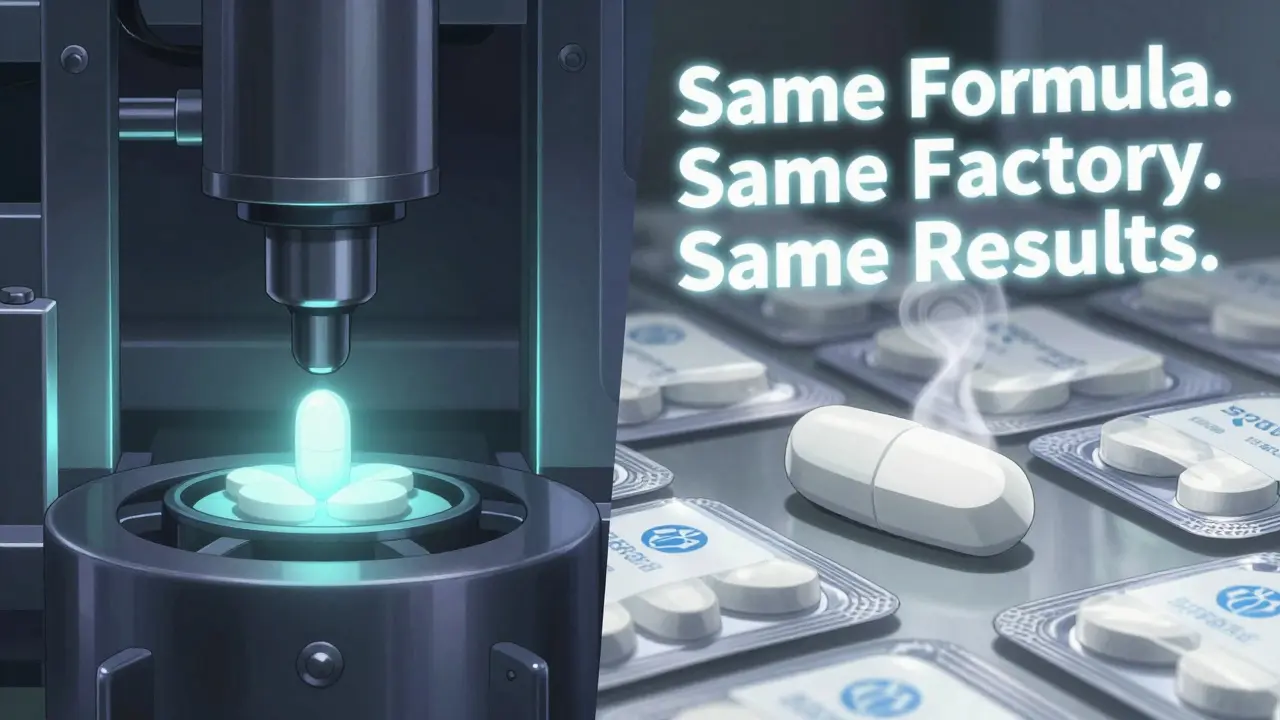
An authorized generic is the exact same medication as the brand-name drug - same active ingredient, same inactive ingredients, same size, same shape, same manufacturing process. The only difference? It doesn’t have the brand name on the label.
The U.S. Food and Drug Administration (FDA) defines it plainly: it’s the brand drug, sold without the brand name. That’s it. No reformulation. No shortcuts. No changes to the formula. The company that made the brand-name drug - say, Pfizer for Lipitor - is the same company making the authorized generic. They just slap on a plain label and sell it under a different National Drug Code (NDC).
This isn’t some loophole. It’s built into the law. The Hatch-Waxman Act of 1984 created a system that lets brand companies protect their patents while still allowing generics to enter the market. But here’s the twist: the brand company itself can choose to make and sell its own generic version. That’s an authorized generic. It’s approved under the original New Drug Application (NDA), not the Abbreviated New Drug Application (ANDA) that typical generics use.
Because of this, authorized generics don’t show up in the FDA’s Orange Book - the official list of approved generic drugs. That’s not because they’re not approved. It’s because they’re not classified as generics under the ANDA system. They’re the brand drug, just labeled differently.
How Are Authorized Generics Different from Regular Generics?
Regular generics are made by other companies after the brand’s patent expires. They have to prove they’re bioequivalent - meaning they deliver the same amount of medicine into your bloodstream at the same rate. But they don’t have to match the brand’s inactive ingredients. That’s where things get tricky.
Take a birth control pill. The active hormone is the same. But the filler - the stuff that holds the pill together - might be different. For most people, that doesn’t matter. But for some, even tiny changes in fillers can affect how the body absorbs the drug. That’s why some patients report feeling different after switching to a regular generic, even when the FDA says it’s equivalent.
Authorized generics avoid that entirely. They use the exact same fillers, dyes, and coatings as the brand. If you’ve ever noticed your brand-name pill had a little logo or a specific shade of blue, the authorized generic might look nearly identical - because it’s made on the same production line, by the same people, with the same materials.
Think of it this way: a regular generic is like a copy of a painting made by a different artist using similar brushes and paints. An authorized generic is the same painting, pulled from the same canvas, just with a different frame.
Do Authorized Generics Work as Well as the Brand?
Yes. And the data backs it up.
A 2018 study published in PMC tracked over 5,000 patients who switched from brand-name drugs to generics. About 94% of them switched to a generic - some to authorized, some to regular. The researchers looked at hospital visits, ER trips, and whether people stopped taking their meds. The results? No meaningful difference in outcomes between those on authorized generics and those on regular generics. Both groups did just as well as the people who stayed on the brand.
Even more telling: the rate of medication discontinuation was almost identical - 18.7% for authorized generics versus 19.3% for regular generics over 12 months. That’s a difference of less than 1%. Not statistically significant. Not clinically meaningful.
Dr. Janet Woodcock, former head of the FDA’s drug center, put it simply: authorized generics are the same drug. Same active ingredient. Same inactive ingredients. Same quality controls. If the brand works, the authorized generic works too.
And the FDA doesn’t just say it - they enforce it. Every batch of an authorized generic is held to the same strict standards as the brand. If there’s a problem with the brand, the FDA investigates. Same for the authorized version. No exceptions.
Why Do Authorized Generics Sometimes Cost More Than Regular Generics?
If they’re the same drug, why aren’t they always the cheapest option?
Here’s the reality: authorized generics are often priced lower than the brand, but sometimes higher than regular generics. Why? Because they’re not competing on price the same way.
Regular generics are made by multiple companies fighting for the lowest bid. That drives prices down - sometimes as low as 80-85% off the brand price.
Authorized generics are different. They’re sold by the original brand company, often as a way to keep market share when a generic enters the scene. So while they’re cheaper than the brand, they don’t always drop as low as the competition. You might pay $10 for an authorized generic versus $5 for a regular generic. But you’re still saving 60-70% compared to the brand.
For patients who’ve had bad experiences with regular generics - maybe their blood pressure fluctuated, or their mood changed after switching - the extra few dollars can be worth it. It’s not about saving the most money. It’s about avoiding the risk of a bad reaction.
What Do Pharmacists Need to Know?
Pharmacists are on the front lines. They’re the ones handing out the pills and answering questions. But here’s the problem: authorized generics aren’t in the Orange Book. That means pharmacy systems might not flag them as “generic.” They might show up as a separate product with a different NDC code.
If a patient asks why their prescription looks different, the pharmacist needs to explain: “This is the same medication your doctor prescribed. It’s made by the same company. The only difference is the label.”
Insurance companies sometimes treat authorized generics differently than regular generics. Some plans require prior authorization for authorized generics, while others cover them at the same tier as brand-name drugs. Pharmacists need to check each plan’s formulary - and be ready to advocate for patients if a cheaper alternative is being denied.
Documentation matters too. If you’re dispensing an authorized generic, make sure it’s clearly noted in the patient’s record. That helps avoid confusion later if there’s a side effect or a refill issue.

Are There Any Downsides?
There’s one big concern: market manipulation.
Sometimes, brand companies use authorized generics as a tactic to delay real generic competition. They’ll launch their own authorized version right as a competitor’s generic is about to hit the market. This floods the market with a low-cost version - but one they control. It can scare off other generic manufacturers who can’t compete on price or distribution.
The Government Accountability Office found cases where brand companies filed patent lawsuits to block generics, then introduced their own authorized generic at the same time. That’s not illegal - but it’s not exactly fair either.
Still, for the patient, it doesn’t change the fact that the drug they’re getting is identical to the brand. The issue is more about market fairness than drug safety.
When Should You Choose an Authorized Generic?
You should consider an authorized generic if:
- You’ve had a bad reaction to a regular generic - even if it was minor.
- You’re on a medication with a narrow therapeutic index - like warfarin, levothyroxine, or seizure meds - where even small changes in absorption can matter.
- You value consistency. You don’t want your pill to change color, shape, or size every time you refill.
- Your insurance covers it at a price close to the regular generic.
For most people, a regular generic is perfectly safe and effective. But if you’ve ever thought, “I just feel better on the brand,” an authorized generic might be the sweet spot - same drug, lower price, no guesswork.
What’s Next for Authorized Generics?
The FDA is pushing for more transparency. In 2023, they updated labeling rules to make sure authorized generics clearly state they’re identical to the brand. In 2022, they launched a new plan under GDUFA III to improve tracking of these drugs.
Experts predict authorized generics will hold steady at 5-7% of the generic market through 2028. They won’t replace regular generics. But they’ll keep serving a critical role: for patients who need absolute consistency, who’ve been burned by formulation changes, or who just want peace of mind.
Bottom line: if your doctor says it’s okay, and your pharmacist confirms it’s an authorized generic, you’re getting the same drug - no compromises.
Are authorized generics FDA-approved?
Yes. Authorized generics are approved under the original brand drug’s New Drug Application (NDA) by the FDA. They’re not approved through the generic ANDA process, but they’re held to the same strict standards for safety, strength, and quality as the brand-name version.
Why don’t authorized generics show up in the FDA’s Orange Book?
The Orange Book only lists drugs approved under the Abbreviated New Drug Application (ANDA) process. Authorized generics are marketed under the brand’s original NDA, so they’re not included. That doesn’t mean they’re not approved - it just means they’re classified differently.
Can I switch from a brand to an authorized generic without my doctor’s approval?
In most cases, yes. Authorized generics are considered therapeutically equivalent to the brand, so pharmacists can substitute them unless your doctor specifically writes “dispense as written” or “no substitution.” But if you’ve had issues with generics before, it’s smart to check with your doctor first.
Do authorized generics have the same side effects as the brand?
Yes. Because they contain the exact same active and inactive ingredients, the side effect profile is identical. If you’ve experienced side effects from the brand, you may experience the same ones with the authorized generic. The FDA monitors side effects for both versions equally.
Are authorized generics always cheaper than the brand?
Almost always. Authorized generics are typically priced significantly lower than the brand - often 50-70% less. But they can sometimes cost more than regular generics, since they’re sold by the original manufacturer and aren’t subject to the same competitive pricing pressures.